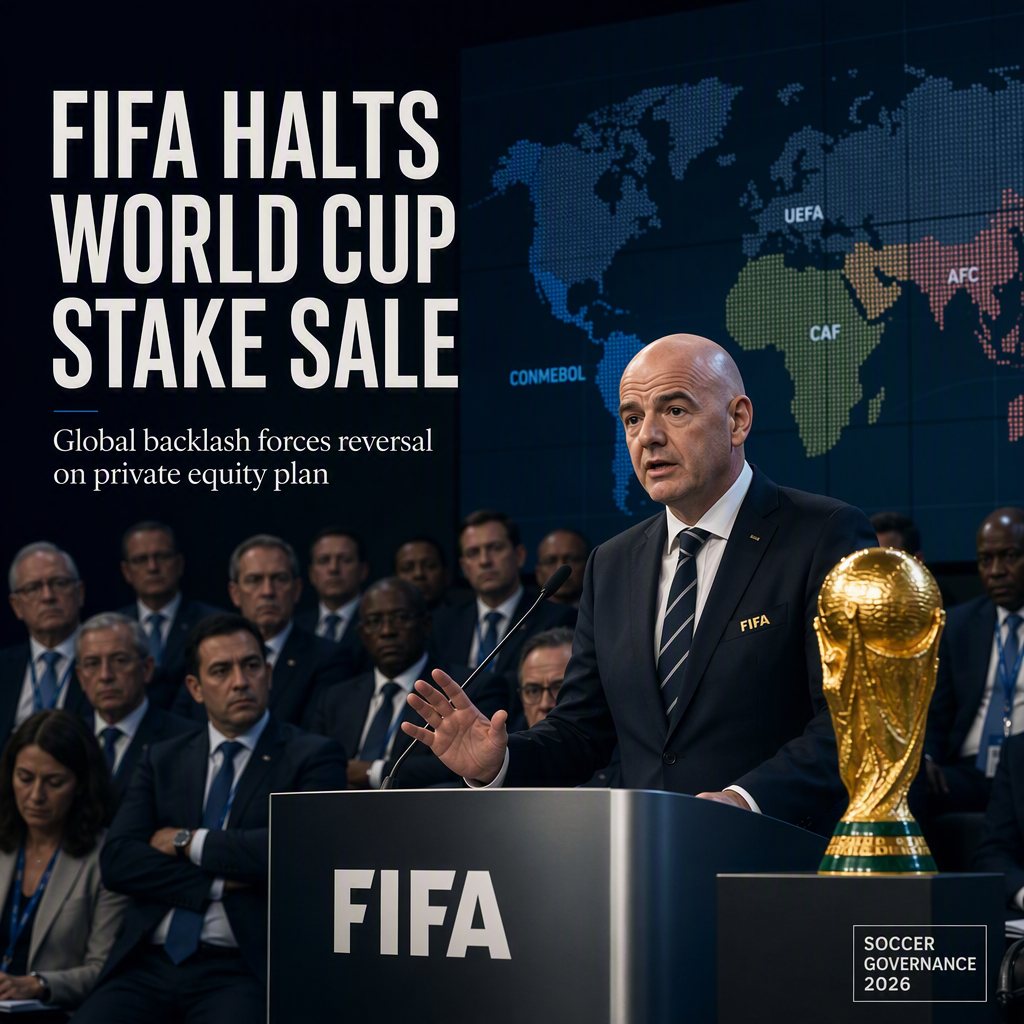
FIFA President Gianni Infantino announced on August 1, 2026, that the organization will not proceed with its plan to sell stakes in the World Cup to private equity investors, following strong opposition from soccer organizations across Europe, Asia, and North America [1]. The proposal faced significant backlash, with several European soccer teams threatening to boycott FIFA events if the deal moved forward, raising concerns about potential disruption to the global soccer calendar and associated revenues [1].
Infantino stated, "After extensive consultation and in light of the negative response from key stakeholders, we have decided not to proceed with the sale of World Cup stakes to private equity investors" [1]. The plan was intended to attract substantial investment into FIFA's flagship tournament, with private equity firms seeking a share of the World Cup's commercial revenues. Critics argued that such a move could undermine the competition's integrity and shift control away from football associations and fans [1].
Market analysts had speculated that a successful deal could have injected billions of dollars into FIFA's coffers, potentially increasing prize money and development funds for participating nations [1]. The abrupt cancellation may impact FIFA's short-term financial projections, but is likely to be viewed positively by traditional stakeholders who are concerned about the commercialization of the sport [1].
No further details were provided regarding alternative funding plans or adjustments to FIFA's financial outlook following this decision [1].
CONCLUSION
FIFA's decision to cancel the private equity sale was driven by widespread opposition from key soccer organizations and concerns over governance and commercialization. While the move may affect short-term financial projections, it is expected to reassure traditional stakeholders and preserve the integrity of the World Cup. No information was given about alternative funding strategies or future financial adjustments.