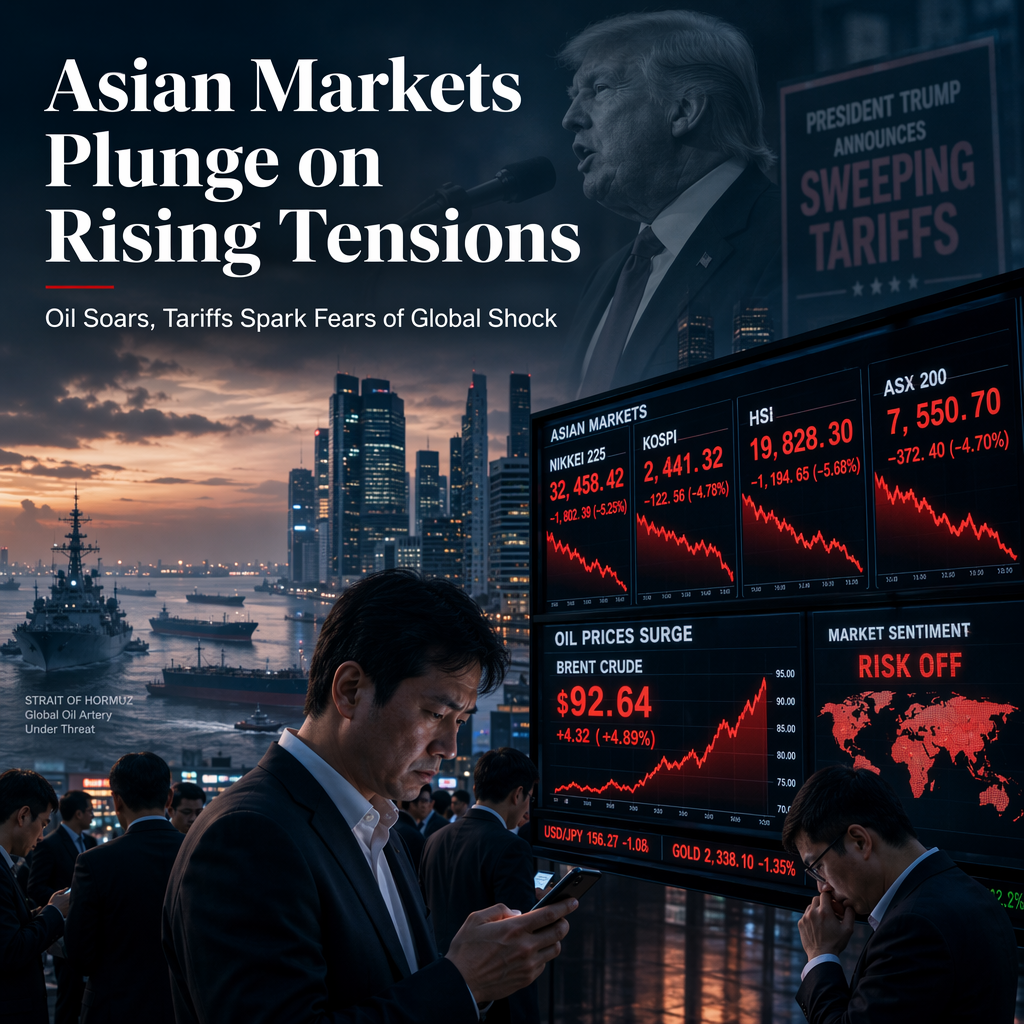
Asian stock markets experienced significant declines on Friday, driven by escalating geopolitical tensions between the US and Iran, as well as the announcement of new US tariffs by President Donald Trump. Japan’s Nikkei N225 dropped nearly 3%, while South Korea's KOSPI index underperformed with a decline of over 4.5% compared to broader markets [1].
The US military confirmed it had completed another round of strikes against Iran on Thursday, marking the 13th consecutive night of operations. This ongoing conflict has expanded, with Iran and its allies launching retaliatory strikes against US-linked military assets in Kuwait, Bahrain, and Jordan [1]. Additionally, Iran-aligned Houthi forces extended the conflict to a second major shipping chokepoint by attacking two Saudi oil tankers in the Red Sea. These developments have heightened concerns about energy supply disruptions, especially with the closure of the Strait of Hormuz, pushing oil prices to their highest level since June 11 and stoking fears of renewed inflation [1].
Investor anxiety over a potential inflation shock has led to speculation that major central banks, including the US Federal Reserve, may adopt a more hawkish monetary policy stance. The CME Group's FedWatch Tool indicates that traders are currently pricing in a 93% probability that the US central bank will raise borrowing costs by the end of the year [1].
Compounding market concerns, the Trump administration is preparing to implement sweeping new tariffs of 10% to 12.5% on 60 of the US's top trading partners, covering nearly all imports. This move has reignited fears of a global trade war and contributed to the broadly weaker tone across global financial markets [1].
CONCLUSION
Asian equity markets suffered sharp losses amid heightened geopolitical risks and renewed trade tensions. The combination of rising oil prices, inflation fears, and the prospect of higher US interest rates has created a risk-off environment for investors. Market sentiment remains negative as uncertainty persists over the direction of global trade and monetary policy.