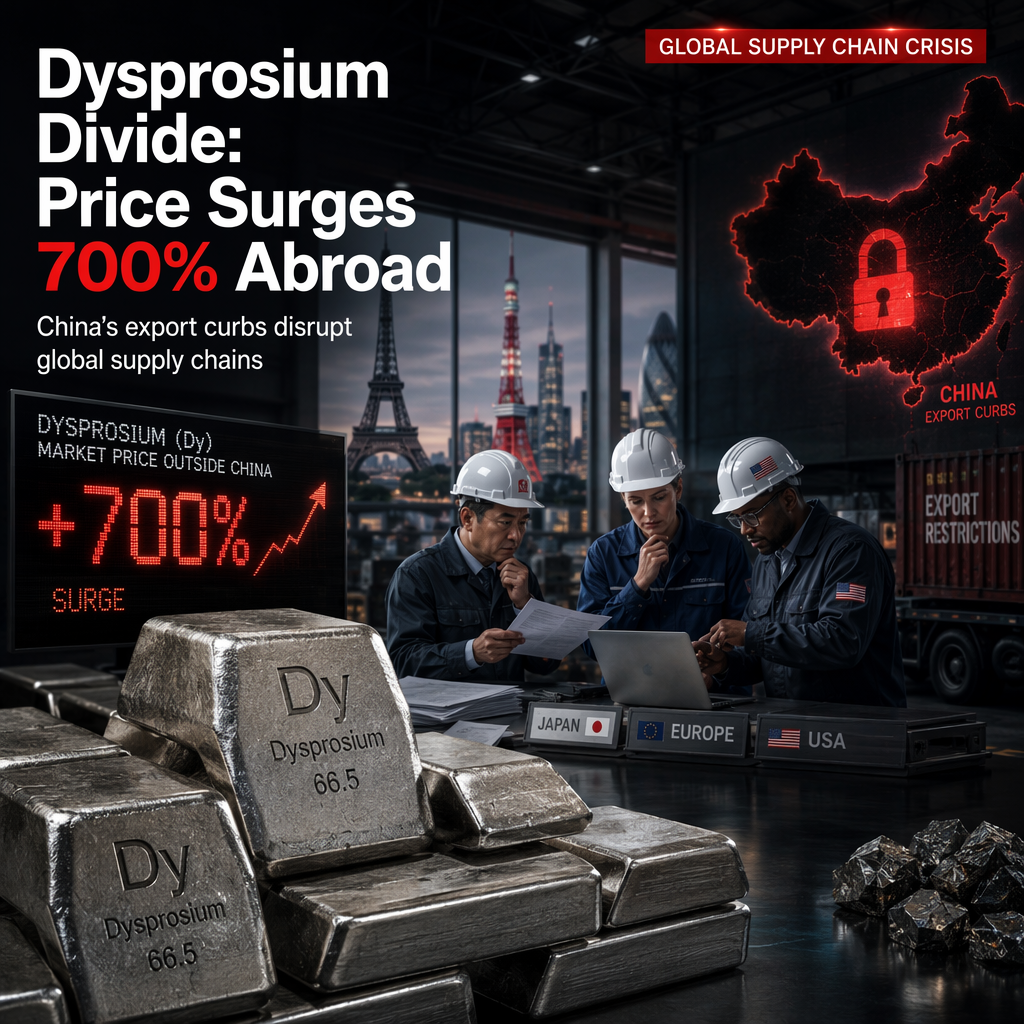
China's implementation of rare earth export restrictions has led to a dramatic divergence in pricing between the domestic Chinese market and international markets, particularly for dysprosium, a critical material used in electric vehicle (EV) motors and other industrial applications [1]. In Europe, the price of dysprosium has soared by 700% compared to pre-restriction levels, while prices within China have remained relatively stable, highlighting the immediate impact of the export curbs on global supply chains [1].
China remains virtually the sole supplier of dysprosium and other heavy rare earths, creating a significant vulnerability for manufacturers outside the country [1]. The sharp increase in international prices has placed additional cost pressures on producers of EVs and high-tech goods, with Japanese firms reporting cost increases of over 20% according to recent industry surveys [1].
Market analysts have identified the price of rare-earth elements, especially dysprosium, as a key indicator of supply chain risk stemming from China's dominance in the sector [1]. One industry analyst noted that the restrictions have caused a supply squeeze that is immediately reflected in international spot prices, forcing companies to either seek alternative sources or pay a significant premium [1].
In response to the widening price gap and supply risks, governments and companies in Asia, Europe, and the US are accelerating efforts to diversify their supply chains and reduce reliance on Chinese rare-earth exports [1]. The situation underscores ongoing geopolitical tensions and the strategic importance of rare-earth elements in high-tech manufacturing and the global energy transition [1].
CONCLUSION
China's rare earth export curbs have created a severe price disparity, with international markets facing soaring costs and supply chain vulnerabilities. The resulting pressures are prompting global efforts to diversify rare earth sourcing and reduce dependence on China, highlighting the strategic significance of these materials in advanced manufacturing and energy sectors.