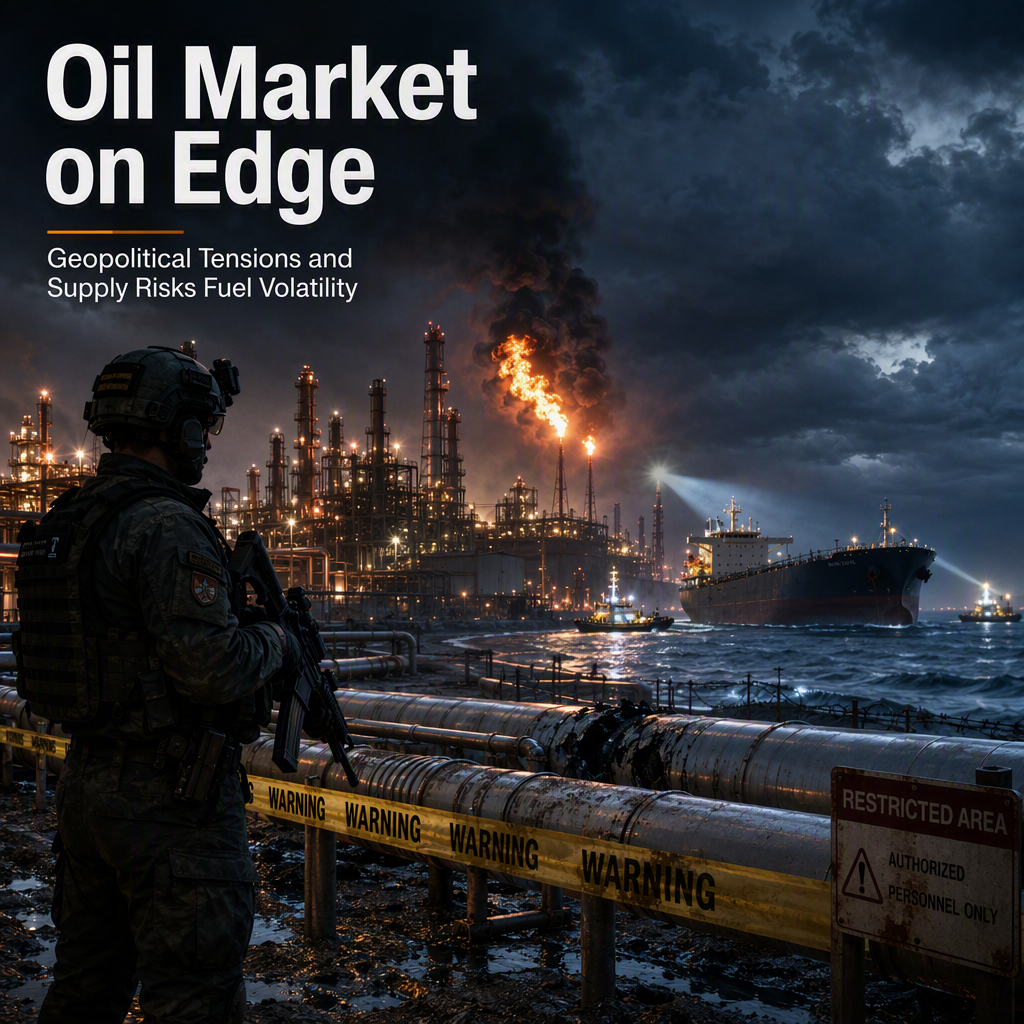
Rabobank’s Senior Market Strategist Benjamin Picton has highlighted escalating stress in the oil market, driven by rising geopolitical risks and structural supply tightness [1]. Picton points to higher crude prices and widening Brent spreads, noting that the spread between dated Brent and the front future has reached its highest levels since mid-April, indicating increased tightness in physical oil markets as refiners scramble to secure feedstock [1].
Recent attacks on the Saudi East-West pipeline, with reports suggesting that damage could take months to repair, have contributed to sustained upward pressure on oil prices. Picton emphasizes that even after repairs, the pipeline remains vulnerable to further attacks, reinforcing ongoing supply concerns [1]. Additionally, reports from Iran’s Farsnewsagency indicate that an oil tanker exploded after colliding with a mine in Omani waters, further exacerbating supply risks [1].
Picton also notes that the United States is nearing the end of its Strategic Petroleum Reserve (SPR) release program, with reserves now at their lowest levels since the 1980s. There is ongoing discussion within oil circles about stock levels approaching minimum thresholds, potentially threatening the structural integrity of the salt caverns where the oil is stored [1].
The depletion of US stocks and soaring gasoline prices have sparked speculation about possible export bans on certain oil products ahead of the midterm elections in November. However, Secretary of the Interior Doug Burgum has dismissed this prospect, stating that such measures would not help to lower prices [1].
CONCLUSION
Geopolitical disruptions and structural supply concerns are driving significant tightness in the oil market, with higher prices and widening Brent spreads reflecting these risks. The approaching end of US SPR releases and ongoing speculation about export restrictions add further uncertainty. Market participants should remain alert to continued volatility and supply risks in the near term.