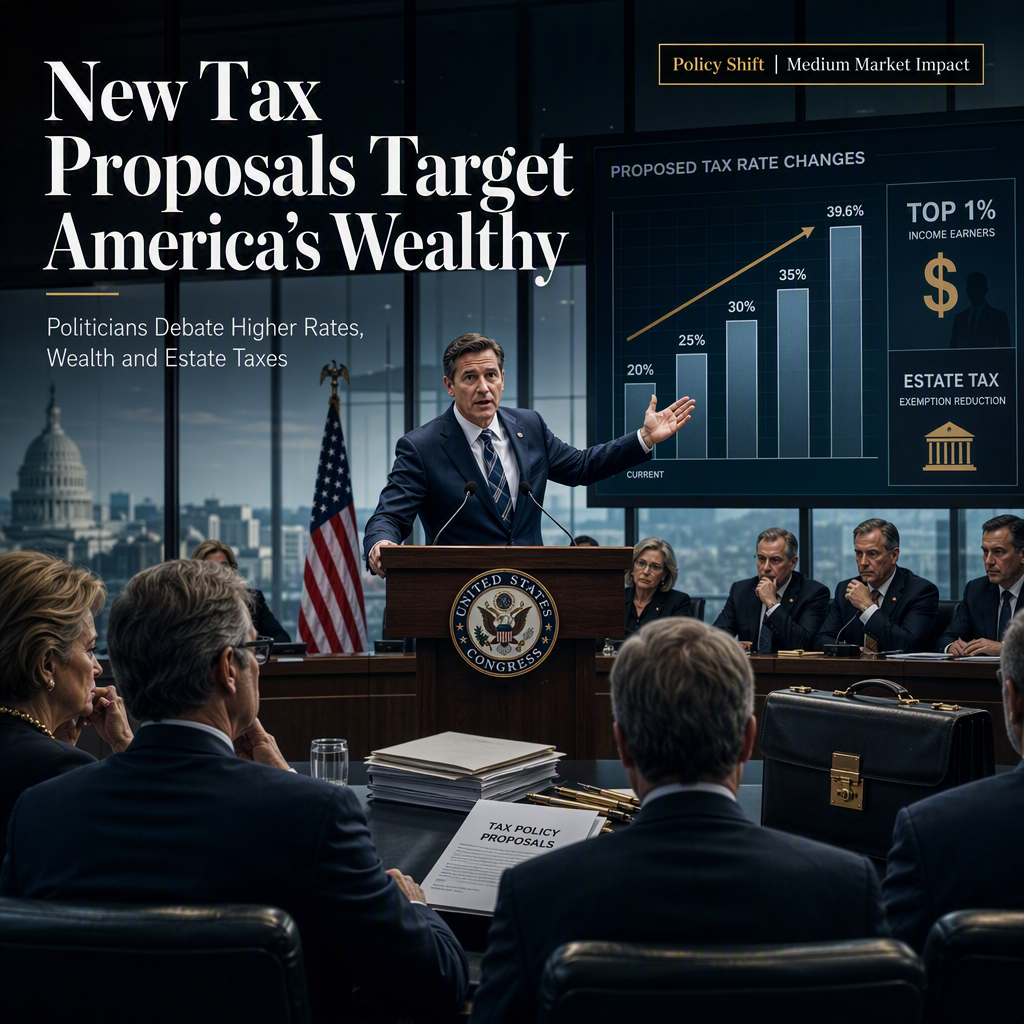
The article discusses ongoing proposals by politicians to increase taxes on wealthy Americans through various mechanisms, beyond the current federal individual income tax system [1]. According to the author, the top 1% of taxpayers already pay roughly 40% of federal individual income taxes, while the top 10% contribute the overwhelming majority of taxes [1]. Despite these figures, there is continued debate about what constitutes a 'fair share,' with some politicians advocating for even higher tax rates and new forms of taxation [1].
Five potential tax increases are outlined: raising the top income tax rate, increasing capital gains taxes, implementing wealth taxes during an individual's lifetime, and increasing estate taxes upon death [1]. The article notes that the last time the top tax rate exceeded 39.6% was 40 years ago, when it reached 50%, and questions whether such a rate could return, though no political candidate has specified a target rate [1]. The possibility of taxing investment gains as ordinary income is highlighted as a likely target if political leadership changes, with the author warning that such changes could alter investor behavior [1].
Wealth taxes are described as fundamentally different, taxing individuals based on their net worth rather than earned income, with California set to vote on a related measure in the upcoming November ballot [1]. Estate taxes are also under scrutiny, with the current federal exemption at $15 million and a top estate-tax rate of 40% for estates above this threshold. The article raises concerns about the exemption potentially reverting to much lower levels, as seen in 2000 when it was less than $1 million [1].
While the article does not provide specific market reactions or analyst opinions, it suggests that increased taxation could influence investor behavior and business decisions, particularly if capital gains are taxed more heavily or wealth taxes are implemented [1].
CONCLUSION
The article highlights a series of proposed tax increases targeting wealthy Americans, including higher income, capital gains, wealth, and estate taxes. Although no specific market reactions are cited, the author warns that such measures could impact investor behavior and business activity. The ongoing debate signals potential changes in tax policy that could have medium market impact, especially for high earners and investors.