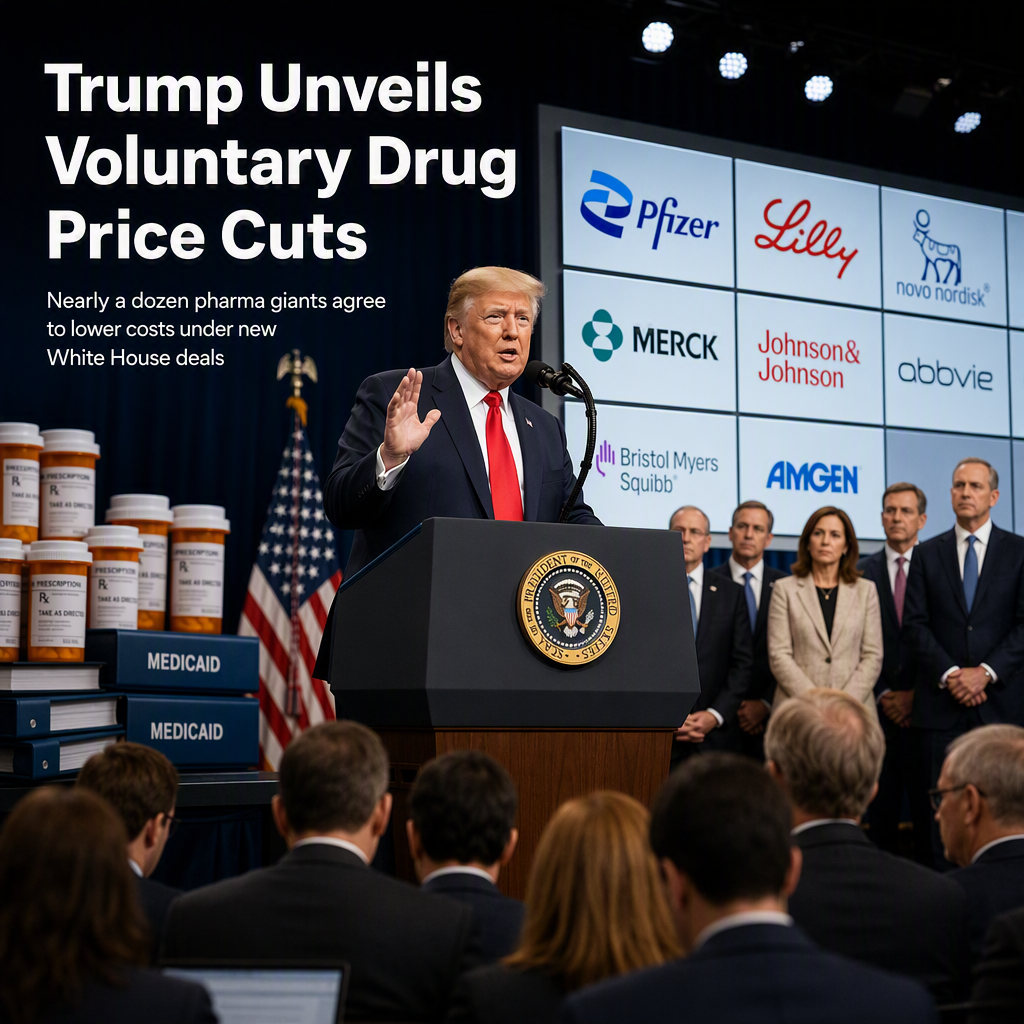
President Donald Trump is reportedly set to announce new agreements with nearly a dozen drugmakers who will voluntarily lower the prices of their medications, as part of the administration's ongoing efforts to address healthcare affordability and drug pricing in the United States [1]. These deals are expected to be unveiled during a scheduled announcement on healthcare affordability at 3:00 p.m. ET on Monday [1]. Over the past year, the Trump administration has already reached drug pricing agreements with 17 pharmaceutical companies, including Pfizer, Eli Lilly, and Novo Nordisk, under the 'most favored nation' policy, which aims to link U.S. drug prices to lower prices abroad [1].
The forthcoming deals reportedly involve drugmakers agreeing to provide discounts on outpatient drugs to state Medicaid programs, aligning the prices states pay with those charged in foreign countries. Participation by state Medicaid programs is optional, and in exchange for these discounts, the companies will be exempt from pilot programs mandating similar discounts in Medicare [1]. While Medicaid already receives significant discounts under federal law, the impact of these new deals on patient out-of-pocket costs remains unclear [1].
The 'most favored nation' agreements have already influenced the commercial strategies and financial performance of major pharmaceutical companies. To mitigate future tariff risks, drugmakers are investing billions to relocate manufacturing to the U.S. and are expanding direct-to-consumer sales channels, including the TrumpRx portal [1]. However, lower U.S. prices are negatively affecting company bottom lines, with Novo Nordisk indicating that it will take time for increased prescription volumes to offset revenue declines [1].
A 2024 Rand Corp. study cited in the article found that U.S. prescription drug prices are, on average, nearly three times higher than those overseas, with branded drug prices more than four times higher [1]. The pharmaceutical trade association PhRMA has criticized the 'most favored nation' approach, arguing that it is not the best method to reduce drug costs for Americans and attributing price disparities to pharmacy benefit managers instead [1].
The U.S. remains the most important market for many drugmakers, including European companies, despite their international headquarters [1].
CONCLUSION
The Trump administration's new voluntary drug pricing deals with nearly a dozen pharmaceutical companies mark a significant step in its ongoing efforts to lower medication costs in the U.S. While the agreements may impact company revenues and strategies, the direct effect on patient expenses is still uncertain. The market is closely watching how these changes will influence both the pharmaceutical industry and healthcare affordability.