
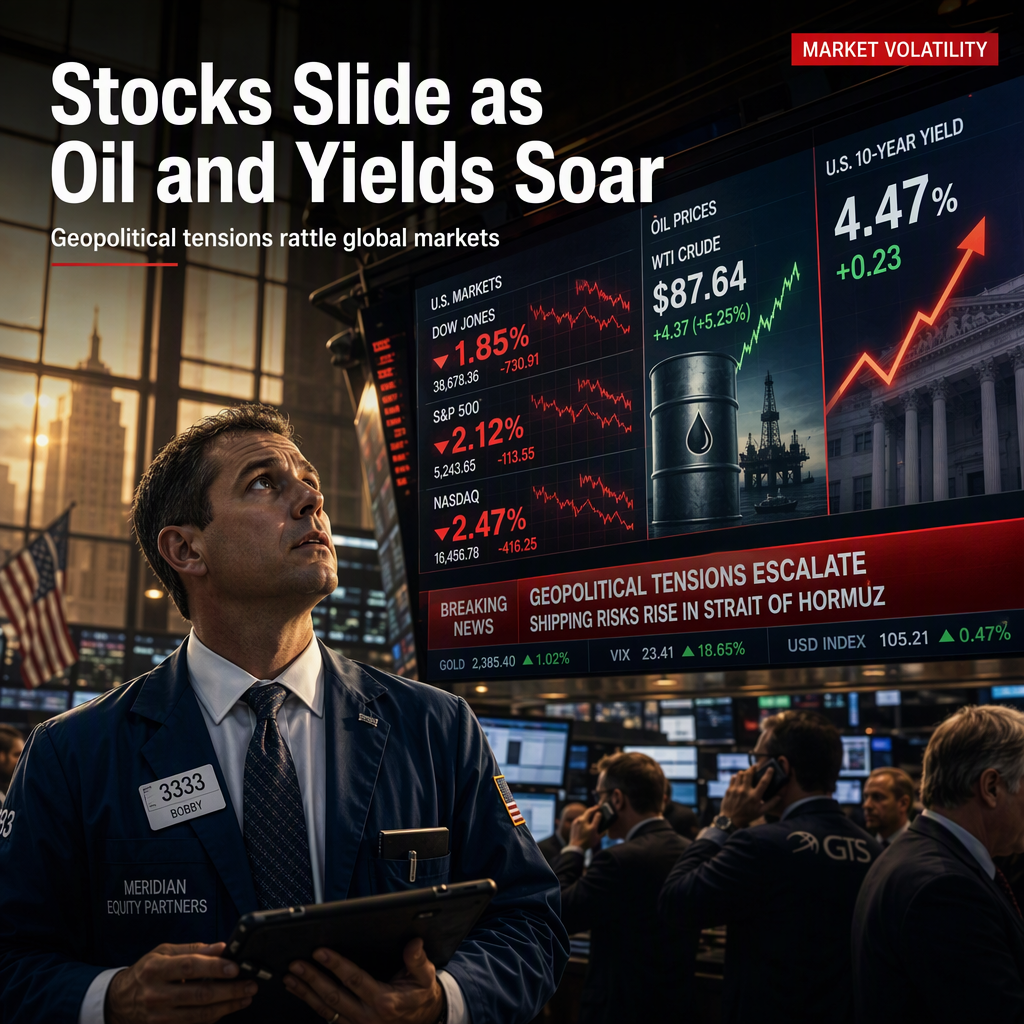
On Monday, stocks declined as geopolitical turmoil continued to unsettle financial markets, with both oil prices and bond yields experiencing significant increases [1]. The S&P 500 dropped by 0.5% and the Nasdaq Composite fell by 0.6%, while Brent crude oil rallied 3% to nearly $108 per barrel, marking its highest level since September 15. U.S. crude oil also climbed to almost $96 [1]. The surge in oil prices was briefly interrupted by reports of mediators planning to meet separately with U.S. and Iranian officials regarding the ongoing war with Iran. However, Iran's semi-official ISNA news agency minimized the importance of these meetings, stating that Iran's foreign minister, Abbas Araghchi, would attend talks with mediators but no U.S. representatives would be present [1].
President Donald Trump over the weekend rejected Iran's proposal to reopen the Strait of Hormuz, a critical energy supply route, saying, "They want to make a deal, and I think that's fine. I like making a deal too, but ... that deal would not be acceptable" [1]. The brief pause in oil's upward momentum was short-lived, and prices resumed their climb, reflecting the persistent volatility in energy markets this year [1].
Bond yields also surged to multi-year highs, with the 10-year U.S. Treasury yield reaching 5.27%, its highest since mid-June 2007. Other Treasury yields traded above 5%, and the 30-year bond hit its highest level since May 2004. The 2-year Treasury yield, often seen as an indicator of future central bank rates, reached its highest level since 2024 [1]. Market analysts expressed concern about the implications of rising yields. Ed Yardeni, president of Yardeni Research, noted, "The significant increase in oil prices so far this year hasn't knocked the wind out of the global economy's sails. The question is whether rapidly rising interest rates will do so." He also warned that higher rates exacerbate the outlook for large government deficits worldwide [1].
Despite these pressures, stocks have shown resilience, with the S&P 500 up over 12% for the year. Goldman Sachs analysts attributed this to financial conditions remaining largely unchanged since January, as the rise in interest rates has been nearly offset by higher equity prices. However, they cautioned that the equity market's gains have been concentrated in a few sectors, raising concerns among some analysts [1].
CONCLUSION
Geopolitical tensions and surging oil and bond yields have heightened market volatility, leading to declines in major stock indices. While equities have remained resilient overall, analysts warn that rising interest rates and concentrated sector gains could pose risks moving forward. The market remains on edge as traders monitor developments in energy prices and global diplomacy.