
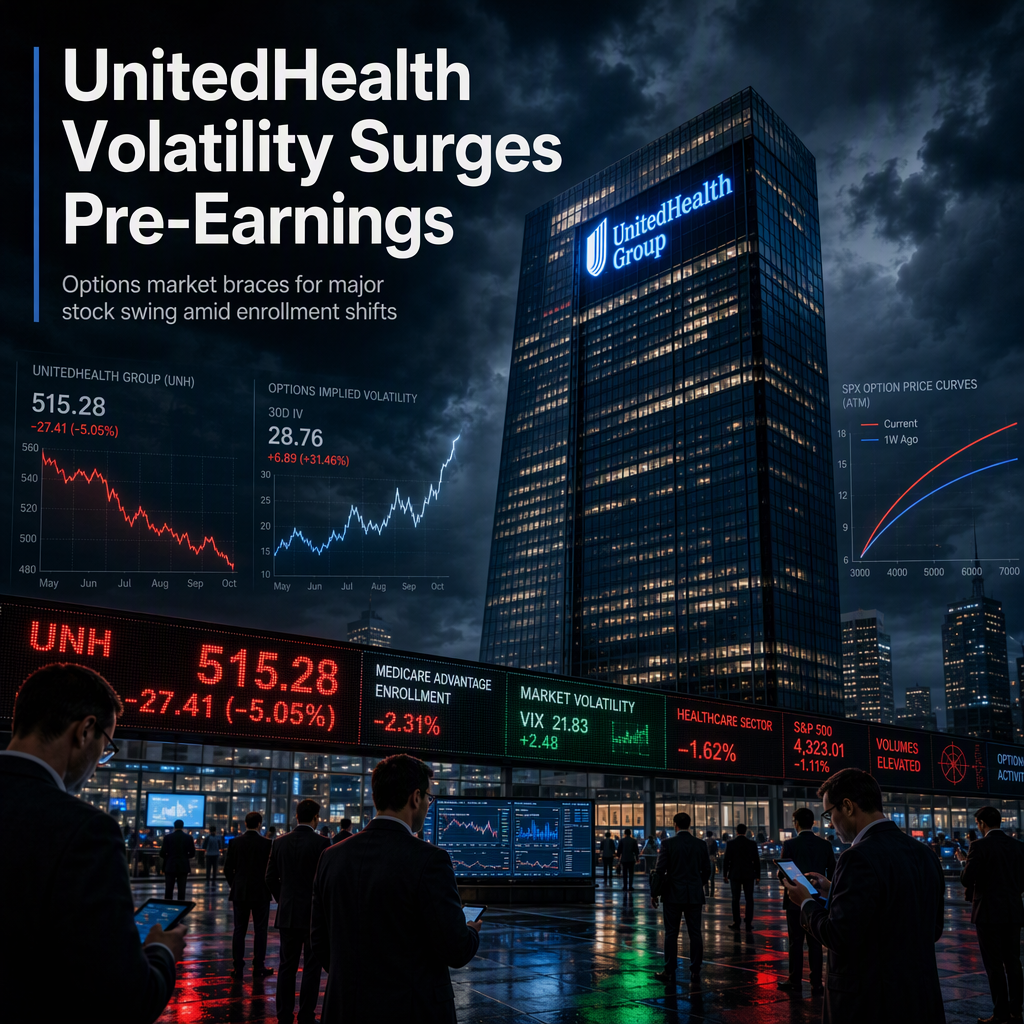
UnitedHealth Group is experiencing unusually high implied volatility in its shares ahead of its quarterly earnings report scheduled for October 13, 2026. Options prices, which reflect the cost of insuring the underlying stock, are currently running at twice the level of realized volatility, making them expensive and setting up favorable conditions for short premium strategies. Traders are considering selling November premium to reduce the cost of longer-dated January calls by more than half, as much of the negative impact from previous missteps appears to be already reflected in the stock price [1].
The company reports that 90% of its 52 million customers are based in the U.S., covering approximately 12% to 13.5% of the U.S. population. While growing enrollment remains critical for EPS growth, underwriting margin is also a key driver of operational profitability. UnitedHealth's commercial fee-based enrollment grew by approximately 2.9% year-over-year between 2024 and 2025, outpacing the 1.4% growth in the U.S. workforce, suggesting market share gains. Total Medicare enrollment increased by 4.5% over the same period. However, ACA marketplace-driven enrollment is expected to decline, posing a headwind for revenue in that segment, though it is a smaller part of the overall enterprise compared to Medicare and Commercial [1].
At 17 times forward earnings, with free cash flow at 5.7% of enterprise value and 6.5% of market cap, UnitedHealth's stock is not priced for a recovery. The market is currently implying 40% volatility for the stock, compared to a realized volatility of 20%. This elevated implied volatility is likely due to the company's history of significant earnings-related stock moves, including a nearly 20% drop in January and a similar decline in April 2025. The stock is currently trading about 12-13% below the midpoint of its two-year high and low range and has declined in five of the last eight earnings reports. Options prices imply a 6.5% move on earnings, the second highest implied move in almost two years, according to Cboe LiveVol data [1].
CONCLUSION
UnitedHealth is heading into its earnings report with elevated market expectations for volatility, reflecting both recent earnings-related price swings and ongoing challenges in enrollment growth. While the company has shown some market share gains in its commercial segment, headwinds remain from declining ACA enrollment and persistent healthcare cost pressures. The market is bracing for a significant move, as reflected in options pricing.