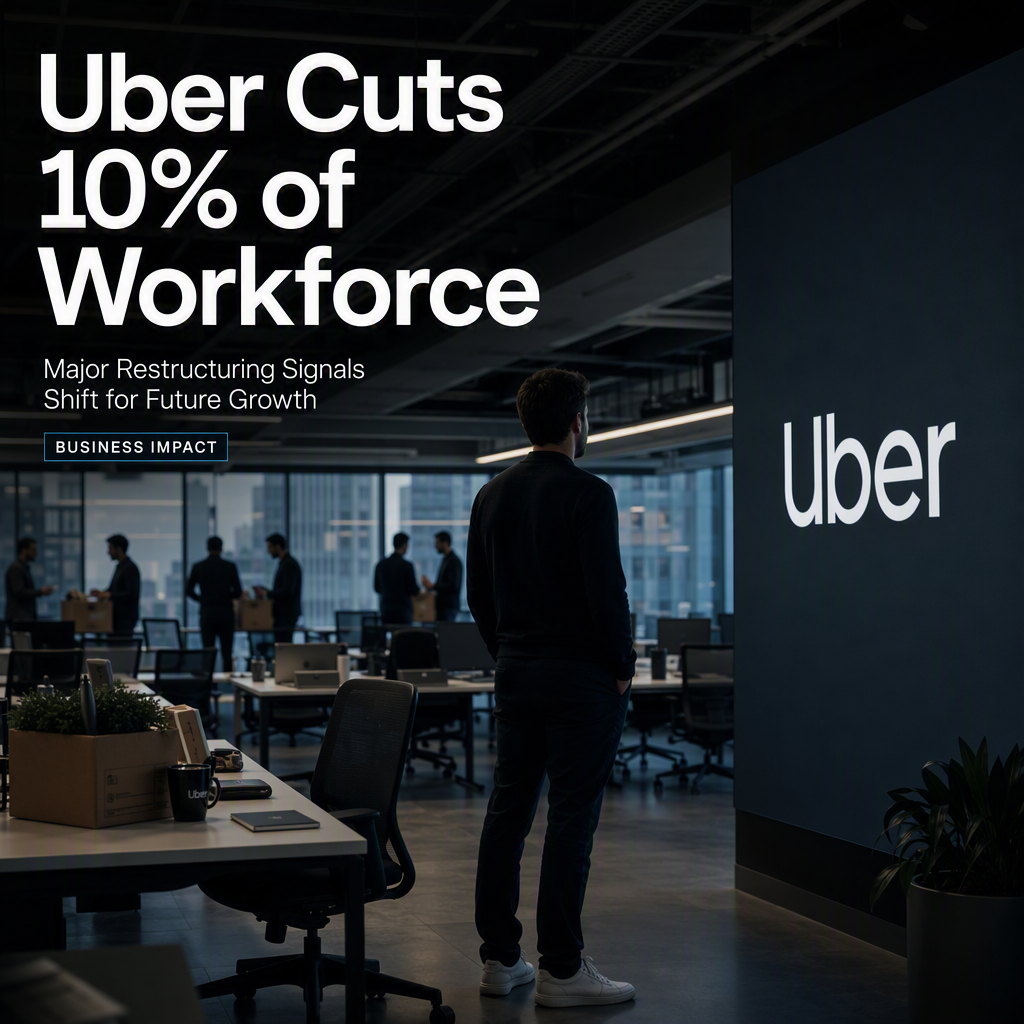
Uber has announced a significant restructuring effort that will see the company cut approximately 10% of its workforce, amounting to about 3,300 jobs, as part of a plan to streamline operations and simplify its organizational structure [1]. CEO Dara Khosrowshahi communicated the changes in a memo to employees, stating that Uber is removing management layers, simplifying teams, and refining the locations of its teams to make the company 'simpler and faster' and to 'create more capacity to invest in our future' [1].
Khosrowshahi emphasized that Uber's revenue has nearly tripled over the past five years, but this growth has also led to increased complexity, including more layers of management and fragmented team structures [1]. As part of the restructuring, Uber has reduced the number of employees sitting seven or more layers below the CEO by 20% and cut the number of 'micro-teams'—those with only one to two direct reports—by nearly 50% [1]. The company is also consolidating teams to eliminate duplication and speed up decision-making [1].
Additionally, Uber will concentrate its workforce in a smaller number of key hubs, such as New York and San Francisco, and is asking most remote workers to relocate to an office, with only about 1% of employees remaining remote going forward [1]. The company will continue to require employees to work from an office three days per week [1]. Khosrowshahi noted that these changes are intended to generate savings that will be reinvested in growth, innovation, and capabilities that matter most for the future [1].
Khosrowshahi acknowledged the disruptive nature of these changes but stated that making one significant shift was preferable to multiple smaller ones, with the goal of allowing employees to focus and do their best work as the company looks ahead [1].
CONCLUSION
Uber's decision to cut 10% of its workforce and restructure its organization marks a major shift aimed at simplifying operations and positioning the company for future growth. The move is expected to generate cost savings and improve efficiency, though it represents a significant change for employees. Market participants are likely to view the restructuring as a high-impact event with potential long-term benefits for Uber's competitiveness and innovation.