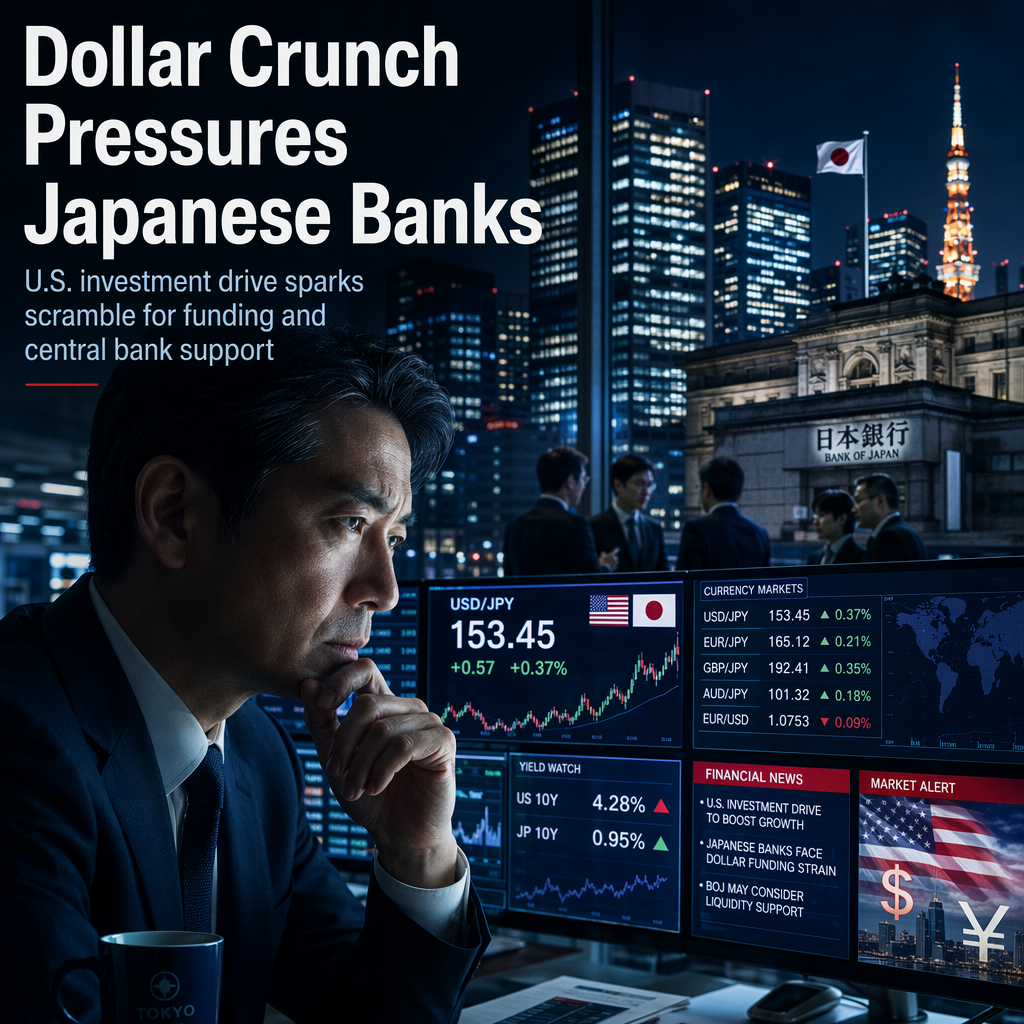
Japan's leading banks, alongside the government-backed Japan Bank for International Cooperation (JBIC), have initiated financing for the first round of projects agreed upon during U.S.-Japan tariff negotiations. However, concerns are emerging regarding the difficulty of securing additional dollar funds to meet these investment commitments [1]. Private sector officials have requested assistance from the government and the Bank of Japan (BOJ) to help secure foreign exchange, underscoring worries about dollar availability as Japanese banks ramp up their U.S. investment activities [1].
The banks are actively exploring strategies to raise dollar funds without disrupting financial market stability. These efforts include considering foreign exchange swaps and collaborating with government and central bank institutions to bolster dollar reserves [1]. The challenge is compounded by ongoing market volatility, with officials emphasizing the need to avoid negative impacts on the yen-dollar exchange rate or liquidity for other market participants [1].
Market analysts highlight that the ability of Japanese banks to secure sufficient dollar funding is critical for maintaining their planned investment pace in the U.S. and preventing bottlenecks that could delay project execution. Investors are closely monitoring these developments, as the outcome may influence broader market sentiment and trading strategies involving the yen and dollar pair [1].
While no specific price levels or technical indicators were mentioned, the prevailing market consensus is one of heightened caution as Japanese banks intensify their dollar acquisition efforts [1].
CONCLUSION
Japanese banks are facing significant challenges in securing dollar funding for their U.S. investment commitments, prompting calls for government and central bank support. The situation is generating cautious sentiment in the market, with analysts and investors closely watching for potential impacts on the yen-dollar exchange rate and broader financial stability.