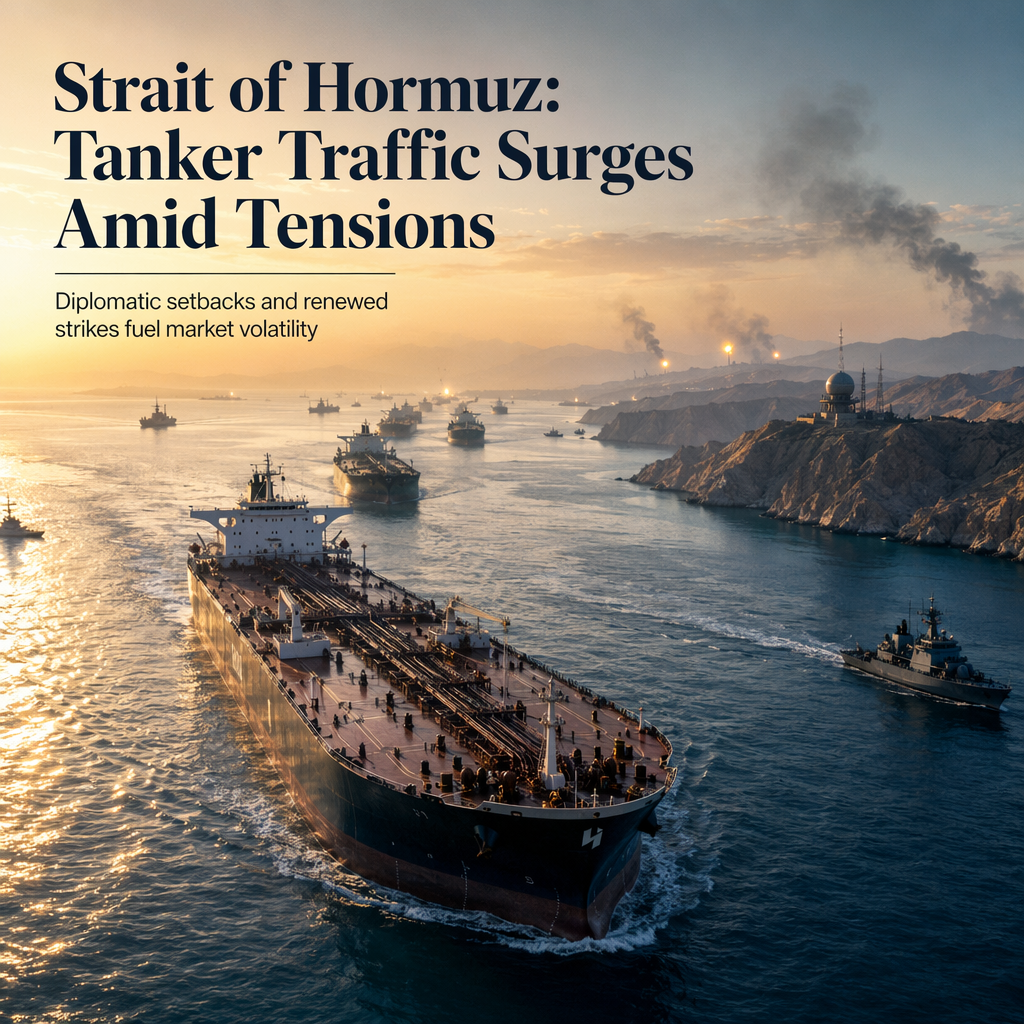
The Strait of Hormuz, a critical chokepoint for global oil shipments, has seen a notable increase in tanker traffic following the signing of a memorandum of understanding between the U.S. and Iran. In the week since the agreement, 98 tankers passed through the strait, marking the highest level since the onset of the conflict, though this figure still represents only 25% of prewar traffic levels, highlighting ongoing supply disruptions in the region [1]. Despite this uptick, analysts caution that more ships are leaving than entering, suggesting that supply constraints could persist and continue to impact global oil supply and pricing in the near future [1].
Market reactions have been mixed in response to these developments. Initially, crude oil prices fell to prewar levels as traders anticipated a gradual normalization of exports through the Strait of Hormuz [1]. However, renewed military strikes between the U.S. and Iran have since reignited concerns over Middle East oil supplies, causing oil prices to edge higher. West Texas Intermediate (WTI) futures rose by 0.71% to $69.72 a barrel, while Brent crude climbed 0.36% to $72.25, after both benchmarks had dipped below key levels not seen since before the conflict began in late February [2].
Diplomatic efforts to resolve the conflict have encountered setbacks. Talks aimed at ending hostilities have reportedly been paused following U.S. strikes on Iranian military sites in retaliation for attacks on commercial shipping in the Strait of Hormuz [2]. While a Pakistani source involved in negotiations confirmed the pause, a senior Trump administration official disputed claims that talks had been abandoned, stating that technical discussions regarding the implementation of the memorandum of understanding are still on track [2]. A U.S. official further indicated that both sides would stand down for now, allowing vessels to move freely, and that technical talks are slated to continue [2].
The situation remains volatile, with President Donald Trump warning Iran of "devastating consequences" after U.S. forces targeted Iranian missile and drone storage locations and coastal radar sites in response to violations of the ceasefire agreement [2]. Neighboring countries Kuwait and Bahrain also reported missile and drone attacks overnight, underscoring the ongoing risks to regional stability and energy markets [2].
CONCLUSION
Tanker traffic through the Strait of Hormuz has increased but remains well below prewar levels, reflecting persistent supply disruptions. While initial optimism led to a drop in oil prices, renewed U.S.-Iran hostilities and diplomatic uncertainty have pushed prices higher and heightened market volatility. The outlook for oil supply and regional stability remains uncertain as technical talks continue amid ongoing military tensions.