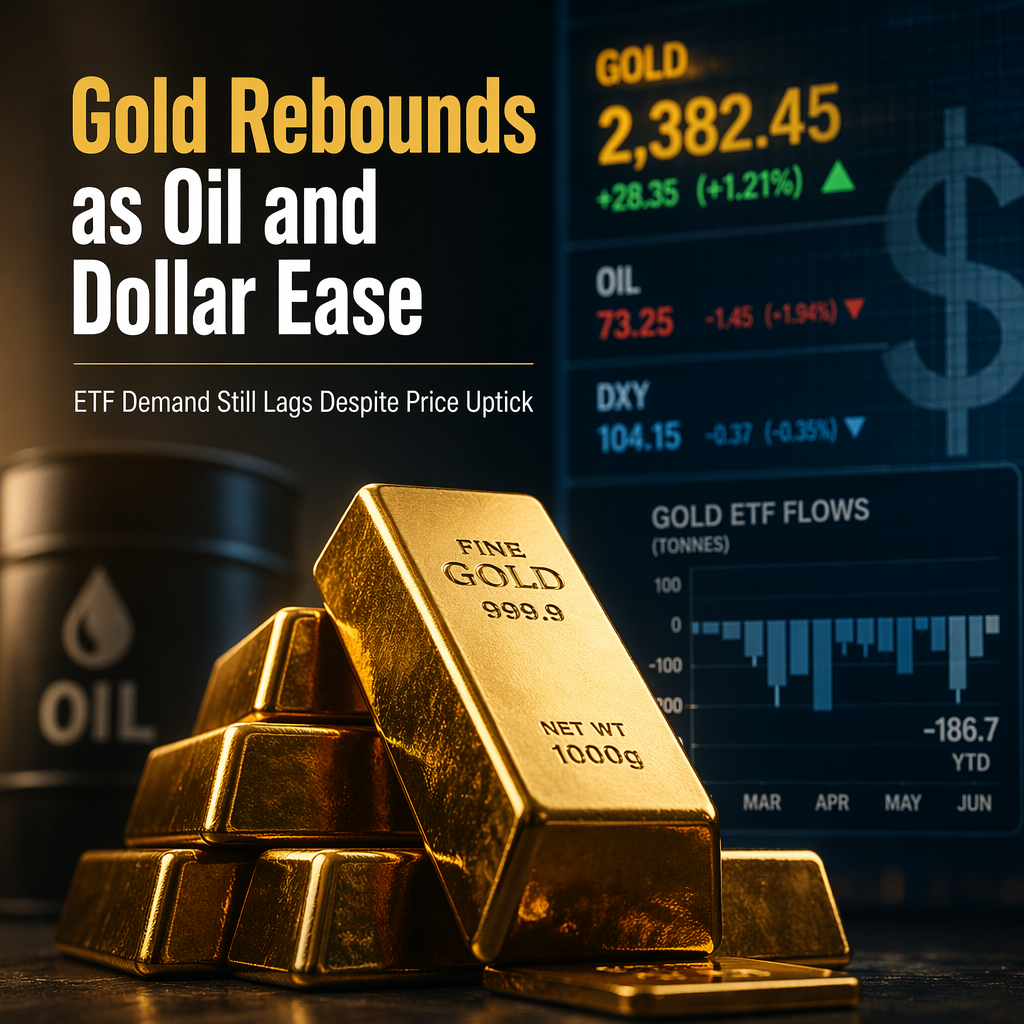
Gold prices have experienced a tentative rebound as oil prices eased from their recent spike, alleviating some pressure on inflation expectations, yields, and concerns over further Federal Reserve tightening, according to OCBC strategists Christopher Wong and Sim Moh Siong [1]. The recovery in gold was also supported by a softer US Dollar following a recent selloff across the precious metals complex [1]. Despite this price recovery, ETF flows have not indicated a decisive return of investor demand, with Bloomberg data showing that total known gold ETF holdings remain lower month-to-date, although they have stabilized slightly in recent days [1].
Central banks continue to provide structural support for gold, with Poland highlighted as a notable buyer this year. Governor Glapinski stated that Poland has purchased 82 tonnes of gold in 2023, bringing its total holdings to 632.4 tonnes, with a target to accumulate 700 tonnes [1]. In the near term, gold could maintain a better tone if oil prices and yields remain contained, but a stronger rally would likely require softer US economic data or further easing in Fed tightening concerns [1].
Technically, gold was last seen at 4125, with mild bullish momentum on the daily chart and a rising RSI, suggesting risks are currently skewed to the upside. Key resistance levels are noted at 4140 (21 DMA) and 4200, while support is seen at 4021 (week’s low) and 3943 (year’s low) [1].
CONCLUSION
Gold's recent rebound is primarily attributed to relief from easing oil prices and a softer US Dollar, rather than renewed investor demand as ETF flows remain subdued. Structural support from central bank buying, particularly by Poland, underpins the market, but a sustained rally may require further positive catalysts such as softer US data or reduced Fed tightening expectations.