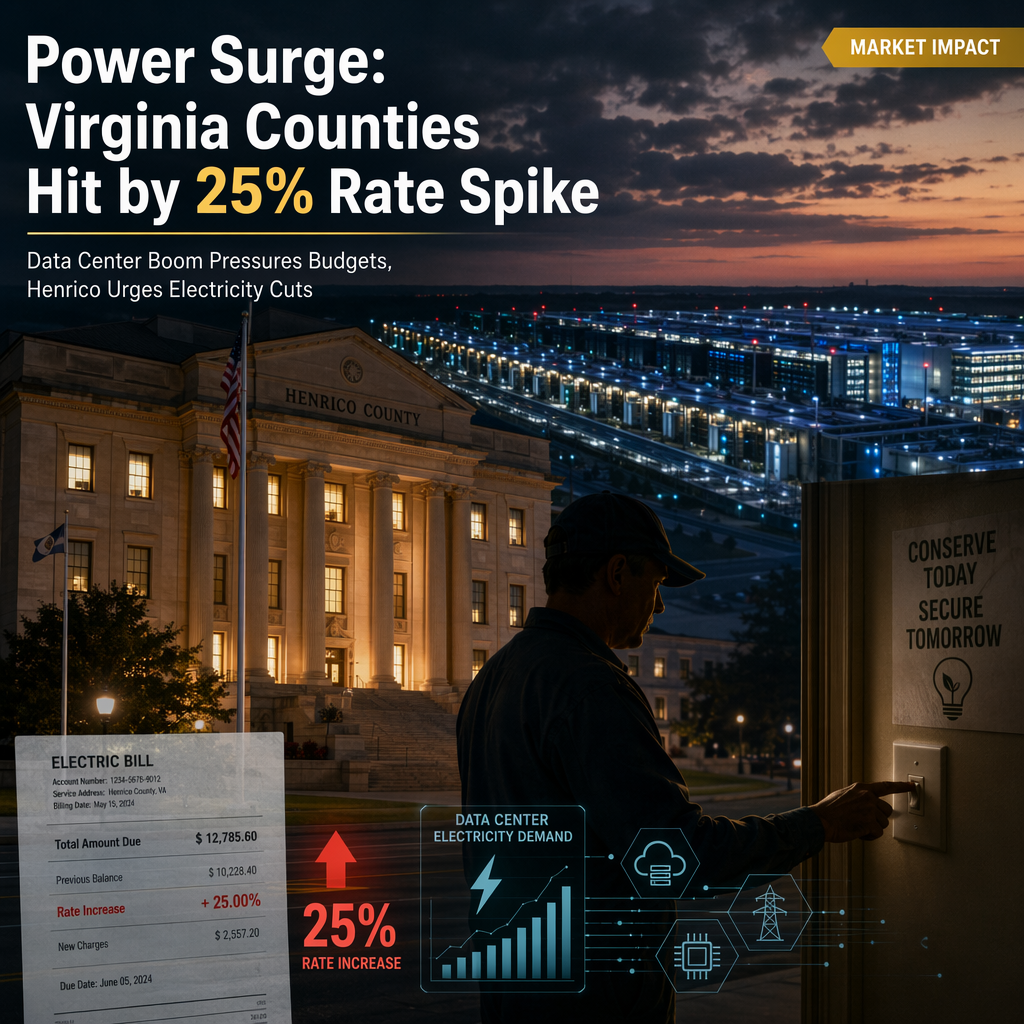
Henrico County in Virginia is urging its government and school employees to reduce electricity usage following a 25% increase in electricity rates across the state, effective July 1. County manager John Vithoulkas communicated the request in a June 26 email, highlighting that the rate hike will increase Henrico's electricity costs by an estimated $5 million in the next fiscal year. He also warned that further rate increases are anticipated in the coming years [1].
Vithoulkas outlined several measures for employees to cut power consumption, such as turning off lights, shutting down computers, closing blinds, and unplugging chargers. He compared the current austerity measures to those implemented during the late 2000s Great Recession, noting that each department is seeking ways to reduce expenses by 3% in the next fiscal year's budget [1].
The 25% rate increase applies to all counties that are members of the Virginia Energy Purchasing Governmental Association (VEPGA), which includes most municipalities north of Richmond. The surge in electricity rates comes as Virginia, particularly its northern and central regions, experiences rapid growth in data center construction. According to the Virginia Joint Legislative and Audit Review Commission (JLARC), Northern Virginia hosts more than a quarter of U.S. data centers and 13% of the world's, with central Virginia, including Richmond, absorbing new builds as the north nears capacity [1].
While Vithoulkas did not directly attribute the rate hikes to the data center boom, JLARC's 2023 assessment found that the industry's expansion has substantially driven up energy demand in Virginia. The report concluded that increased energy demand from data centers will likely raise system costs for all customers, including those not associated with data centers [1].
CONCLUSION
Virginia's 25% electricity rate hike is placing significant budgetary pressure on counties like Henrico, prompting immediate power-saving measures. The rapid expansion of data centers is a key factor driving up energy demand and costs, with further increases expected. This development signals high market impact for energy consumers and local governments in the region.