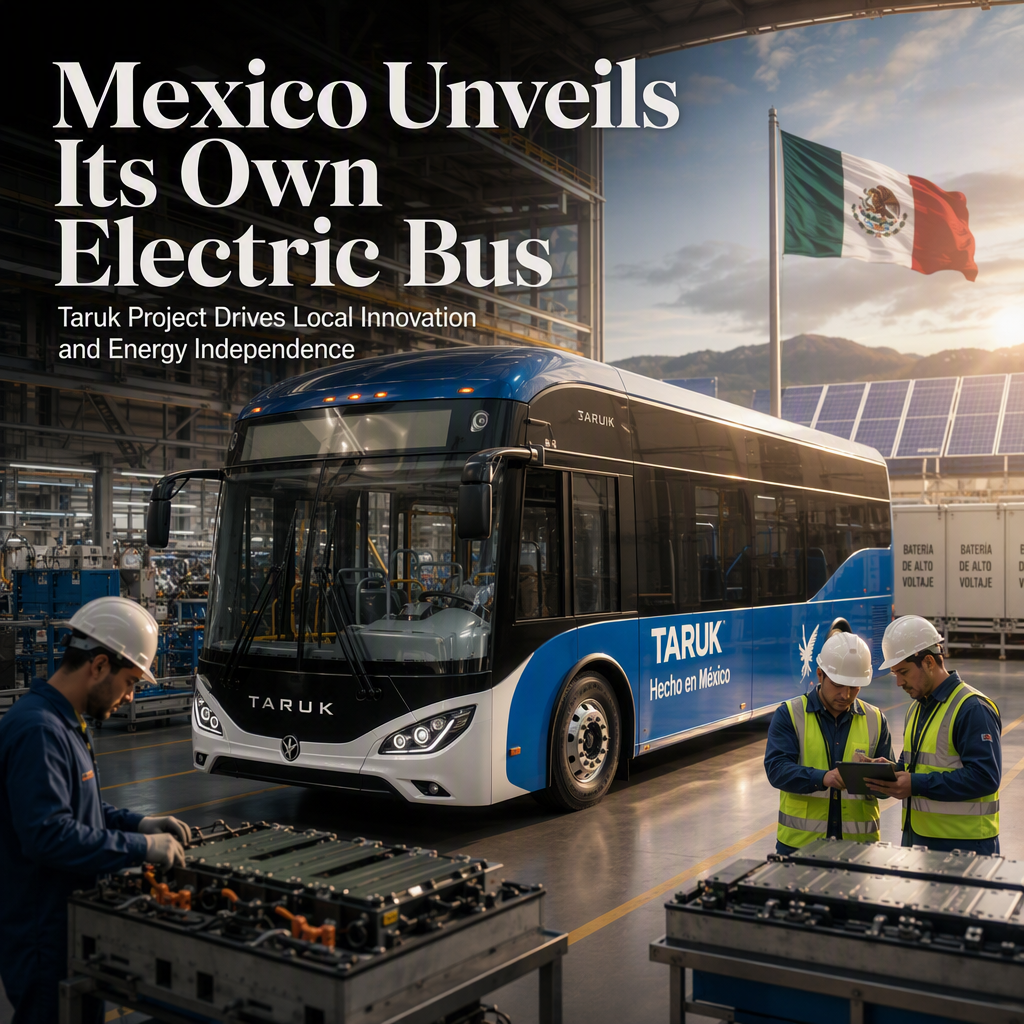
Mexico has initiated the development of a domestically produced electric bus, known as the Taruk project, as part of a strategic effort to decrease reliance on Chinese manufacturers and strengthen its own industrial base in the electric vehicle (EV) sector [1]. The project aims to localize up to 80% of electric bus components and establish a domestic battery industry, reflecting Mexico's ambition to capture more value from the global transition to clean transportation [1].
The Taruk project is advancing into full-scale development, with the goal of building local expertise in battery manufacturing and other critical EV components [1]. This initiative is positioned as a blueprint for future Mexican EV projects, supporting the country's broader strategy to create jobs, enhance industrial capabilities, and secure a stronger role in the global EV supply chain [1].
The move comes amid a global trend of falling electric vehicle prices, which have dropped below those of hybrids due to the proliferation of affordable Chinese cars and increased international competition [1]. By focusing on local content and technology transfer, Mexico aims to benefit from growing global demand for electric vehicles while reducing risks associated with foreign supply chains, particularly those tied to China [1].
No specific market reactions, analyst opinions, or forward-looking financial projections are mentioned in the article [1].
CONCLUSION
Mexico's Taruk electric bus project marks a significant step toward reducing dependence on Chinese EV imports and building a robust domestic supply chain. By localizing production and investing in battery technology, Mexico aims to strengthen its position in the global clean mobility market and foster industrial growth.