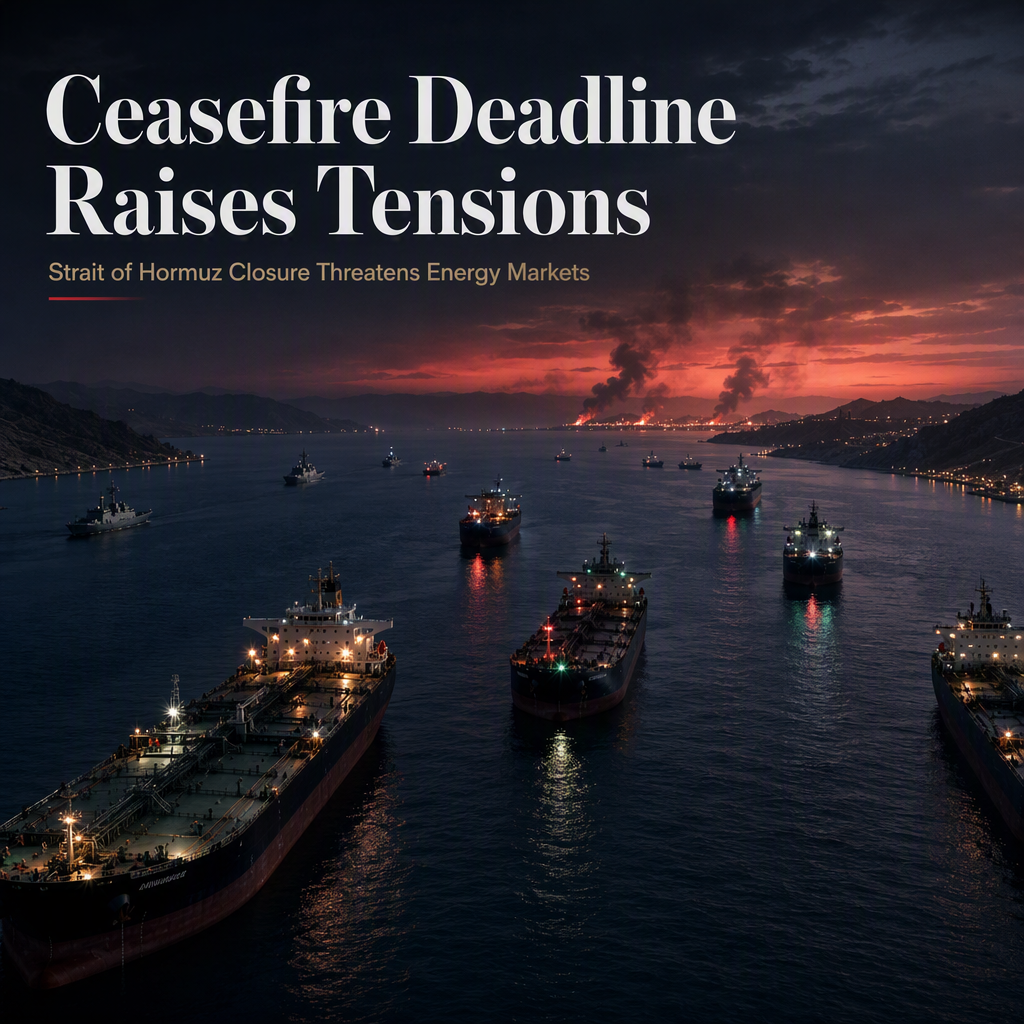
The June ceasefire between the United States and Iran is set to reach its nominal expiry on Monday, with negotiations reportedly deadlocked and no resolution in sight [1]. The Strait of Hormuz remains shut, a critical chokepoint for global oil shipments, which could have significant implications for energy markets [1]. Over the weekend, Israel and Hezbollah engaged in renewed hostilities, marking the deadliest period since the truce began [1].
The ceasefire deadline coincides with a relatively light US economic calendar, where the only potentially rate-moving event is the release of the FOMC minutes scheduled for Wednesday [1]. The upcoming Jackson Hole symposium is also noted as a key backdrop for market participants, though no specific projections are published this week due to the ongoing uncertainty [1].
The article outlines several scenario lanes and asset levels, indicating heightened volatility and risk for the week ahead, particularly in energy and geopolitical-sensitive markets [1]. No forward-looking analyst opinions or projections are provided, as the situation remains fluid and unpredictable [1].
CONCLUSION
The expiry of the US-Iran ceasefire, ongoing closure of the Strait of Hormuz, and renewed conflict between Israel and Hezbollah signal elevated geopolitical risk and potential market volatility. With limited economic data releases and uncertainty prevailing, investors are likely to focus on FOMC minutes and developments in the region for further direction.