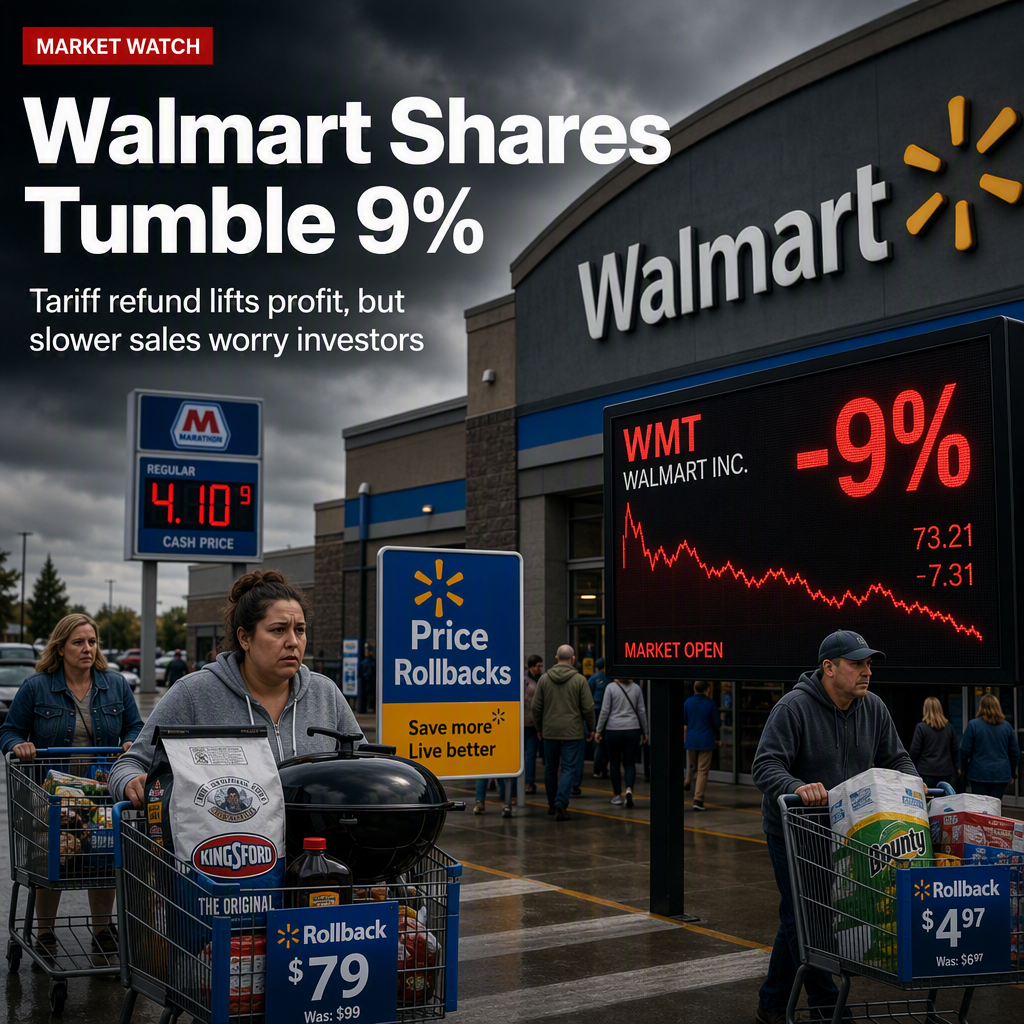
Walmart reported that it received nearly $3 billion in tariff refunds, which the company used in part to cut prices for consumers facing inflationary pressures. This windfall contributed to a boost in Walmart’s profit for the quarter, as detailed in its latest earnings report released Thursday [1]. CEO John Furner emphasized that maintaining the lowest prices across a basket of goods is helping Walmart build trust with customers during a period when many households are closely managing their budgets [1].
Despite the positive impact on profits from the tariff refunds, Walmart’s U.S. same-store sales growth slowed to just 2.6%, marking the lowest rate the company has reported in years [1]. Wall Street reacted negatively to the tepid sales numbers, with Walmart’s stock plunging 9% Thursday morning. The company’s shares are now down more than 20% from their recent high in May, causing Walmart to fall out of the $1 trillion market capitalization club [1].
Walmart attributed the disappointing sales growth in part to new federal drug pricing rules that slashed the price of several expensive medications for Medicare enrollees. Additionally, the company is bracing for more than $2 billion in added costs this year due to higher fuel prices, which are a result of soaring global oil prices linked to the U.S. and Israel’s war with Iran [1].
The broader economic context is challenging for consumers, with the inflation rate in July rising to 3.4% year-over-year, up from 2.4% before the war. Wage growth lagged behind at 3.2% last month. The national average for a gallon of regular gas increased from $2.98 before the war to $4.10, prompting consumers to make trade-offs in their spending. Walmart’s CFO John David Rainey noted that when fuel prices rose above $4, there appeared to be a psychological impact on consumer choices, reinforcing Walmart’s strategy to lean into lower prices. The company implemented more than 11,000 price rollbacks in the second quarter, including cuts on summer barbecue items [1].
CONCLUSION
Walmart’s $3 billion tariff refund provided a temporary boost to profits and enabled price cuts, but slower same-store sales growth and rising costs from fuel and regulatory changes weighed heavily on investor sentiment. The 9% stock drop and exit from the $1 trillion club underscore market concerns about consumer resilience and Walmart’s near-term growth prospects. The company’s focus on price leadership may help retain customers, but economic headwinds remain significant.