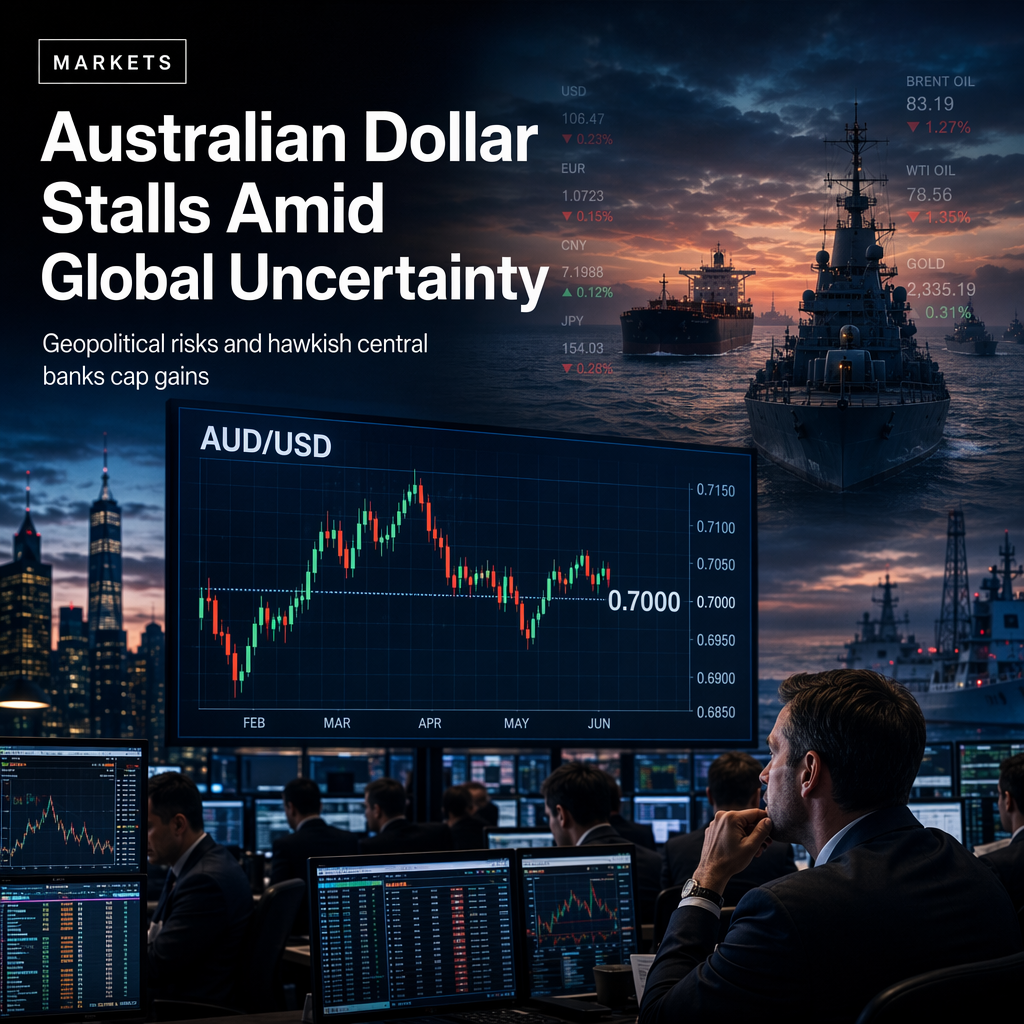
The Australian Dollar (AUD) experienced a volatile session on Tuesday, initially climbing from just below the 0.7000 level to a session high near 0.7050, before reversing gains and ending the day flat near 0.7000 [1]. The rally was capped at the declining 50-day Exponential Moving Average, a technical barrier that has repeatedly stalled advances throughout the month [1].
Geopolitical tensions, particularly the ongoing strike campaign against Iran and a maritime embargo declared by Houthi allies against Saudi Arabia, have driven crude oil prices higher. This energy price increase contributes to Australian inflation and supports the Reserve Bank of Australia's (RBA) tightening bias. The RBA's cash rate currently stands at 4.35% after three hikes this year, with the June meeting keeping further increases on the table. A majority of surveyed economists anticipate one more rate hike at the 11 August meeting [1].
On the other side, these same geopolitical risks have fueled safe-haven demand for the US Dollar and increased expectations for Federal Reserve rate hikes. Markets are fully pricing in a Fed hike by December, with roughly two-thirds odds of a move by mid-September and some expecting two hikes. This dynamic pushed USD/JPY above 163.00 for the first time since 1986. However, a slowing US weekly hiring gauge, the only US data point on Tuesday, had no significant impact on the Dollar [1].
Commodity markets, typically a key driver for the AUD, offered little support. Iron ore prices remained below $100 per tonne, constrained by rising supply, weak Chinese steel-mill margins, and high port inventories. Beijing's stimulus pledges have yet to translate into increased construction demand, leaving Australia's terms of trade stagnant at a time when the currency needs a boost. Additionally, new US tariffs and the threat of broader trade actions present a further drag on risk-sensitive currencies like the AUD [1].
CONCLUSION
The Australian Dollar remains range-bound as geopolitical tensions and hawkish stances from both the RBA and the Fed offset each other. With commodity prices subdued and trade risks looming, the currency lacks a clear catalyst for movement. Market participants are watching for further central bank actions and developments in global trade policy.