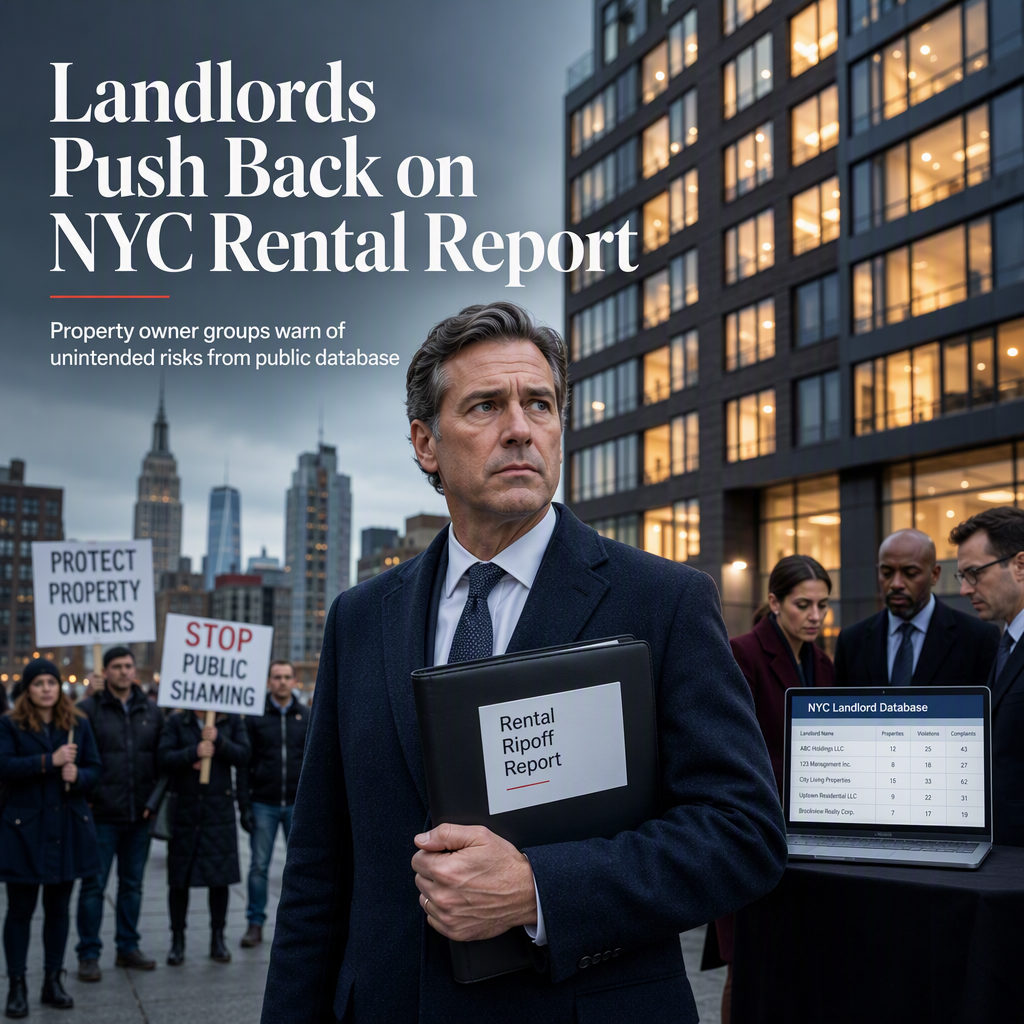
New York City Mayor Zohran Mamdani has released a 'Rental Ripoff Report' that argues residents are paying excessive rents without receiving adequate value, and outlines 23 proposals to address these concerns. In addition, the city's Department of Finance published a searchable database listing affluent property owners whose non-primary residences could be subject to a proposed pied-à-terre tax. This database allows users to search properties and view the names and addresses of owners, a move that critics argue could expose them to harassment and public safety risks. A spokesperson for the department stated that publication of the property roll was required by state law [1].
The Real Estate Board of New York (REBNY) President James Whelan criticized Mamdani's approach, stating, 'The Mayor's report focuses on symptoms, not causes,' and argued that record-high rents are due to insufficient housing supply and challenges in heavily rent-stabilized buildings. Whelan further contended that the administration is unfairly characterizing the property owner industry and called for policies that increase and preserve housing supply to improve affordability [1].
Whelan also expressed concern that the database, released before the tax's enactment, adds confusion and demonstrates that the proposed second-home tax is broader and more complicated than supporters suggest. He warned that many smaller property owners could be inadvertently affected, not just the ultra-wealthy residents the tax targets [1].
Ann Korchak, board president of Small Property Owners of New York (SPONY), also condemned Mamdani’s influence on city politics, highlighting ongoing tensions between property owners and the administration [1].
CONCLUSION
The release of the 'Rental Ripoff Report' and the landlord database has sparked significant backlash from property owner advocacy groups, who argue that the measures are overly broad and could have unintended consequences for smaller landlords. Critics urge the administration to focus on increasing housing supply rather than targeting property owners. The controversy signals ongoing debate over how best to address New York City's housing affordability crisis.