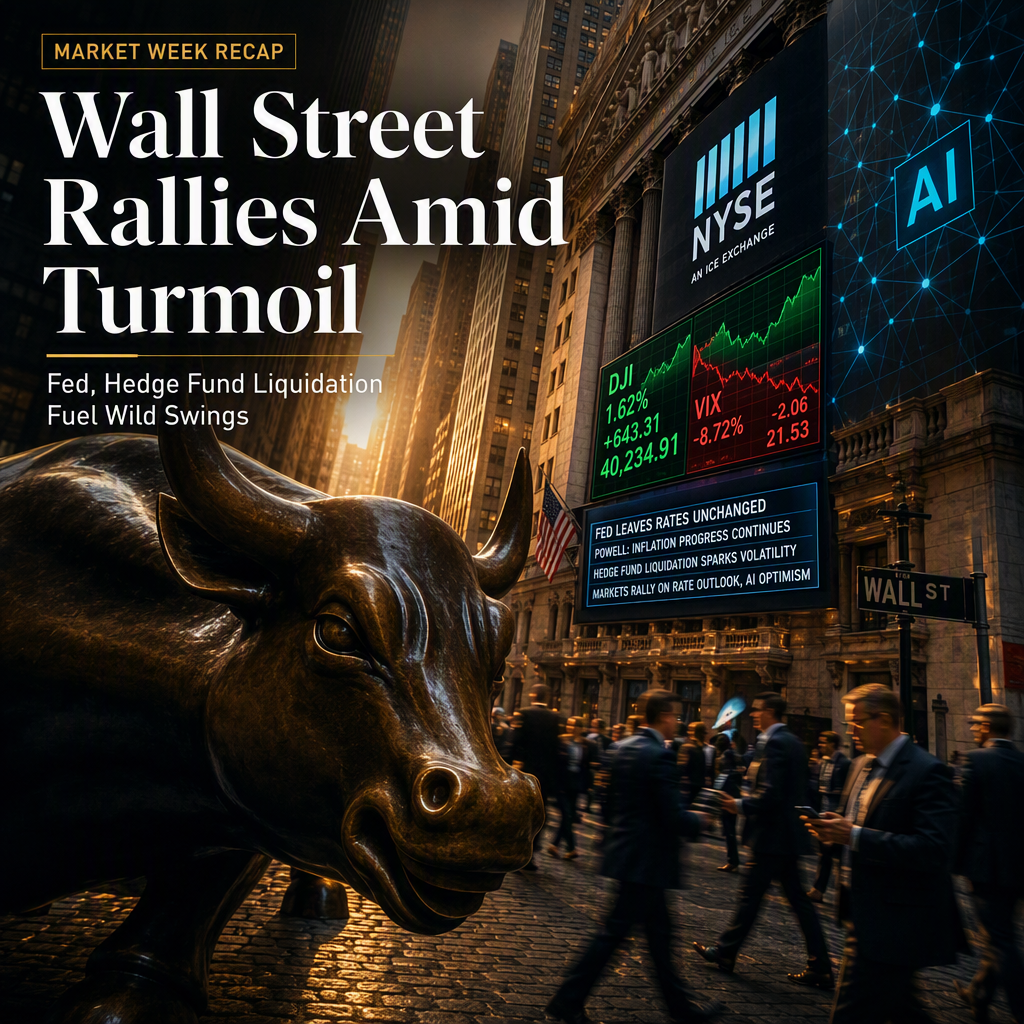
Last week, Wall Street experienced a return to gains following a period of volatility driven by a hawkish Federal Reserve meeting, significant swings in chip stocks, and a pivotal round of Big Tech earnings. The Dow Jones Industrial Average rose 1% for the week, ending a three-week losing streak, while the S&P 500 gained 1% and the Nasdaq climbed 1.6%, both avoiding three consecutive weeks of losses. However, for the month of July, the Dow edged up 0.32%, marking its fourth consecutive monthly gain, while the S&P 500 slipped 0.13% and the Nasdaq fell 3.2%, both posting back-to-back monthly declines [1].
The Federal Reserve left interest rates unchanged, but three out of twelve members of the central bank's policymaking committee voted for a rate hike, reflecting concerns about persistent inflation above the Fed's 2% target. Higher energy prices, driven by renewed Iran war tensions, contributed to inflationary pressures. Following the Fed's decision, the 10-year Treasury yield climbed above 4.67% and the 30-year yield surged above 5.2%, reaching its highest level since 2007. This spike in yields led to a sharp sell-off in equities, with the Dow plunging more than 1,100 points, or 2.2%, on Wednesday—its worst one-day decline since April 2025. Despite this, stocks recovered and finished the week higher, with the 10-year yield topping 4.7% on Friday. Oil prices were higher on Friday but ended the week lower overall [1].
A major factor in the market's volatility was the forced liquidation of positions by Situational Awareness, a highly leveraged hedge fund founded by former OpenAI researcher Leopold Aschenbrenner. The fund's unwinding of troubled bets on Thursday stabilized the previously turbulent AI trade. Market commentator Jim Cramer described the liquidation as a strong buy signal, suggesting the removal of indiscriminate selling pressure could mark a turning point. The Nasdaq surged on Thursday and Friday, although it remained down for the month. Cramer also highlighted the episode as a warning about the risks of investing with borrowed money, reiterating his advice against buying stocks on margin [1].
Earnings from hyperscalers during the week further emphasized the market's selective approach to AI-related spending, though specific details were not provided in the article [1].
CONCLUSION
Wall Street overcame a volatile week marked by a hawkish Fed stance and the forced liquidation of a major hedge fund, ultimately ending with gains across major indices. The episode highlighted ongoing inflation concerns, the impact of leveraged trading, and the market's cautious optimism. Investors remain attentive to central bank policy and the stability of leveraged funds as key drivers of market sentiment.