
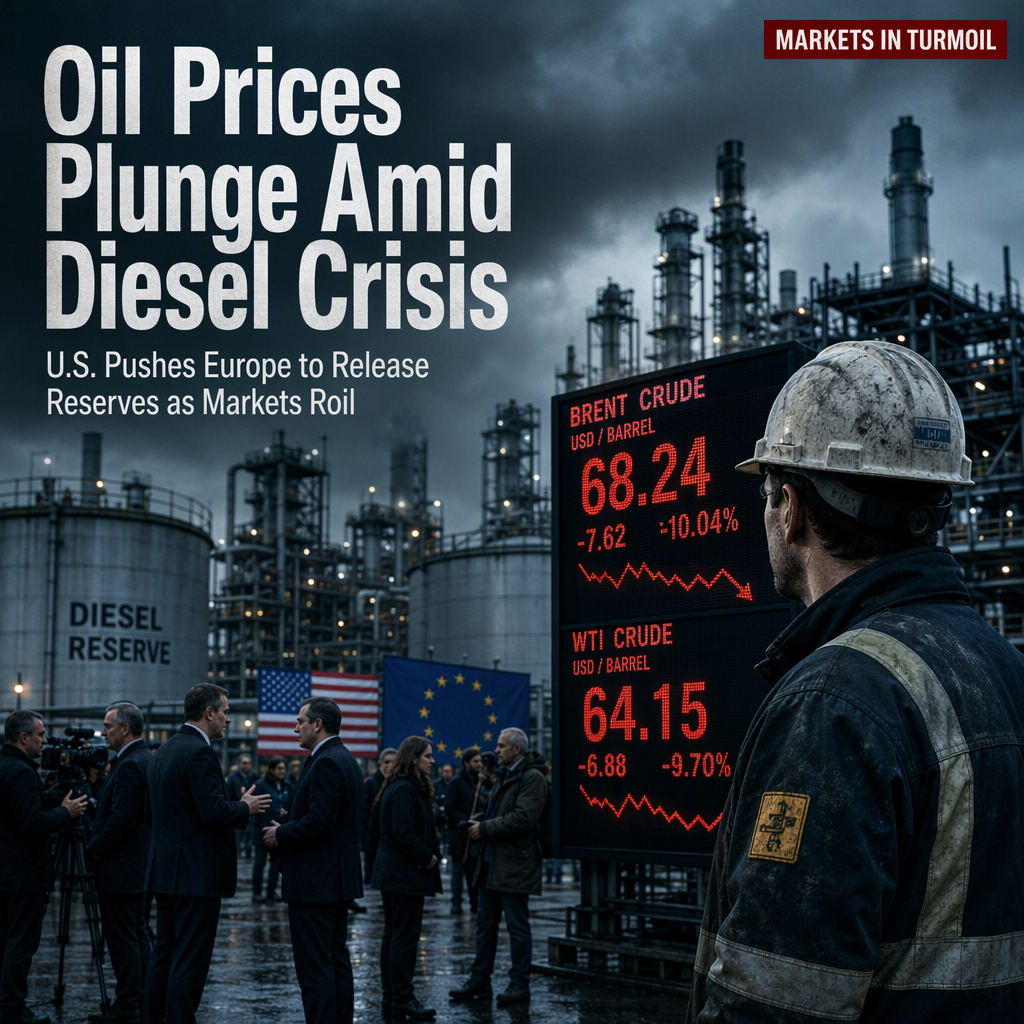
Oil prices fell sharply on Friday morning, with Brent crude futures for December down 2.5% to $99.51 per barrel and U.S. West Texas Intermediate futures for November dropping 3.6% to $89.47, following reports that European Union member states are considering releasing diesel and crude reserves to address a global supply shortage [1]. This move was reportedly prompted by a French proposal for EU nations to release 50 million barrels of diesel and International Energy Agency members to release 50 million barrels of crude oil, although CNBC could not independently verify this report and official comments from the French government and IEA were not immediately available [1].
The push for reserve releases comes amid mounting pressure from the Trump administration, with U.S. Treasury Secretary Scott Bessent urging European countries to "accelerate delivery on their existing commitments and make additional supplies immediately available to address ongoing disruptions" [1][2]. Bessent emphasized that "American farmers, truckers, and businesses should not be left carrying the burden of a global diesel shortage" [1][2]. President Donald Trump has also stated he "may" ask European countries to release diesel reserves and is "very seriously" considering a U.S. diesel export ban, though he appeared to cool on the idea this week, acknowledging potential negative impacts on gasoline prices [2].
Average U.S. diesel prices surged to a record high of $6.50 per gallon late last month, according to AAA, driven by supply disruptions linked to the Iran war and Russia's invasion of Ukraine [2]. The U.S. supplied around half of the EU's diesel imports in August, highlighting Europe's vulnerability to a possible U.S. export ban [2]. EU member states are scheduled to hold crisis talks on Friday to develop a coordinated response to soaring diesel prices, with EU trade chief Maros Sefcovic stating that any U.S. move to restrict diesel exports would be unexpected and negatively impact Europe's economic outlook [2].
Energy strategists at Macquarie Group noted that the U.S. position on the global diesel crisis has taken on a global dimension, reflecting the interconnectedness of energy markets [2]. The U.S. government faces mounting political pressure to address high fuel prices ahead of the November midterm elections [2].
CONCLUSION
The coordinated push for reserve releases and potential U.S. export ban have triggered significant volatility in oil markets, with prices dropping sharply. Both the U.S. and EU are grappling with record diesel prices and supply disruptions, prompting urgent crisis talks and policy considerations. The outcome of these discussions and any policy actions will be closely watched for their impact on global energy markets.