
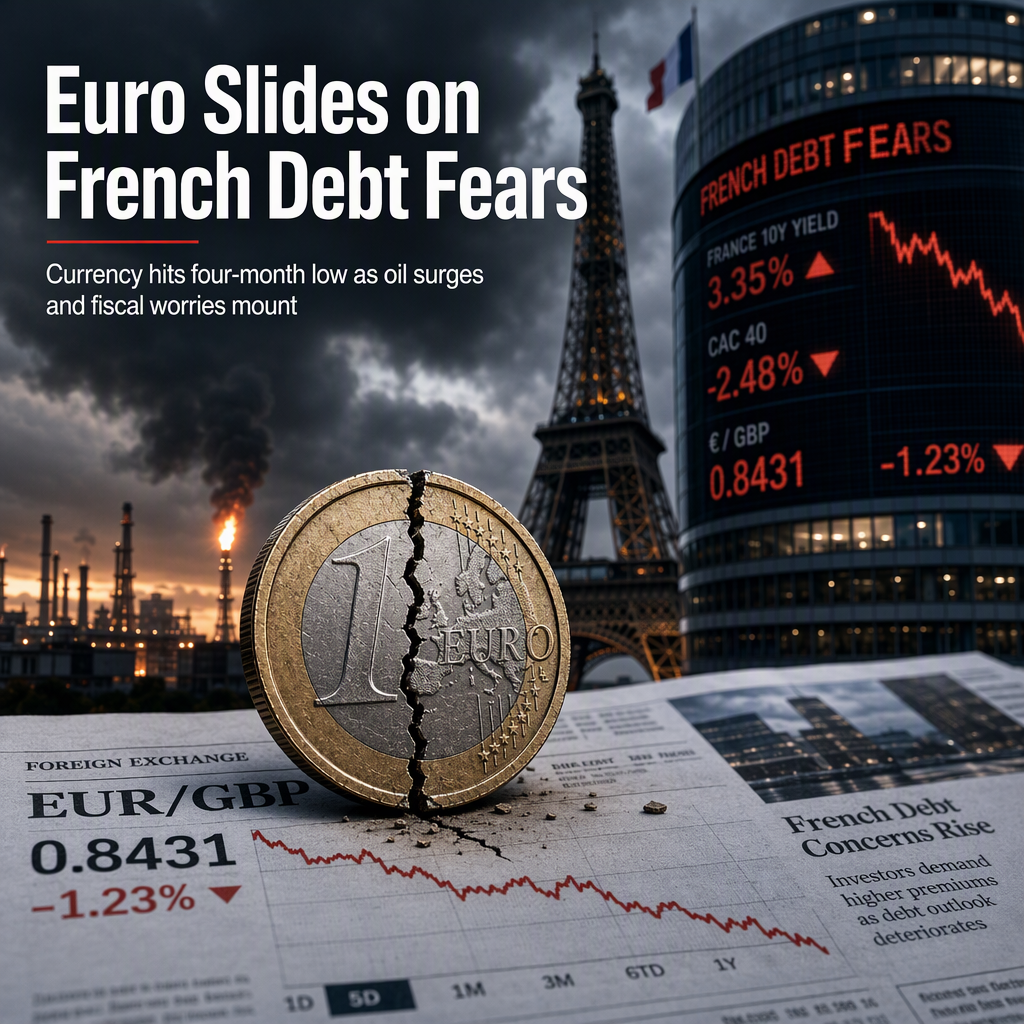
The Euro (EUR) continued to weaken against the British Pound (GBP) on Friday, poised to close its worst weekly performance in four months with a 1% decline. This sell-off has been driven by escalating concerns over France’s fiscal health and surging Oil prices, which have weighed heavily on the Euro. EUR/GBP rallies were capped below 0.8525 on Thursday, with the pair approaching a four-month low of 0.8508 ahead of the release of the Eurozone’s consumer inflation data [1].
The Eurozone’s preliminary Harmonised Index of Consumer Prices (HICP) is expected to show headline inflation accelerating to a 3.6% year-on-year rate in September, up from 3.2% in August. Core inflation is anticipated to rise more moderately to 2.5% year-on-year, compared to 2.4% in the previous month. These inflation figures add pressure on the European Central Bank to consider further interest rate hikes, but persistent concerns about France’s rising borrowing costs continue to overshadow the Euro’s prospects. Notably, the yield spread between German and French bonds surged beyond 140 basis points on Friday, highlighting market anxiety over French fiscal stability [1].
The French government presented its 2027 budget bill on Thursday, which includes measures aimed at reducing the fiscal deficit. However, the likelihood of successful implementation is seen as marginal due to a divided parliament [1]. Meanwhile, Brent Oil prices have climbed above $101.00, up nearly 4% for the week, exacerbating economic pressures on the Eurozone as negotiations between the US and Iran remain stalled [1].
On the UK side, the economic calendar was light, but the Pound found some support from hawkish comments by Bank of England officials. Nevertheless, Rabobank strategists cautioned that with over 100 basis points of policy tightening already priced in over the next 12 months, there is limited room for sustainable GBP gains from further rate hikes. They suggest the Pound could soften as rate hike risks are reined in [1].
CONCLUSION
The Euro’s sharp decline this week reflects mounting market concerns over French fiscal stability and the impact of rising Oil prices, despite expectations of higher Eurozone inflation. While the European Central Bank faces pressure to raise rates, persistent debt worries and external shocks continue to weigh on the currency. The British Pound, meanwhile, may see limited further upside as rate hike expectations are already largely priced in.