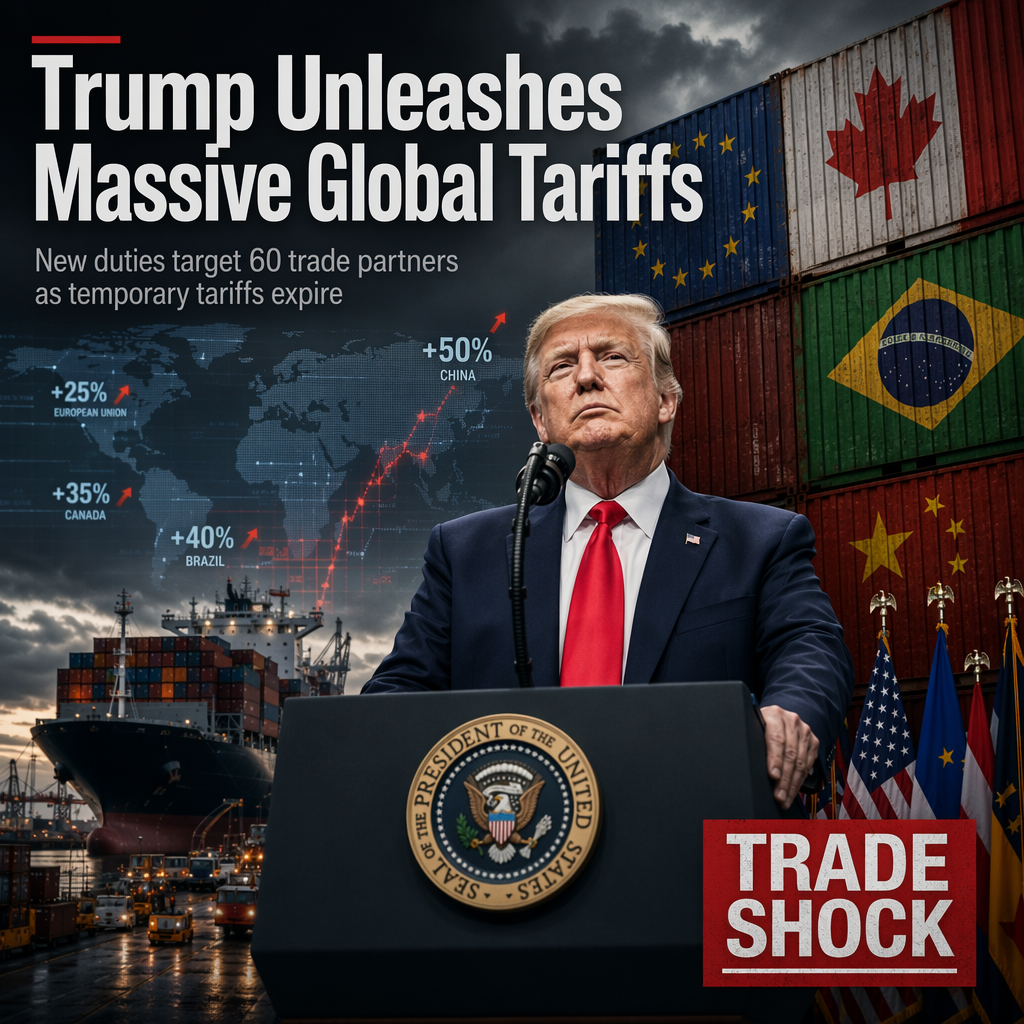
President Donald Trump will implement a broad new tariff regime on 60 trade partners, including the European Union, as the current temporary 10% global tariffs expire. The new duties, ranging from 10% to 12.5%, will take effect at 12:01 a.m. ET on Friday and will cover over 99% of U.S. trade, according to senior administration officials [1]. These tariffs are being imposed in response to alleged forced-labor violations and will replace the expiring global tariffs, which were set under Section 122 of the Trade Act of 1974 and had a 150-day duration [1].
The Office of the U.S. Trade Representative stated it could not provide an estimate of the revenue expected from the new tariffs [1]. A senior Trump administration official described the move as "the most sweeping international labor rights action the United States has ever taken — that any country has ever taken" [1]. The new tariffs will not be added on top of existing Section 232 duties on steel and aluminum, which were imposed last year on national-security grounds [1].
This announcement marks a renewed escalation in the Trump administration's protectionist trade agenda, following legal setbacks earlier in the year. Recently, the White House imposed 25% tariffs on most U.S. imports from Brazil, effective Wednesday, and announced 50% tariffs on a wide range of goods from Canada, set to begin next month [1]. The new tariffs are being enacted under Section 301 of the Trade Act of 1974, following a forced-labor investigation that concluded targeted countries failed to effectively ban such practices in trade with the U.S. [1].
In March, the administration also launched a separate Section 301 investigation into excess manufacturing capacity by 16 economies, though this probe has not yet been finalized [1]. The Trump administration has emphasized tariffs as tools for generating revenue and gaining leverage over trade partners, despite criticism that they increase costs for U.S. importers and consumers [1].
CONCLUSION
The Trump administration's decision to impose sweeping new tariffs on 60 trade partners signals a significant escalation in U.S. trade policy, affecting the vast majority of U.S. trade. Market participants should anticipate heightened trade tensions and potential cost increases for importers and consumers as these duties take effect. The move underscores the administration's commitment to aggressive tariff use despite recent legal and political challenges.