
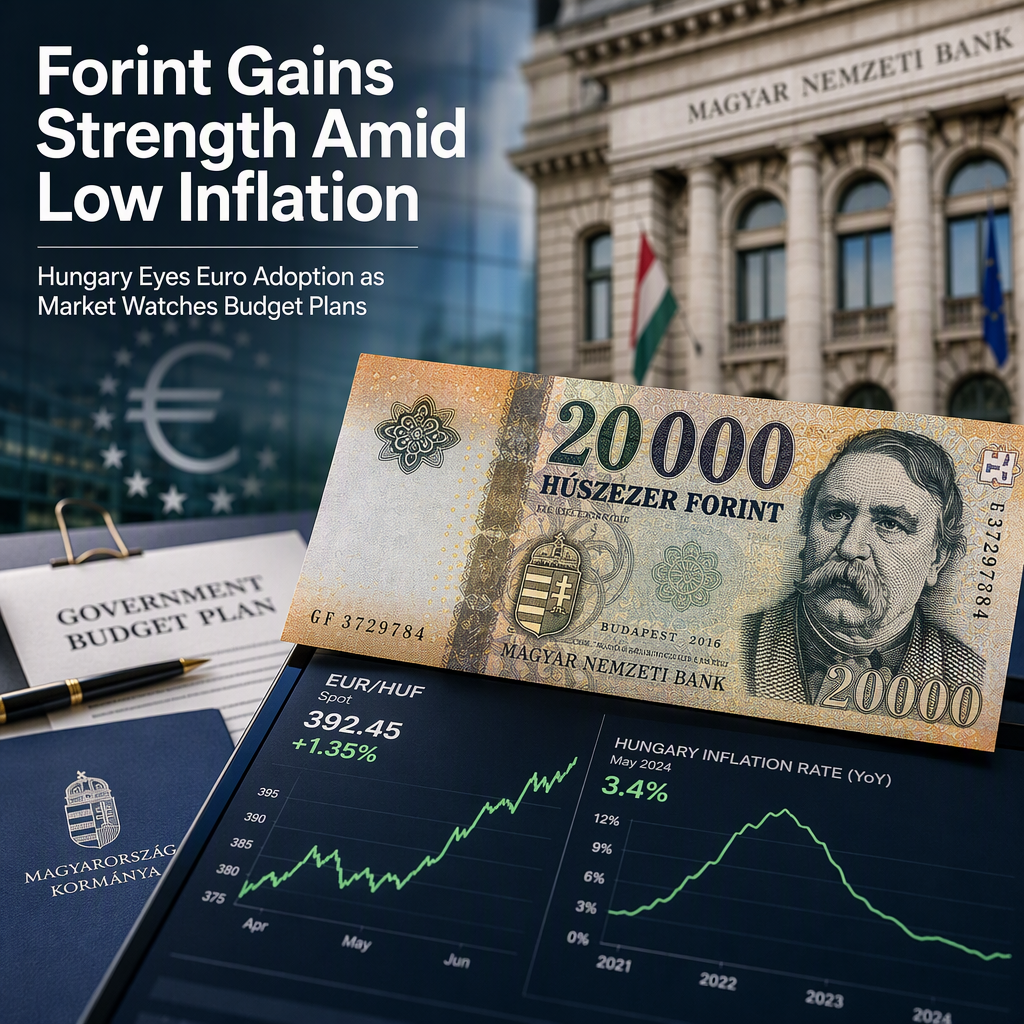
Societe Generale reports that the Hungarian Forint (HUF) has shown strength, contributing to subdued inflation trends in Hungary. According to the bank, inflation increased from 1.3% in August to 1.6% in September, which is 1.4 percentage points below the target set by the Magyar Nemzeti Bank (MNB) [1]. The stronger Forint has played a role in curbing price pressures, keeping underlying inflation trends muted [1].
The EUR/HUF currency pair rebounded from its 50-day moving average at 364.55 following a downside surprise in the Consumer Price Index (CPI) data [1]. This movement reflects market sensitivity to inflation data and the Forint's performance [1].
On the policy front, Finance Minister Karman indicated that Hungarian Government Bonds (HUFGBs) could experience a rally when the government presents its budget and euro-adoption plans in mid-October [1]. Additionally, MNB Deputy Governor Kurali stated that euro adoption could occur two years after Hungary meets the common criteria for joining the eurozone [1].
No analyst opinions or further market reactions are provided in the source.
CONCLUSION
Hungary's lower-than-target inflation and a stronger Forint have contributed to subdued price trends, with potential market movements anticipated around the government's upcoming budget and euro adoption plans. Forward-looking statements from officials suggest euro adoption could follow two years after meeting the necessary criteria. Market participants may monitor these developments for further implications.