
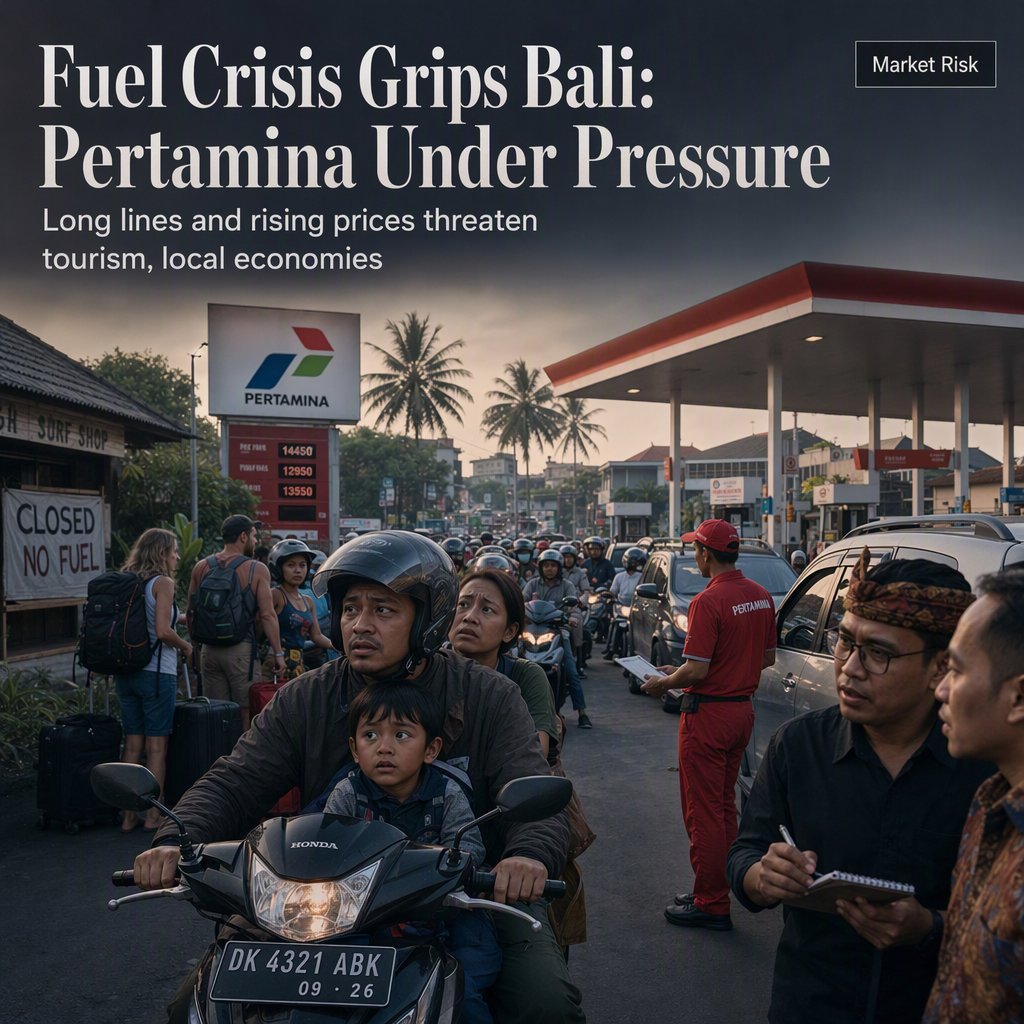
Indonesia is experiencing widespread fuel shortages, with long lines reported at gas stations in several regions, including the popular tourist destination of Bali. Both tourists and local residents are affected by the shortages, which are impacting local economies and the tourism sector [1]. The state energy company Pertamina is at the center of the crisis, as it struggles to maintain fuel supply amid rising costs. Analysts have noted that Pertamina is facing 'growing pressure on cash flow,' and warn that the company's financial position could deteriorate further if global oil prices continue to rise and the government does not intervene [1].
The shortages have led to climbing fuel prices, raising concerns among market observers that transportation costs and inflation could increase as a result. Analysts caution that the situation could escalate, potentially forcing Pertamina to adjust its pricing strategy or seek additional funding to manage the crisis [1]. The ongoing disruptions are being closely monitored by traders, as they could have broader implications for Indonesia's economic outlook and financial markets [1].
A key analyst quoted in the article stated, 'Pertamina faces growing pressure on cash flow, and the situation could escalate if global oil prices remain elevated. The government may need to step in to stabilize supply and prices' [1]. While no technical trading advice was provided, the overall market sentiment is cautious, with warnings about risks to both Pertamina's financial health and Indonesia's macroeconomic stability [1].
CONCLUSION
Indonesia's fuel shortages are causing significant disruptions in multiple regions, including Bali, and are putting financial pressure on state energy company Pertamina. Analysts warn that without government intervention, the situation could worsen, impacting inflation and the broader economy. Market sentiment remains cautious as stakeholders monitor the evolving crisis.