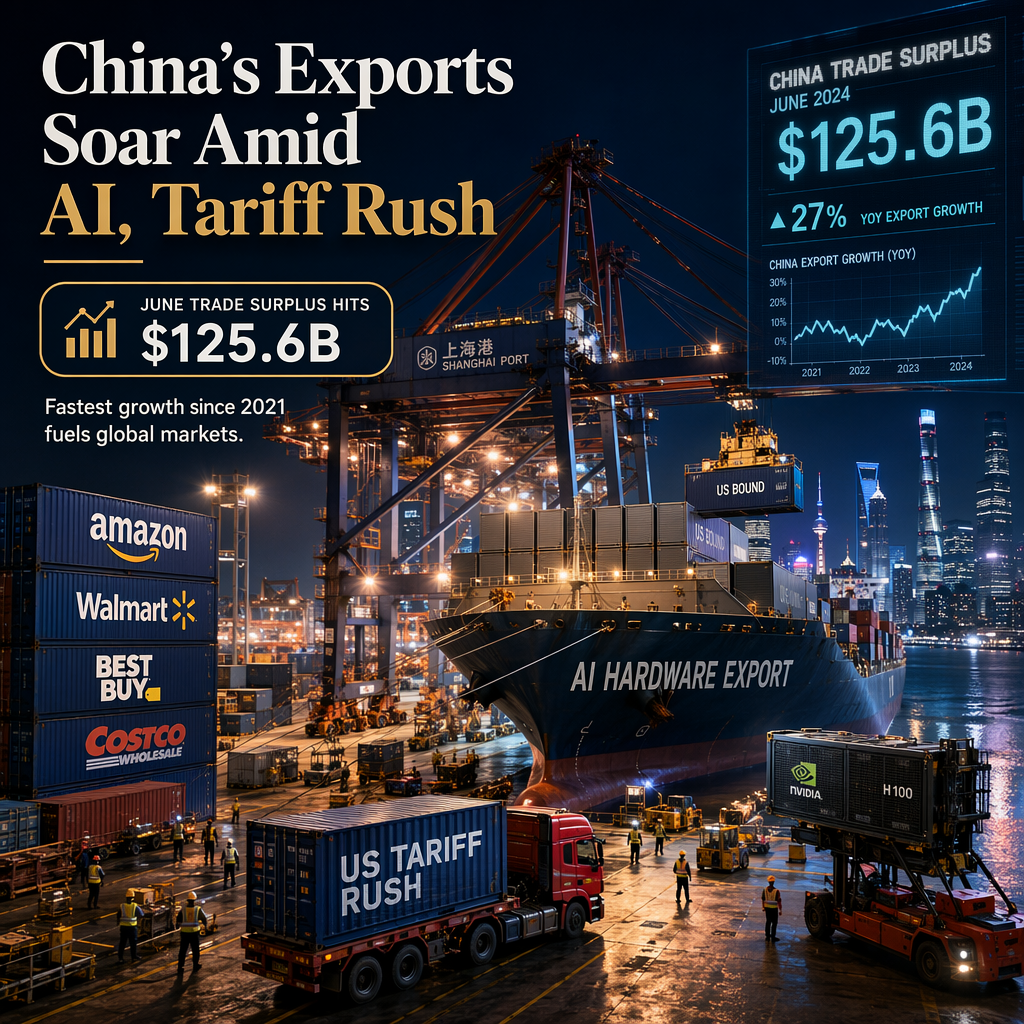
China's exports soared by 27% year-on-year in June, marking the fastest pace since October 2021, according to customs data released on Tuesday. This sharp acceleration was fueled by booming global demand for AI hardware and a rush by U.S. retailers to import goods ahead of anticipated tariff hikes, significantly outpacing economists' expectations of an 18.2% increase. Imports also saw robust growth, rising 36% in June—the largest jump since June 2021—compared to a 27.4% gain in May and surpassing the forecasted 24% growth. The trade surplus for the month stood at $125.6 billion [1].
Factory activity in China picked up in June, with U.S.-bound orders showing strong year-on-year gains, as highlighted by a China Beige Book survey. This surge in orders contributed to higher freight rates. Manufacturers are preparing for the expiration of a 10% broad-based duty from U.S. President Donald Trump's Section 301 probes, set to lapse on July 24, which has prompted a rush to ship goods before potential tariff changes [1].
Despite the robust export and industrial output figures, Beijing continues to face challenges from a deepening supply-demand imbalance. While the global AI investment boom has helped offset negative impacts from the Middle East conflict and global oil shocks, domestic consumption and private investment remain weak due to a prolonged property downturn and volatile oil prices [1].
Looking ahead, China is set to release its second-quarter GDP growth figures, with economists polled by Reuters expecting a slowdown to 4.5% from 5% in the first quarter. Industrial output and retail sales for June are projected to expand by 4.7% and contract by 0.1%, respectively, while urban investment is estimated to decline by 4.9% in the first half of the year. Investors are closely watching for signals from the upcoming Politburo meeting in late July regarding potential stimulus measures, though analysts anticipate no significant policy changes unless growth slows more sharply, given the resilience in exports and Beijing's focus on curbing excess factory capacity to combat deflation [1].
CONCLUSION
China's June trade data highlights a significant acceleration in exports and imports, driven by strong global AI hardware demand and pre-tariff U.S. orders. While external demand remains robust, domestic economic challenges persist, and investors are awaiting further policy signals from Beijing. The market impact is high, with attention now turning to upcoming GDP and policy announcements.