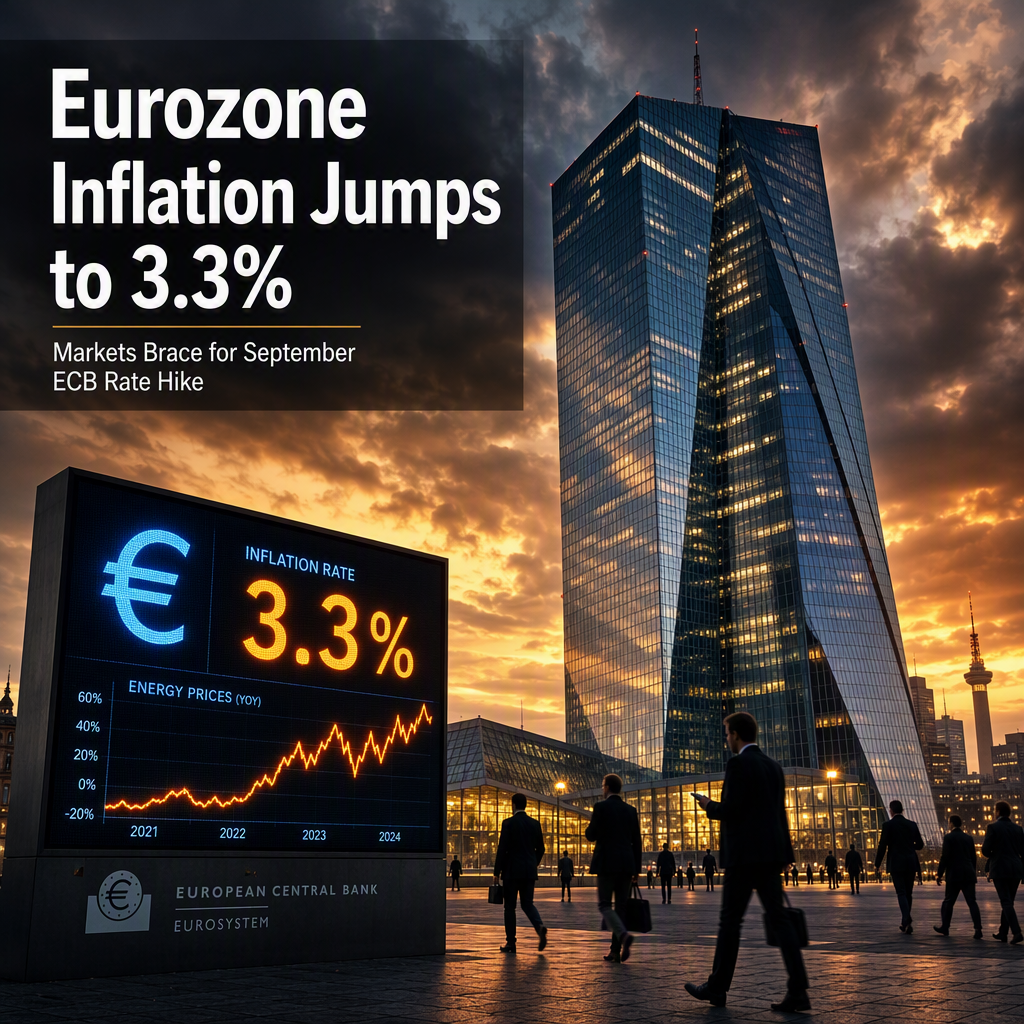
Eurozone inflation accelerated in August, with the flash Consumer Price Index (CPI) rising to 3.3% year-on-year, up from 2.9% in July, driven primarily by a surge in energy prices, which jumped from 10.3% to 14.3% year-on-year [4][5]. Core inflation, which excludes volatile items such as energy and food, edged down to 2.4% from 2.5% in July, mainly due to a slowdown in services inflation from 3.3% to 3.0% [4][5]. Inflation for non-energy industrial goods also increased, reaching 1.2% year-on-year, the highest since early 2024 [5].
Despite the moderation in core and services inflation, headline inflation remains well above the European Central Bank's (ECB) 2% target, maintaining pressure on policymakers to act [4][5]. The swaps curve indicates that markets have nearly fully priced in a 25 basis point ECB rate hike to 2.50% at the September 10 meeting, with a total of 75 basis points of tightening expected over the next twelve months [4]. Nordea strategists and Brown Brothers Harriman (BBH) analysts both highlight that persistent above-target inflation and a firmer growth outlook provide the ECB with scope for further rate increases [4][5].
Nordea expects the ECB to continue raising rates at quarterly intervals, with the next move likely at the September meeting, citing ongoing upside inflation risks, broadening price pressures, and a tight labor market [5]. BBH notes that these dynamics are supportive for the euro and make fresh cyclical lows below 1.1400 for EUR/USD unlikely [4].
The elevated inflation environment is further complicated by external factors such as the ongoing war in the Middle East and elevated energy prices, which could lead to even higher gas prices during the winter due to low natural gas inventories [5]. Both Nordea and BBH emphasize that the ECB is likely to remain vigilant regarding upside price pressures, with core inflation expected to stay above target in the coming years according to the ECB’s latest staff forecast [5].
CONCLUSION
Eurozone inflation's rise to 3.3% in August, driven by energy costs, has solidified market expectations for an ECB rate hike in September. Analysts see persistent inflation and a resilient economy supporting further tightening, with the euro's downside likely limited. The ECB is expected to maintain a hawkish stance amid ongoing inflation risks.