
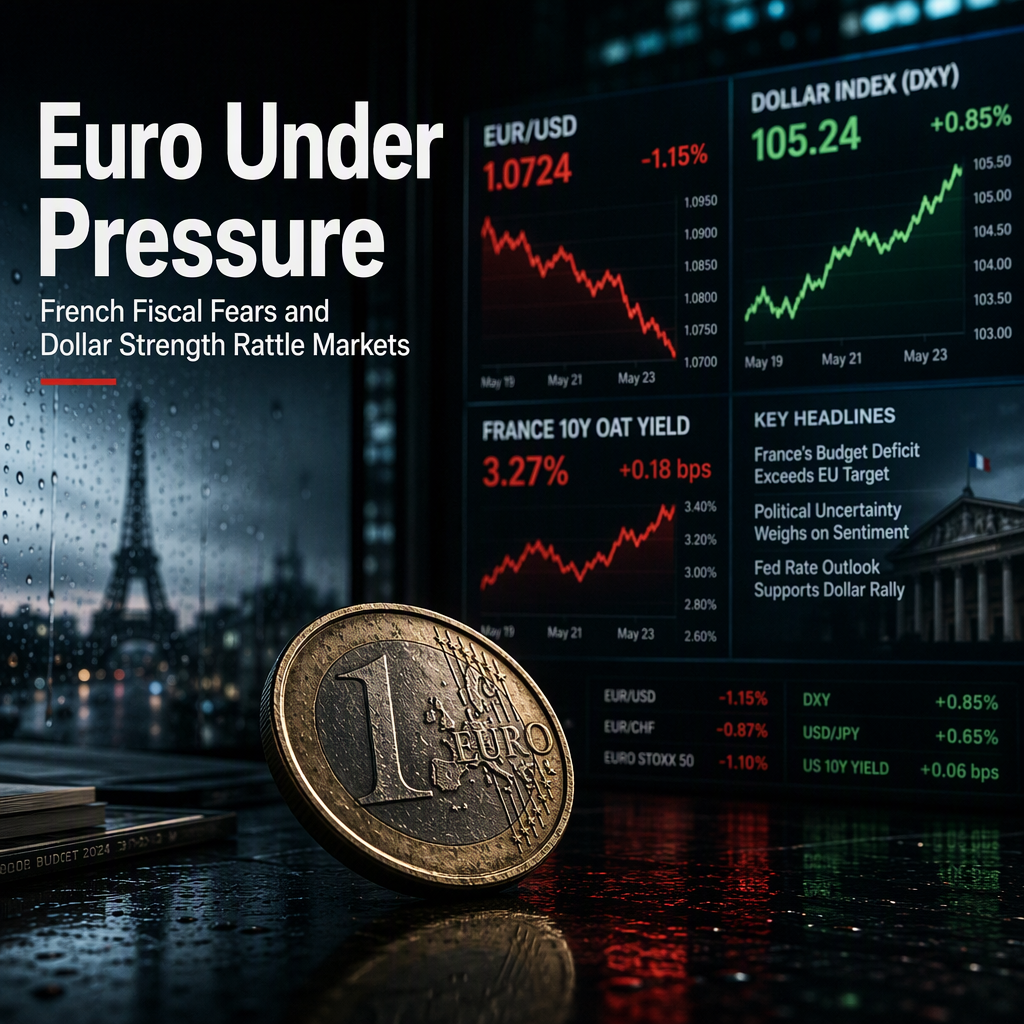
The Euro (EUR) faced renewed pressure on Friday, reversing earlier gains and positioning the EUR/USD pair for a fifth consecutive weekly decline as the US Dollar (USD) rebounded from its previous pullback. At the time of reporting, EUR/USD traded around 1.1195, a level last seen in May 2025, reflecting persistent concerns over France’s fiscal outlook and a resurgent US Dollar [1].
The US Dollar’s strength was underpinned by a recovery in US Treasury yields, with the benchmark 10-year yield rising by 4.2 basis points to 5.261%, though still below the 5.365% peak reached earlier in the week—the highest since 2002. The US Dollar Index (DXY) climbed to 102.30 after rebounding from an intraday low of 101.92. Strong demand at a 30-year Treasury auction and a modest pullback in oil prices contributed to easing bond market pressures, while US President Donald Trump’s statement ruling out renewed strikes against Iran before the November midterm elections also played a role [1].
Analysts at ING cautioned that any drops in the Dollar are likely to be short-lived due to fragile bond markets and a hawkish Federal Reserve narrative. They further warned that the 'French premium isn’t likely to leave the euro very soon,' suggesting risks remain for EUR/USD to test the 1.110 level in the near term. ING also expressed skepticism that Marine Le Pen’s fiscal tightening promises would be sufficient to improve sentiment for French bonds or the euro, indicating that the euro may continue to suffer from French fiscal concerns [1].
On the macroeconomic front, crude oil prices remained elevated above pre-war levels, sustaining inflation risks and supporting expectations for additional interest rate hikes by both the Federal Reserve (Fed) and the European Central Bank (ECB). Recent Fed communications kept the possibility of further tightening open, with the CME FedWatch Tool showing traders widely expect the Fed to keep rates unchanged at 3.75%-4.00% at the October 27-28 meeting, but pricing in an 85% probability of a rate hike in December. US economic data were mixed: the preliminary University of Michigan Consumer Sentiment Index fell to 46.3 in October from 48.1 (missing expectations of 47.6), while the Consumer Expectations Index improved to 47.3 from 46.3. Inflation expectations edged higher, with the 1-year measure rising to 4.7% from 4.6% and the 5-year measure to 3.5% from 3.4% [1].
ECB officials remained divided on the pace of further tightening, with some downplaying second-round effects from higher oil prices and others warning that inflation risks could necessitate additional rate hikes. Policymakers emphasized that future decisions would depend on incoming data [1].
CONCLUSION
The Euro remains under significant pressure due to ongoing French fiscal concerns and a strengthening US Dollar, with analysts warning of further downside risks for EUR/USD. Elevated inflation expectations and divided central bank outlooks add to market uncertainty, while traders anticipate potential rate hikes later in the year. Market sentiment remains negative for the Euro in the near term.