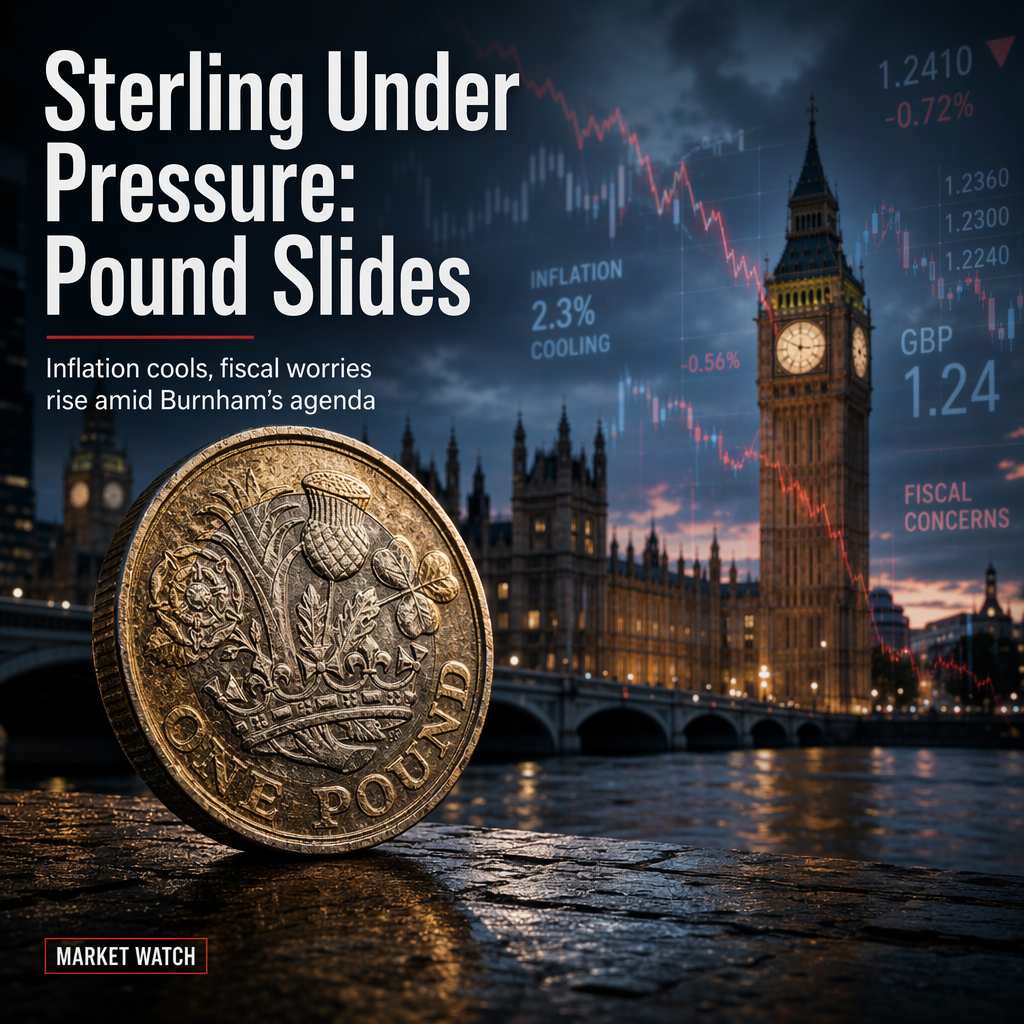
The British Pound (GBP) has come under renewed downward pressure against major currencies, surrendering its recent gains as investors react to a combination of cooling UK inflation and mounting fiscal uncertainty linked to Prime Minister Andy Burnham’s economic agenda [1]. According to macro economists at ING, the underlying trend in UK price pressures is disinflationary, with a second consecutive monthly decline in food prices and falling petrol costs contributing to a favorable outlook for consumer inflation expectations [1]. The Bank of England’s preferred core services inflation metric slowed from 3.8% to 3.6%, indicating that domestic price drivers are easing and reducing the need for further interest rate hikes by the central bank [1]. ING notes that 'Sterling is a little weaker on the data and EUR/GBP may well have put in a significant low at 0.8455 last week' [1].
At the same time, cost-of-living relief proposals from Prime Minister Burnham’s administration—including temporary VAT cuts on electricity bills, higher personal tax allowances, and expanded social housing—have reignited concerns about the sustainability of UK sovereign debt, especially in the absence of offsetting tax increases [1]. Commerzbank strategists warn that the initial optimism surrounding Burnham’s government has quickly shifted to fiscal anxiety, with the lack of a clear funding plan for these measures triggering worries over long-term debt sustainability and reversing Sterling’s recent advance against the Euro [1].
Both ING and Commerzbank anticipate a volatile near-term trajectory for the British Pound. ING suggests that the combination of benign domestic inflation and slowing private-sector wage growth will keep Sterling subdued, with 0.8455 potentially serving as a key structural floor for EUR/GBP [1]. Commerzbank adds that until the government presents a credible plan to balance fiscal sustainability with economic growth, the Pound will remain vulnerable to sudden market sentiment shifts [1].
CONCLUSION
The British Pound is facing significant headwinds from both cooling inflation, which reduces the likelihood of further Bank of England rate hikes, and renewed fiscal concerns tied to government spending plans. Market participants expect continued volatility for Sterling until clearer fiscal policies are outlined, with the currency remaining sensitive to shifts in investor sentiment.