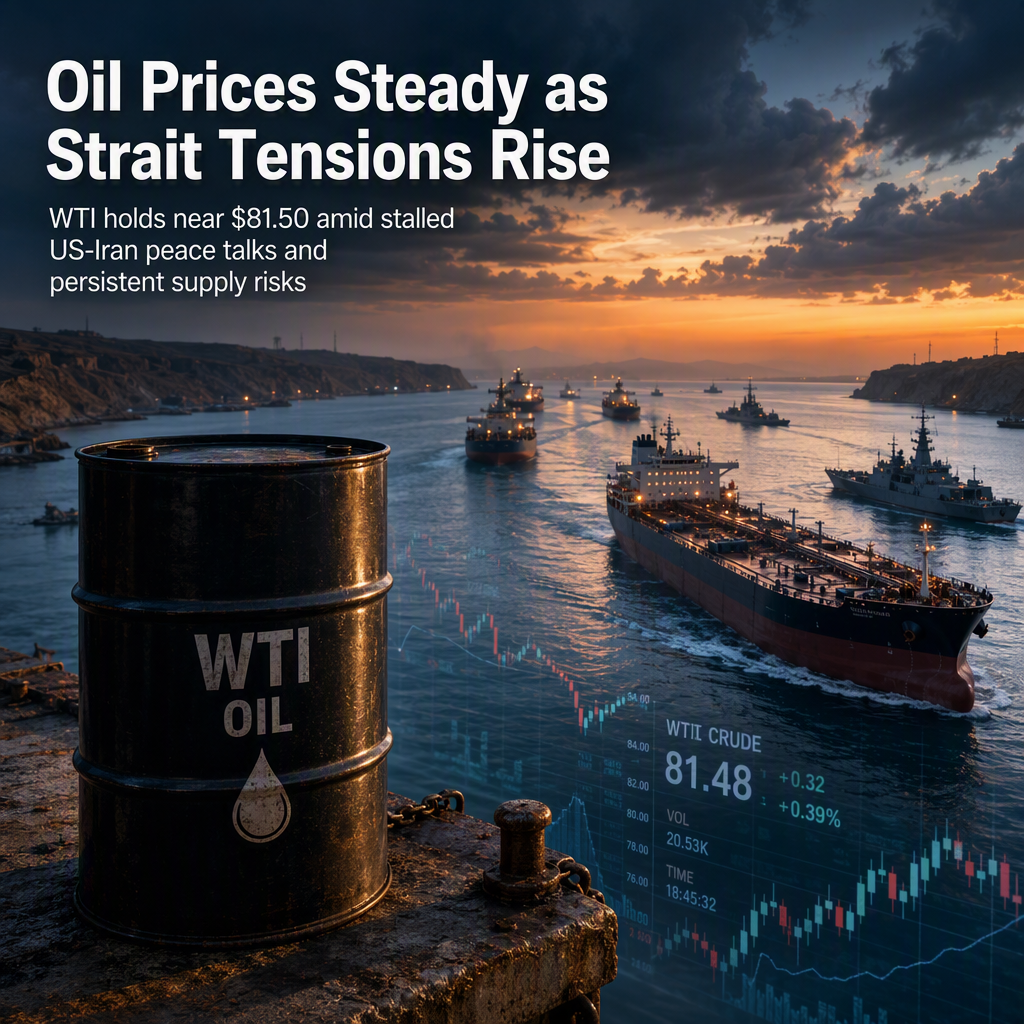
West Texas Intermediate (WTI) crude oil prices remained steady around $81.40 during Asian trading hours on Tuesday, following a significant gain of over 6.5% in the previous day [1]. The market is closely watching the stalled peace negotiations between the United States and Iran, which are critical for reopening the strategic Strait of Hormuz, a vital shipping route for global oil supplies [1]. Hopes for a rapid resolution have faded after US President Donald Trump issued new demands requiring Iran to pay compensation for individuals killed in regional conflicts, a move that followed Tehran's own call for reparations as a precondition for ending the war [1].
Instead of resorting to military action to reopen the Strait, President Trump has signaled a preference for increasing economic pressure on Iran [1]. Diplomatic efforts involving Iran and Oman have also stalled, with Tehran insisting that progress on reopening the Strait is contingent on a broader peace agreement with the US [1]. According to TD Securities, the prospect of a deal to ease tensions in the Strait of Hormuz remains elusive, and ongoing uncertainty is supporting oil prices as investors remain wary of potential supply disruptions at key chokepoints [1].
The constructive tone in the oil market is underpinned by these persistent risks, with trend-following positioning further supporting WTI prices [1]. No specific analyst forecasts or forward-looking price targets were provided, but the overall sentiment remains cautious due to the unresolved geopolitical tensions [1].
CONCLUSION
WTI oil prices are being supported by ongoing uncertainty surrounding US-Iran peace talks and the risk of supply disruptions at the Strait of Hormuz. Market sentiment remains constructive but cautious, with no immediate resolution in sight. Investors are likely to continue monitoring diplomatic developments and potential impacts on global oil supply.