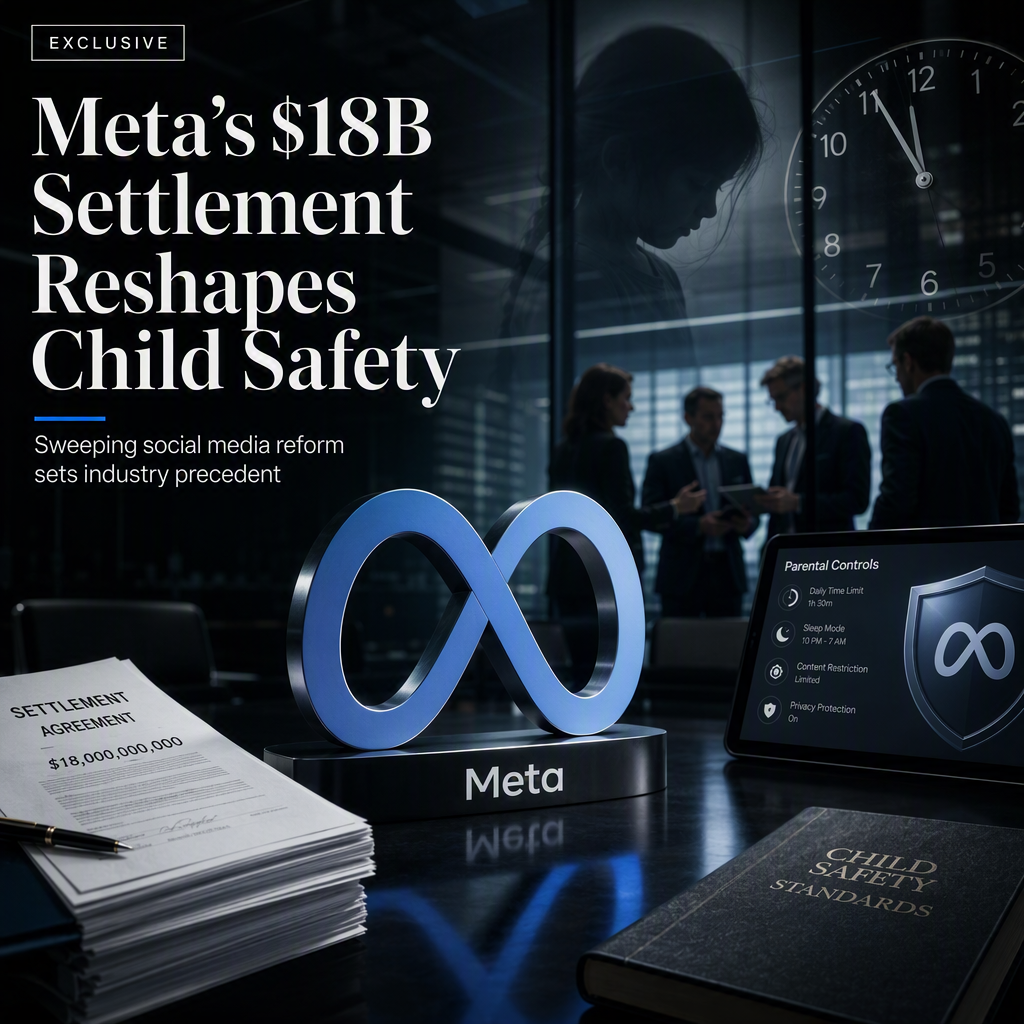
Meta announced on Wednesday that it has reached an agreement with 52 attorneys general from states, U.S. territories, and Washington, D.C., to pay up to $18 billion and implement sweeping changes to its platforms, Facebook and Instagram, in response to allegations that its services harmed children [1]. The settlement, which still requires court approval, resolves claims filed by 47 states and is seen by Tennessee Attorney General Jonathan Skrmetti as a precedent-setting move that could prompt similar actions against other social media and technology companies [1].
Key provisions of the agreement include the introduction of time limits, nighttime restrictions, stronger age checks, and expanded parental controls for users under 18. Skrmetti emphasized that these changes address design decisions that previously made Instagram dangerous for kids, aiming to eliminate triggers for mental health problems associated with addictive platform features [1]. The financial penalty, while significant, is considered less important than the operational changes, according to Skrmetti, who stated, "They agreed to some pretty sweeping changes, and that's way more important than the money" [1].
Meta will distribute the payments annually over 10 years, with participating states receiving approximately $12.7 billion. An additional $5.3 billion will be released only if TikTok and YouTube implement specified child-safety measures and make matching payments [1]. An independent auditor will assess Meta’s compliance with the agreement, and if the platforms fail to address risks meaningfully, the auditor can make this public, allowing states to seek enforcement [1].
Skrmetti suggested that companies not party to similar agreements could face increased litigation pressure, as the industry moves toward higher standards for child safety. Meta stated that the agreement builds on its existing efforts to protect teens and empower parents with greater control over their children's platform usage [1].
CONCLUSION
Meta’s $18 billion settlement marks a significant shift in regulatory expectations for child safety on social media, with sweeping platform changes and ongoing oversight. The agreement is likely to increase pressure on other tech companies to adopt similar standards, signaling a high-impact development for the industry. The market takeaway is that regulatory scrutiny and compliance costs for social media firms may rise, potentially affecting their operations and financial outlook.