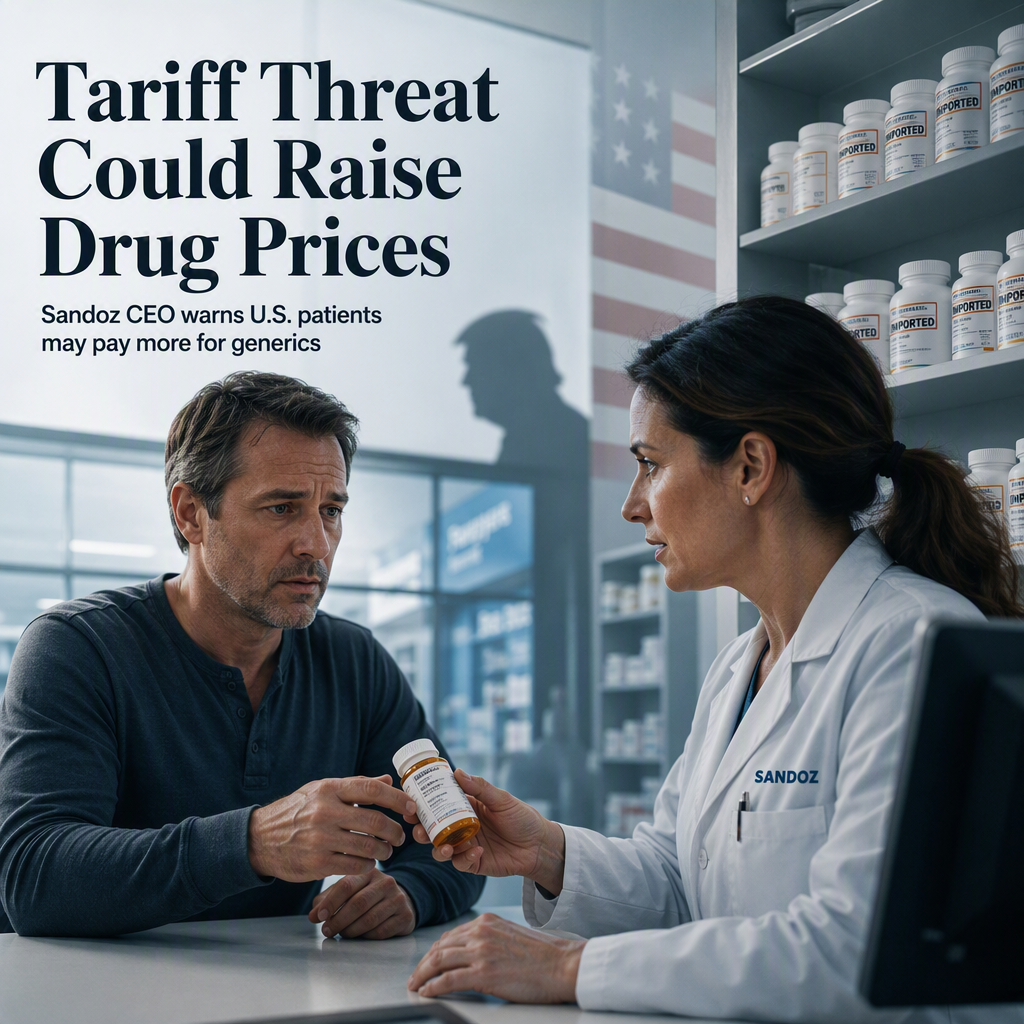
Sandoz CEO Richard Saynor has warned that U.S. patients could ultimately bear the cost of President Donald Trump's threatened tariffs on imported generic drugs. Saynor stated that if manufacturers are faced with steep tariffs, they may be forced to either raise prices or stop supplying certain medicines to the U.S. market. He emphasized, 'Patients pay the tariff,' and explained that businesses cannot continue supplying products at a material loss, leaving them with the choice to increase prices or withdraw products from the market [1].
President Trump announced in July that imported generic medicines could face tariffs of 100% starting in 2028, with the rate potentially rising to 200% a year later. These measures are intended to encourage pharmaceutical manufacturing to shift to the United States. Currently, generics are exempt from the administration's Section 232 pharmaceutical tariffs [1].
Generic medicines account for about 90% of prescriptions in the U.S., but represent a relatively small share of overall drug spending due to their lower prices. Saynor noted that much of the underlying drug substance for generics is produced outside the country. Sandoz, which generates roughly a quarter of its revenue in North America, is targeting more than 100 biosimilars by 2040 to capitalize on a wave of drugs losing exclusivity, particularly in immunology and oncology [1].
Following these announcements and the company's new strategic drive, Sandoz's Swiss-listed shares rose as much as 5% on Tuesday before paring gains and trading about 1% lower in afternoon trading [1].
CONCLUSION
Sandoz's CEO has raised concerns that proposed U.S. tariffs on imported generic drugs could lead to higher costs or reduced access for American patients. The company's strategic focus on biosimilars and upcoming patent expirations presents growth opportunities, but the tariff threat introduces significant uncertainty for the generic drug market.