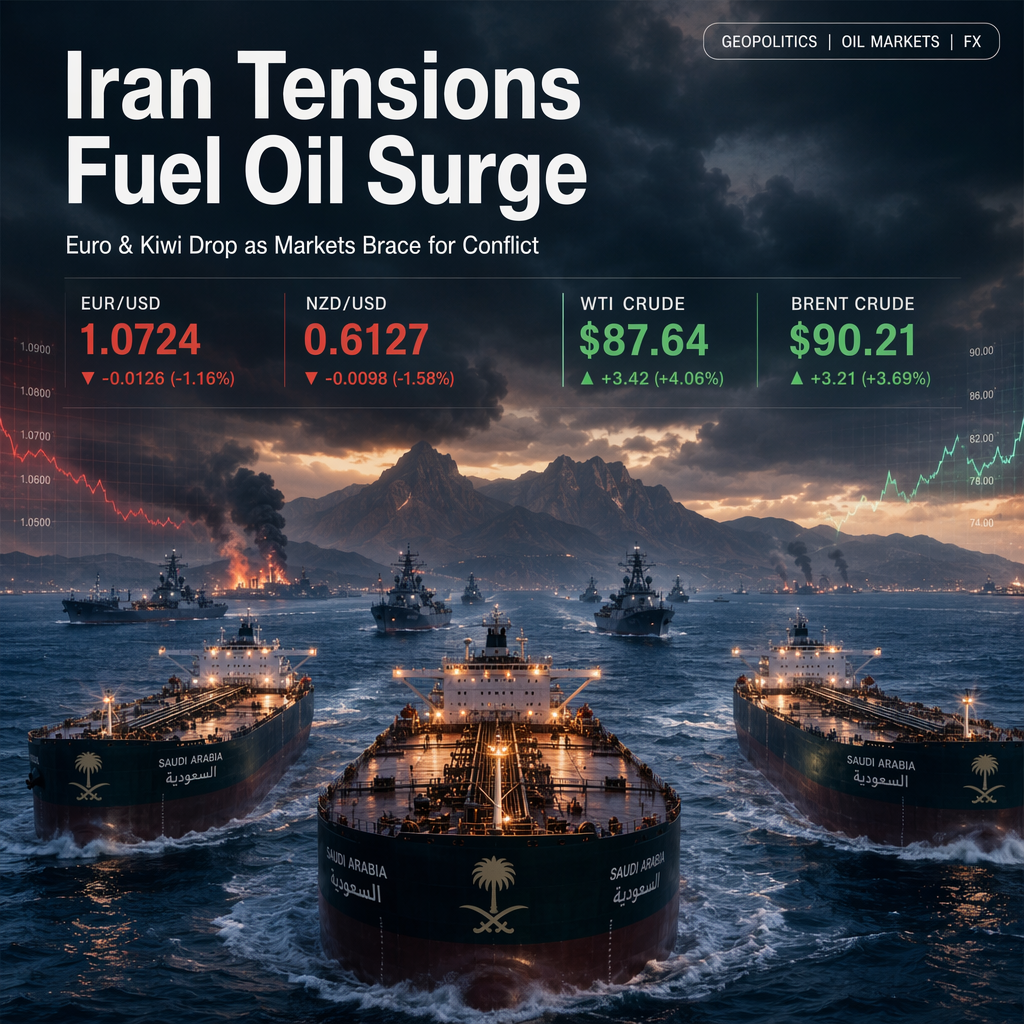
Rising geopolitical tensions in Iran have led to significant market volatility, impacting major currencies and commodity prices. Both the Euro (EUR) and the New Zealand Dollar (NZD) have faced downward pressure against the US Dollar (USD) as the US continued its military strikes on Iranian targets for the 11th consecutive day. US President Donald Trump threatened to attack Picaxe (Pickaxe) Mountain, believed to conceal nuclear facilities, prompting Tehran to warn of a broader regional conflict if attacked [1][2].
The situation has also affected global oil markets. In the Red Sea, three Saudi oil tankers reversed course after the Iran-backed Houthis announced a blockade in the Bab el-Mandeb Strait, raising fears of crude supply disruptions and pushing oil prices higher [1][2]. This surge in energy prices has increased pressure on the Euro, given the Eurozone's sensitivity to energy costs, and has contributed to a risk-off market mood that is supporting the US Dollar [1].
Despite these headwinds, expectations of further monetary tightening by the European Central Bank (ECB) and the Reserve Bank of New Zealand (RBNZ) have provided some support to the Euro and Kiwi, respectively. ING analysts noted that the EUR/USD pair has performed relatively well despite rising energy prices, attributing this to interest rate differentials and the market's anticipation of a more aggressive ECB response compared to the Federal Reserve. However, they caution that it is unlikely the market will price in even higher ECB rates regardless of the outcome of the upcoming ECB meeting [1].
Similarly, Brown Brothers Harriman strategists highlighted that the NZD/USD pair rallied to near a seven-week high, supported by the RBNZ's hawkish stance. At its July 8 meeting, the RBNZ raised the Official Cash Rate (OCR) by 25 basis points to 2.50% and indicated that further increases are likely at upcoming meetings. Above-target inflation and a favorable domestic growth outlook are seen as supportive for the NZD, although the currency's gains have been limited by the prevailing risk-off sentiment due to the Iran conflict [2].
CONCLUSION
Escalating hostilities in Iran and resulting oil price increases have created a risk-averse environment, pressuring both the Euro and New Zealand Dollar despite their respective central banks' tightening biases. Market participants remain focused on upcoming ECB and RBNZ policy decisions, but geopolitical risks are currently the dominant force shaping currency and commodity movements.