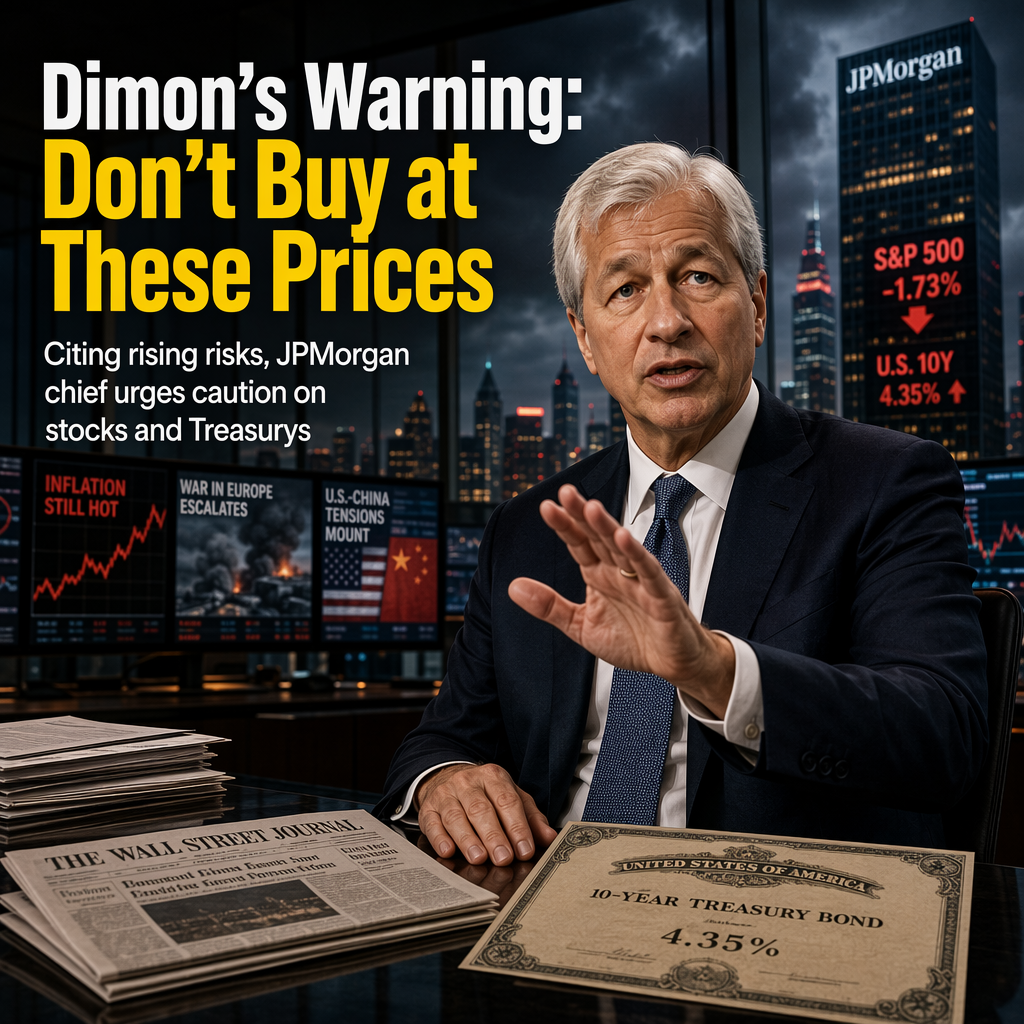
JPMorgan Chase CEO Jamie Dimon stated in a CNBC interview that he would not buy stocks or long-term U.S. Treasury bonds at their current prices, citing concerns that investors are underestimating significant geopolitical and fiscal risks. Dimon highlighted ongoing conflicts in Ukraine and the Middle East, as well as escalating tensions between the U.S. and China, as key geopolitical risks. He also pointed to growing government budget deficits and rising defense spending as fiscal risks that could keep interest rates on government bonds elevated for an extended period [1].
Dimon specifically noted that he would avoid long-term Treasurys under current market conditions, predicting that the 10-year bond yield should be in the range of 4% to 4.5% even if inflation returns to the Federal Reserve's 2% target. As of now, the 10-year Treasury yield is about 4.6% and has remained above 4.2% since March, after trending closer to 4% late last year [1].
Recent consumer price index (CPI) data showed inflation up 3.5% year-over-year, which remains above the Fed's 2% target, despite a month-over-month decline due to stabilized energy markets. Persistently high inflation led the Federal Reserve to keep interest rates unchanged at its June meeting, with policymakers signaling a continued intolerance for elevated inflation. This stance has caused market expectations for rate cuts to drop, with the CME FedWatch tool indicating that the federal funds rate is likely to remain steady or even rise before year-end [1].
Dimon also expressed caution regarding the stock market, stating he would not invest in the broader market at current high valuations and would instead focus on identifying individual companies with strong investment potential. He compared the current wave of artificial intelligence (AI) investment to the initial internet boom, noting that while AI will likely pay off in the long run, the returns and timing may not align with current expectations [1].
CONCLUSION
Jamie Dimon's remarks underscore a cautious outlook for both equity and bond markets, driven by persistent inflation, elevated interest rates, and heightened geopolitical and fiscal risks. His skepticism toward current market valuations and long-term Treasurys signals potential headwinds for investors, with a focus on selective opportunities rather than broad market exposure.