
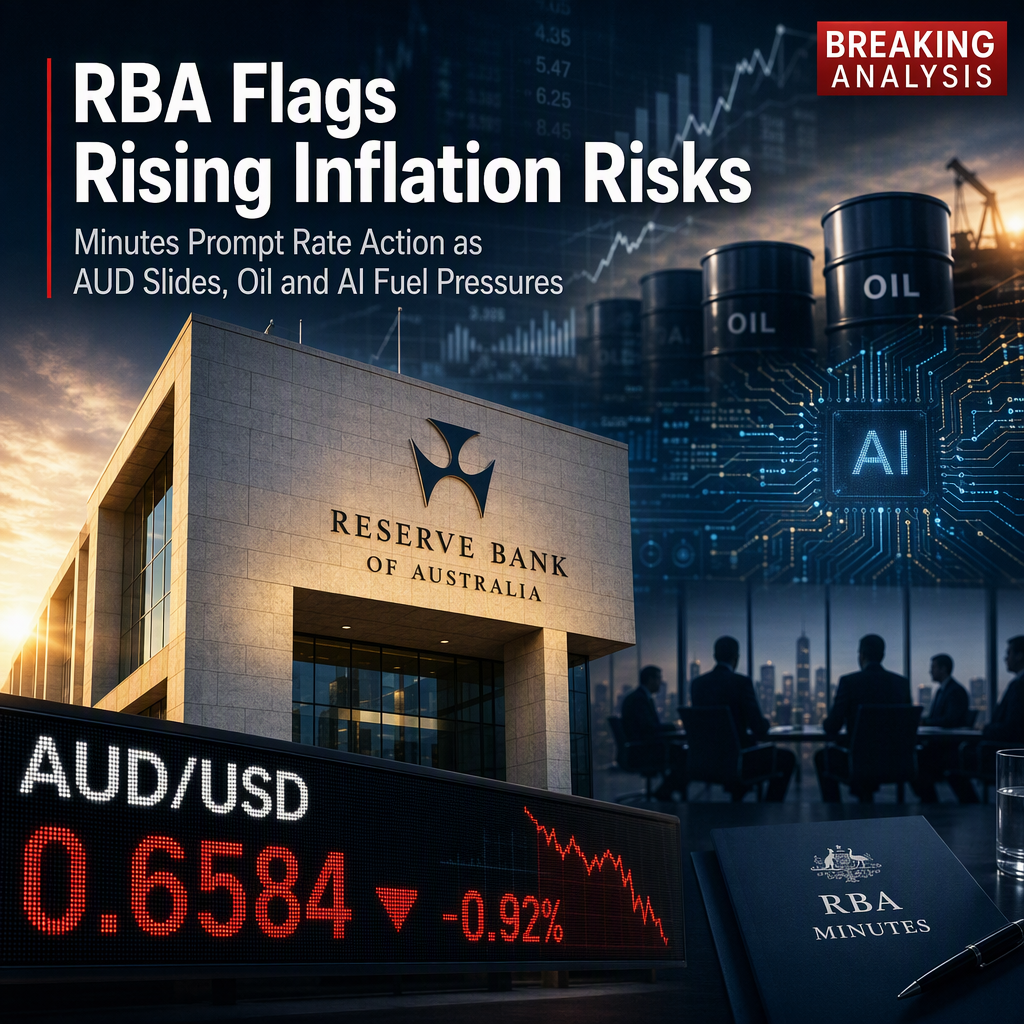
The Reserve Bank of Australia (RBA) released the Minutes of its September monetary policy meeting, emphasizing the need for prompt action on interest rates to keep inflation expectations anchored [1]. The Minutes noted that some inflation upside risks have already materialized or are emerging since August, with additional signals of tech-driven price pressures from the AI boom in Australia [1]. The RBA also highlighted that the recent Middle East conflict has intensified, resulting in oil prices exceeding expected levels, which could further fuel inflationary pressures [1].
Board members observed that financial conditions were only modestly restrictive, though models suggest policy is somewhat restrictive and the neutral rate may have increased [1]. House prices have dropped more than expected, indicating that financial conditions could be tighter than previously thought [1]. The Minutes also pointed out that jobs data should be interpreted with caution due to changes in survey methodology [1].
The RBA warned that an increase in the global neutral rate could weigh on the Australian dollar if domestic rates remain unchanged, and that overseas rate hikes might ease domestic financial conditions by causing a drop in the AUD [1]. Liaison with businesses indicated widespread domestic cost pressures, particularly in unit labour costs, and the Board stressed that domestic spending must remain muted for a period to bring inflation back to target [1].
Following the release of the Minutes, the Australian Dollar edged slightly lower, with the AUD/USD pair trading 0.13% lower on the day at 0.6950 [1].
CONCLUSION
The RBA Minutes underscore the central bank's concern over emerging inflation risks and the potential need for prompt rate action. The market responded with a modest decline in the Australian Dollar, reflecting investor caution amid signals of tighter financial conditions and ongoing inflationary pressures.