
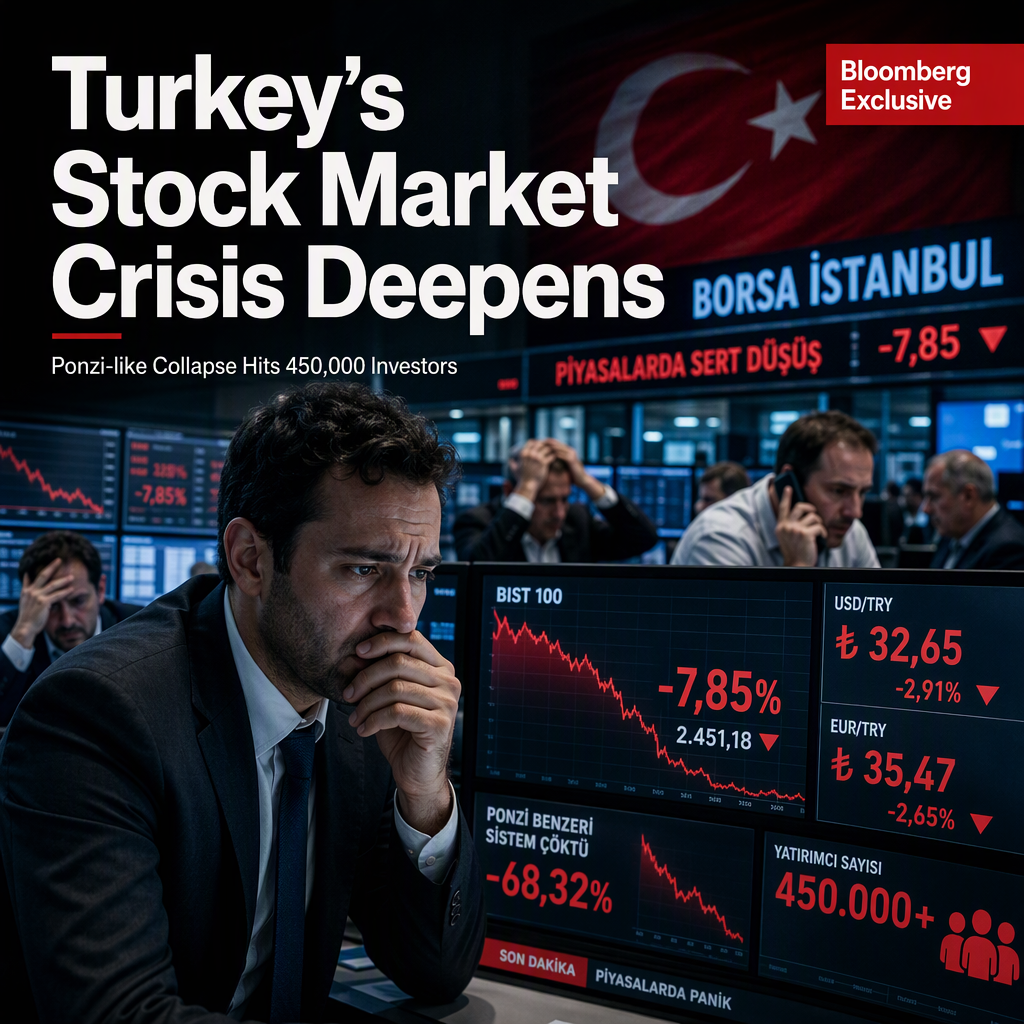
Turkish officials are currently engaged in discussions regarding compensation for more than 450,000 investors who have collectively lost billions of dollars due to what the government has described as a 'Ponzi-like scheme' in the stock market [1]. The collapse of this scheme has had a significant impact on the Turkish equity market, triggering a major selloff and heightened volatility, with both retail and institutional investors affected [1].
Foreign investors hold approximately 33% of Turkish equities, and the crisis has raised concerns about Turkey's attractiveness to global investors and the stability of its markets [1]. The potential downgrade of the Turkish equity market to 'frontier' status is being considered, which could further reduce foreign inflows and market liquidity [1].
In response to the crisis, the government and regulators are weighing compensation measures and increased regulatory oversight in an effort to restore confidence among market participants [1]. The situation remains fluid, with ongoing monitoring of official responses and the potential impact on trading activity, price levels, and overall market sentiment [1].
CONCLUSION
The collapse of the 'Ponzi-like' scheme has severely shaken investor confidence in Turkey's stock market, with billions lost and over 450,000 investors affected. The government's response and potential market downgrade are being closely watched, as the outcome will likely shape future foreign investment and market stability.