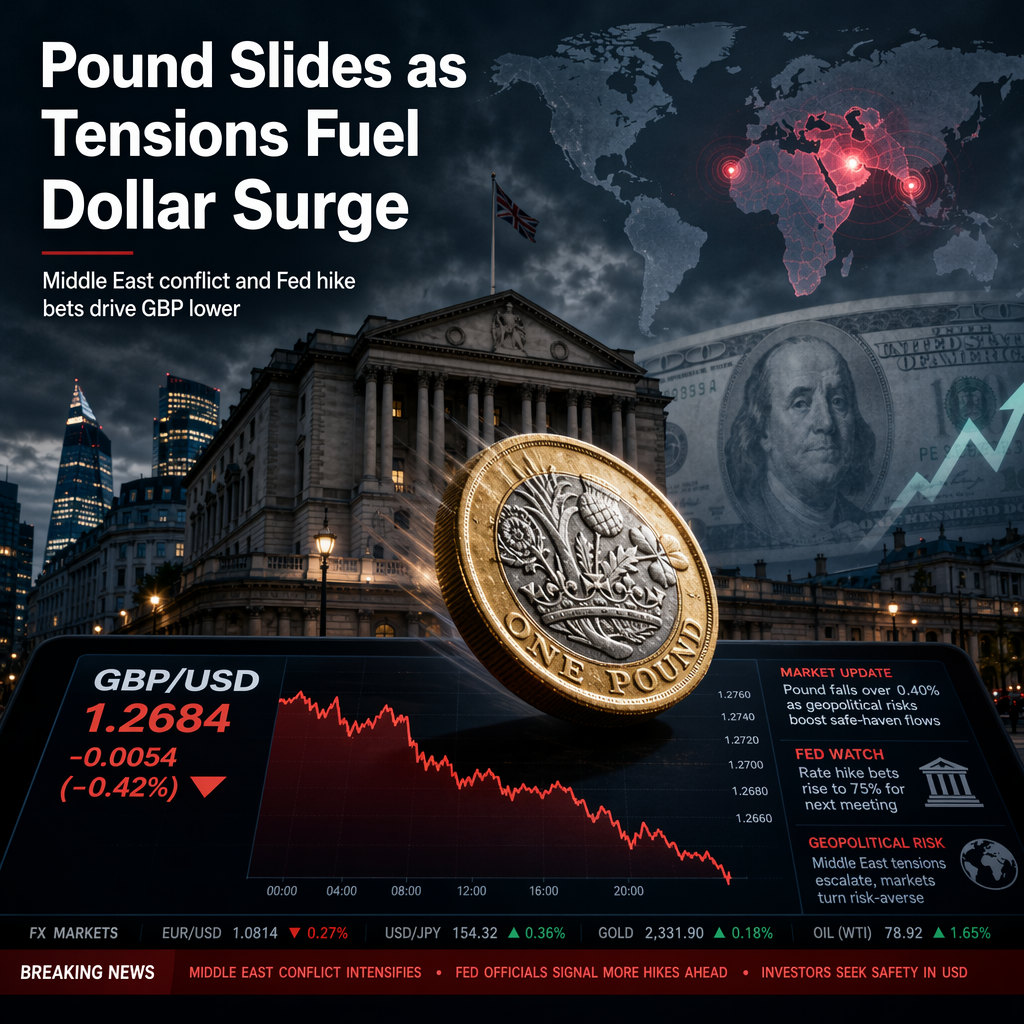
The British Pound Sterling declined by more than 0.40% against the US Dollar, with GBP/USD trading at 1.3313 after reaching a daily high of 1.3393, as escalating conflict in the Middle East fueled risk aversion and strengthened the US Dollar across G8 currencies [1]. The US Dollar Index (DXY) rose 0.32% to 101.46, reflecting broad-based demand for the Greenback amid geopolitical uncertainty [1].
Market sentiment was further impacted by reports that US President Donald Trump is considering 'a massive attack greater than anything before' in response to the Gulf War escalation, which has heightened concerns of an extended US campaign against Iran [1]. Additionally, Houthi sources indicated that Atamco Oil facilities could be targeted if the blockade of Yemen is not lifted, adding to market anxiety and supporting the US Dollar [1].
On the economic front, US Initial Jobless Claims for the week ending July 18 came in at 187,000, outperforming analyst expectations of 212,000 and signaling continued labor market strength [1]. This robust data, combined with geopolitical risks, led money markets to increase the probability of a Federal Reserve rate hike at the July 20 meeting from around 33% a day ago to nearly 40%, with the odds for a hold at 60% according to Prime Terminal data [1].
In the UK, inflation figures released this week showed some easing, but the recent surge in energy prices due to the US-Iran conflict could drive inflation higher in the coming month [1]. Upcoming UK economic data includes Retail Sales and the GfK Consumer Confidence for July, while US traders await S&P Global Flash PMIs ahead of the Federal Reserve's policy decision next week [1].
Technically, GBP/USD remains bearish in the near term, trading at 1.3308 and staying below the 50/100/200-day Simple Moving Averages cluster at 1.3369. The pair also trades beneath key resistance levels at 1.3474 and 1.3517, with the Relative Strength Index (14) at 43.8 indicating weak downside momentum but not an oversold condition. The technical outlook suggests further consolidation or renewed downside attempts unless GBP/USD can break above these resistance levels [1].
CONCLUSION
Escalating Middle East tensions and strong US economic data have driven the British Pound lower against the US Dollar, with markets increasingly pricing in a potential Federal Reserve rate hike. The technical and fundamental backdrop points to continued pressure on GBP/USD, with further downside possible if geopolitical risks persist and the Fed adopts a more hawkish stance.