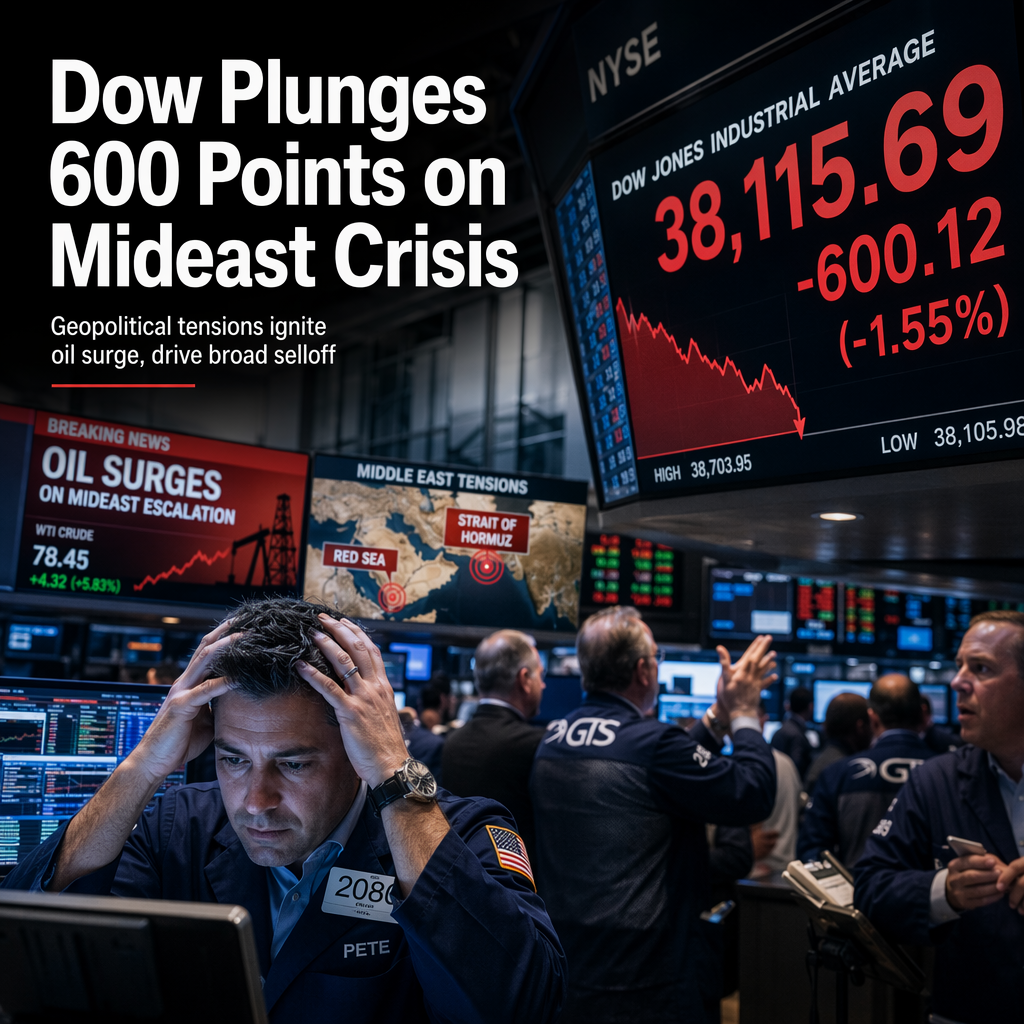
The Dow Jones Industrial Average fell approximately 600 points on Thursday, representing a 1.1% decline to near 51,600, marking its lowest level in roughly three weeks and erasing this week's two-day recovery. The drop pushed the index below its prior weekly floor near 51,800, with the session's high only a few points above the opening print [1].
The selloff was triggered by a significant escalation in Middle East tensions. The first catalyst was Yemen's Tehran-backed Houthi movement claiming strikes on two Saudi tankers in the Red Sea, effectively turning last week's maritime embargo threats into action and expanding the conflict beyond the Strait of Hormuz into a second critical shipping chokepoint. The situation intensified when former President Trump announced via Truth Social that the United States would retaliate for every ship attacked in the Strait by targeting Iranian infrastructure, including sites in or near Tehran, and indicated that Israel would join any such action almost immediately. Trump also stated in an Axios interview that he is considering a massive attack on Iran, larger than any previous operation, with preparations complete and a decision imminent, though no specific deadline was given [1].
Crude oil markets reacted swiftly, with Brent crude rising 7% to over $101.00 per barrel—its first move above $100.00 in about two months—and West Texas Intermediate (WTI) climbing 6% to above $92.00. Both benchmarks returned to levels last seen before the previous month's peace framework was signed. RBC Capital Markets suggested that a full regional war could push oil prices to the $128.00 high of 2022 or even the $146.00 record set in 2008 [1].
Other major indices also declined, with the S&P 500 down about 1.2% and the Nasdaq falling more than 2%. However, these declines were partly attributed to company-specific factors: Alphabet (GOOGL) dropped 6% after raising its 2026 capital spending forecast to as much as $205 billion, and Tesla (TSLA) fell 13% following a second-quarter earnings miss. Notably, neither company is part of the Dow's 30-stock average, making the Dow's decline a more direct reflection of geopolitical risk rather than earnings-related issues [1].
CONCLUSION
The Dow Jones' 600-point drop underscores the market's heightened sensitivity to escalating Middle East tensions, with oil prices surging and equities broadly selling off. Unlike the S&P 500 and Nasdaq, the Dow's decline is directly tied to geopolitical developments rather than company-specific earnings news, highlighting the potential for further volatility if the situation worsens.