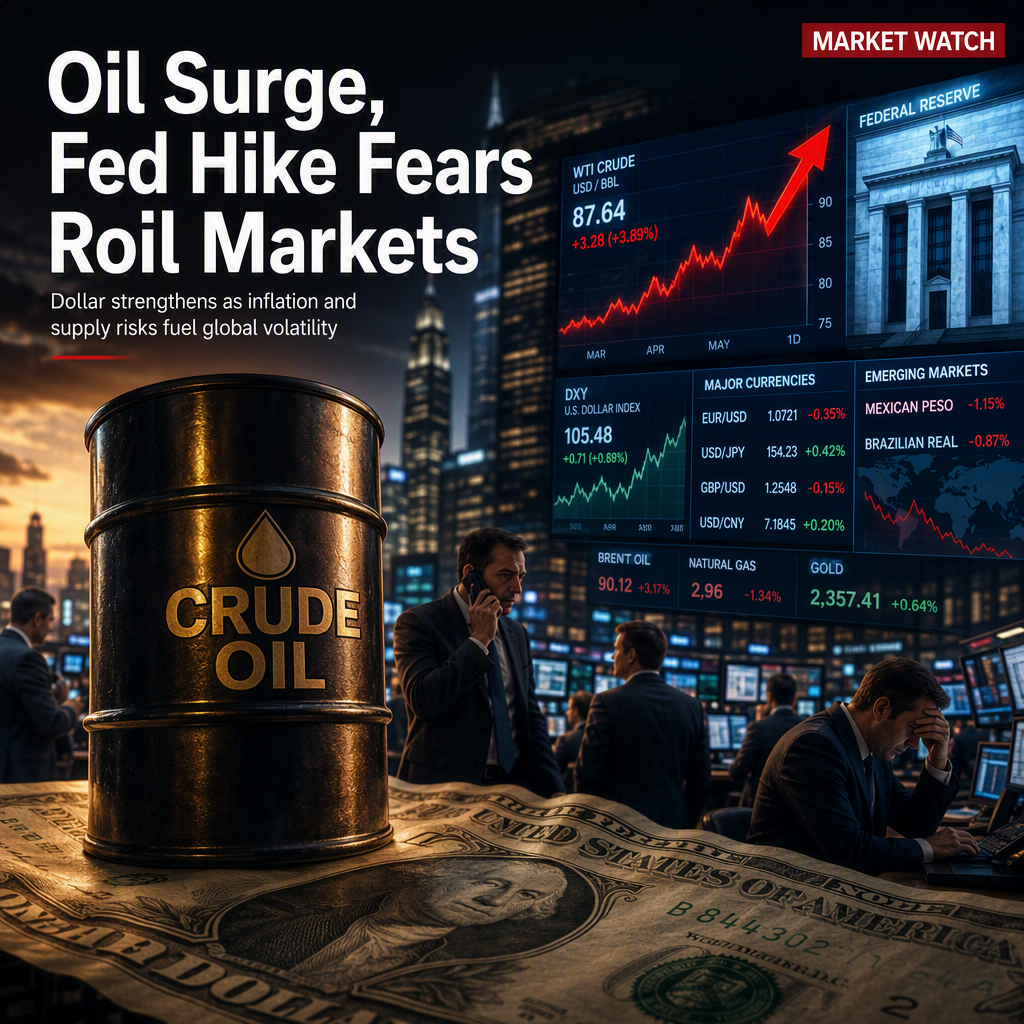
On Tuesday, crude oil prices surged, with WTI crude climbing approximately 3.4% to trade near $106 and Brent pushing above $108, following security alerts issued by Saudi Arabia’s Civil Defence for six cities, including Yanbu, the main Red Sea export port. The threat was later declared to have passed, but the escalation contributed to heightened supply risk and inflation concerns in global markets [1][2]. This rise in oil prices fed into broader inflation worries, which in turn pushed the U.S. 10-year Treasury yield to its highest level in nearly two decades [1].
The stronger inflation outlook, particularly a jump in U.S. headline Producer Price Index (PPI) to 5.4%, alongside a robust August Nonfarm Payrolls report and comments from Fed Chair Kevin Warsh emphasizing inflation and a labor market “consistent with full employment,” led investors to price in a Federal Reserve rate hike. Markets are nearly locking in a September Fed hike, with expectations for the Fed funds rate to move to 3.75%-4% [2]. The U.S. ADP Employment Change 4-week average improved to 16.25K, up from 12.25K, indicating continued labor market strength [1][2].
The dollar firmed against every major currency, including the Mexican Peso, which retreated as USD/MXN rose by over 0.09% to 17.15 after hitting a yearly low of 17.10. The sour market mood and anticipation of the Fed decision contributed to the Peso’s weakness. Technical analysis shows USD/MXN trading below key moving averages, with resistance at 17.18 and support at 16.89, suggesting rallies may face selling pressure [2].
Stocks slipped for the sixth time in seven sessions, pressured by higher yields and energy prices, while Bitcoin declined after the U.S. Senate blocked a landmark crypto market-structure bill. Gold remained near the flatline, and the split in asset performance intensified as U.S. traders responded to fresh supply-risk headlines and expectations of Fed rate hikes [1]. In Mexico, Banxico has kept interest rates at 6.50% since May 2026, with inflation risks tilted to the upside, but the latest 12-month inflation print was below estimates at 3.26% [2]. Upcoming Mexican economic data includes Retail Sales on September 22 and inflation readings on September 23, ahead of Banxico’s next meeting [2].
CONCLUSION
A surge in oil prices and expectations of a Federal Reserve rate hike have strengthened the U.S. dollar and pressured global equities, with the Mexican Peso retreating from its yearly low. Market sentiment remains cautious ahead of the Fed decision, as inflation and supply risks continue to drive volatility. Technical and economic indicators suggest further scrutiny of currency and asset movements in the coming days.