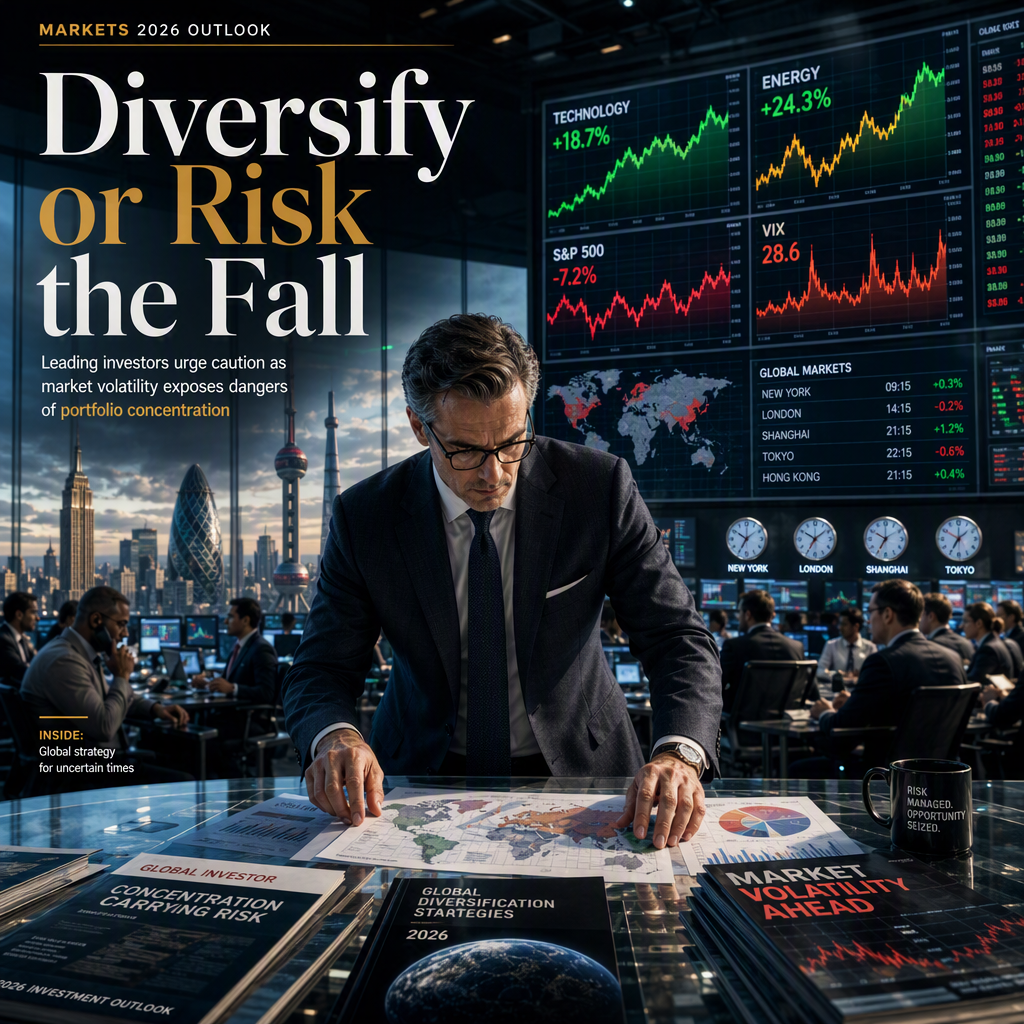
Global markets have experienced significant volatility in 2026, with both equity and bond markets facing fresh turbulence this week [1]. CNBC interviewed six investors to identify the biggest risks currently threatening markets. While their views on specific risks varied, all agreed on the importance of diversifying portfolios beyond this year's top-performing assets [1].
Chris Rush, investment manager at IBOSS, highlighted the danger of being overly concentrated in past winners, particularly U.S. equities, which now constitute a large portion of global portfolios. Rush noted that 'U.S. exceptionalism has also started to fade from the levels seen before 2025,' and rising debt levels among the so-called Magnificent Seven add to the risks of chasing the same companies [1]. To mitigate these risks, Rush's team is increasing exposure to real estate investment trusts (REITs), U.K. equities, and stocks in Asia and emerging markets. He specifically mentioned that while AI winners in Korea and Taiwan have attracted attention, China has performed well during the recent market pullback and remains well positioned [1].
Ben Kumar, head of strategy for wealth, investment and public policy at 7IM, emphasized that the main challenge for investors this year has been managing 'specific volatility' rather than overall market volatility. He pointed out that energy and IT stocks have alternated between being the best and worst performers, making concentrated bets risky. Kumar stated, 'Diversification has helped hugely — across sectors and regions,' and advised investors not to 'die trying to be a hero' by chasing winners [1].
The consensus among the interviewed investors is clear: the shifting landscape of market winners and losers in 2026 makes broad diversification across sectors and regions essential for managing risk and capturing opportunities [1].
CONCLUSION
Investors are increasingly concerned about concentration risks in global markets, particularly in U.S. equities and popular themes. The prevailing advice is to diversify portfolios across regions and sectors to navigate ongoing volatility and avoid the pitfalls of chasing past winners. This strategy is seen as crucial for managing risk in the current market environment.