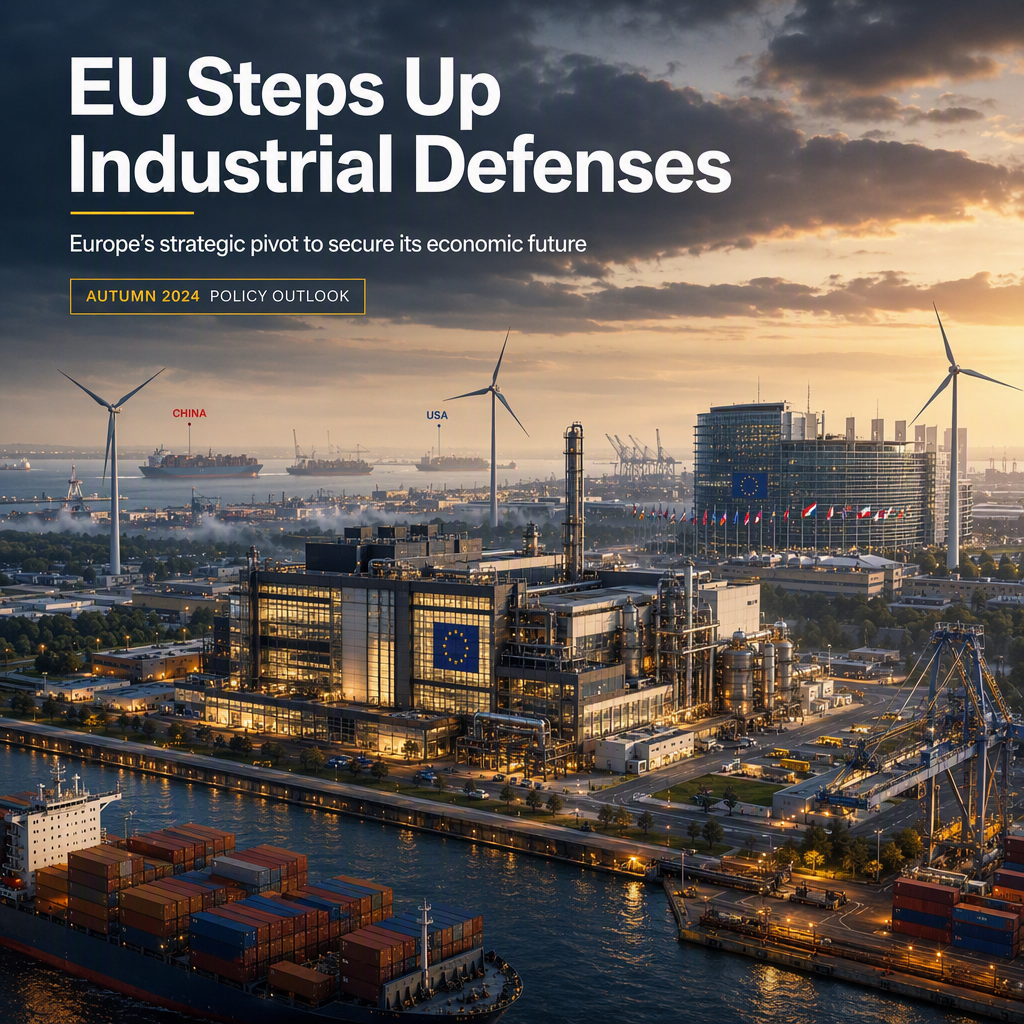
The European Union is intensifying its efforts to bolster the Eurozone's industrial sector and reduce reliance on external partners, according to RaboResearch economists Maartje Wijffelaars and Leander Kalff [1]. The EU's strategic push includes measures to stimulate key sectors, raise trade-defence barriers, and diversify supply chains, with the aim of protecting domestic industry from growing competition, particularly from China, as well as addressing challenges such as high energy prices and the short-term costs associated with decarbonisation [1].
The European Commission and several member states are advocating for a balanced approach that maintains the EU's openness to trade while also seeking to protect domestic industries from 'harmful' imports [1]. Ongoing engagement with China exemplifies the EU's preference for dialogue over outright protectionism, but there is also a clear move towards expanding the use of trade-defence measures and broadening the existing policy toolbox [1].
The report highlights that proposals from the European Commission regarding these strategic measures are expected in the autumn, but notes that reaching consensus and implementing these policies will require additional time [1]. Risks identified include potential retaliation from the US and China, as well as internal divisions within the EU, both of which could slow the implementation process and impact Eurozone growth [1].
No specific market reactions or analyst forecasts are provided in the article, but the outlined measures signal a medium-term shift in the EU's industrial and trade policy landscape [1].
CONCLUSION
The EU is taking concrete steps to strengthen its industrial base and reduce external dependencies, though the process faces risks from international retaliation and internal disagreements. While immediate market impacts are not detailed, the strategic direction points to significant policy changes ahead for the Eurozone.