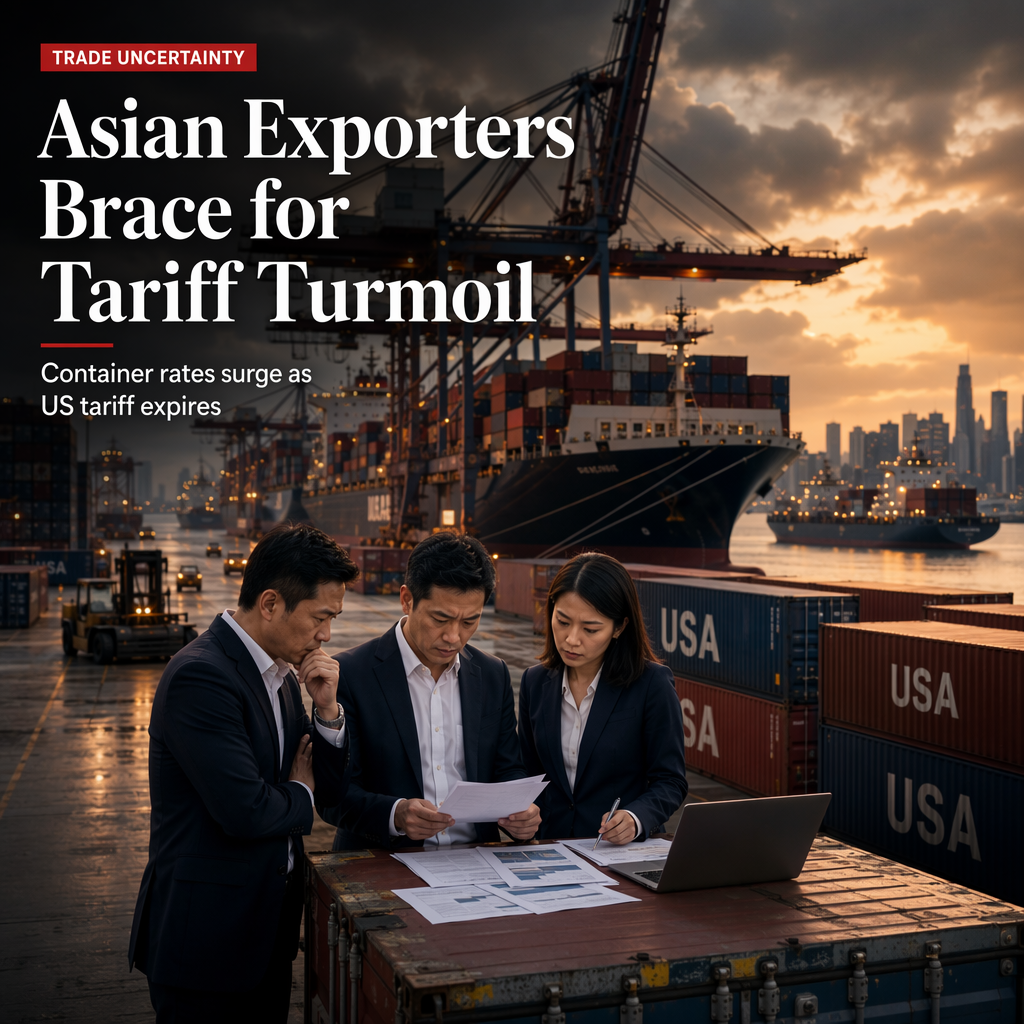
Asian exporters are bracing for significant changes as the temporary 10% US tariff on all imports, implemented under President Donald Trump, is set to expire on Friday [1]. This expiration has led to a surge in container shipments from Asia to the US, with importers rushing to move goods before potential new tariffs are announced [1]. Container rates between China and the US have reached a two-year high, and some US importers are paying premiums to secure shipping slots due to increased demand for logistics services [1].
The Trump administration is reportedly working to rebuild its tariff regime, with the possibility of higher and more targeted tariffs on Asian goods, contributing to widespread concern among exporters [1]. In addition, the US has already imposed new 50% tariffs on select Canadian products and has floated the possibility of additional tariffs on up to 60 economies, including China, over forced labor concerns [1]. This has resulted in heightened market volatility and uncertainty for Asian exporters [1].
One year ago, Japan and the US reached an agreement to limit exports of certain Japanese products to the US in exchange for a partial easing of US-imposed tariffs [2]. As this agreement marks its first anniversary, Japanese manufacturers and related industries continue to face challenges in maintaining price competitiveness and reviewing procurement systems for the US market [2]. Sectors with significant exports to the US, such as auto parts and steel products, are actively implementing countermeasures [2].
Economic analysts note that future US-Japan trade negotiations could require further adjustments or new responses from exporters, emphasizing the need to monitor currency trends and US economic conditions [2]. Companies are expected to continue diversifying production bases and strengthening supply chains as part of their medium- to long-term strategies [2]. Market sentiment remains cautious, with technical indicators suggesting continued volatility in logistics and shipping costs until the tariff situation stabilizes [1].
CONCLUSION
The expiration of the US 10% tariff and uncertainty over new trade measures are causing significant disruption and caution among Asian exporters, particularly in Japan. Both immediate logistical pressures and longer-term strategic adjustments are underway as companies and analysts await further clarity on US tariff policy.