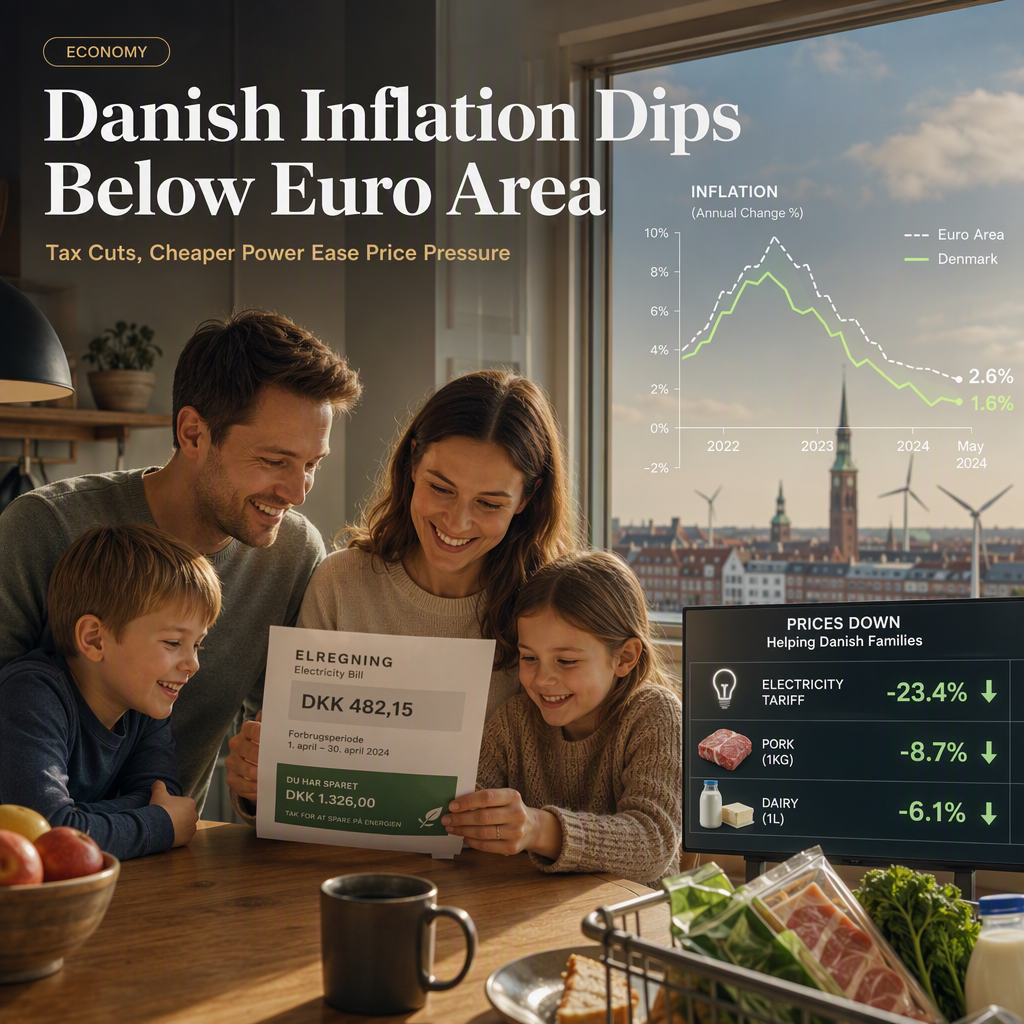
Danish inflation eased in July, with headline consumer prices rising by 1.7% year-over-year, a decrease from 1.9% in June, according to Nordea economist Jan Størup Nielsen [1]. Core inflation remained steady at 2.3% [1]. On a monthly basis, the Danish consumer price index increased by 1.2%, marking the largest monthly increase since July of the previous year [1].
Seasonal factors such as higher rents on summer houses and increased prices for package holidays contributed to the monthly rise in prices. However, these were offset by lower electricity tariffs and declining food prices, particularly pork, which helped keep overall inflation in Denmark below that of the euro area [1].
A significant factor in the subdued inflation rate was the Danish government's decision to reduce electricity tariffs to the EU's minimum rate at the start of the year. This policy move resulted in electricity subtracting 0.68 percentage points from the annual inflation rate [1]. In comparison, overall inflation in the eurozone stood at 2.9% in July, meaning Danish inflation remains markedly lower than that of the euro area [1].
Nordea's analysis attributes Denmark's lower inflation primarily to the substantial reduction in electricity tax, alongside the impact of falling food prices [1].
CONCLUSION
Danish inflation continues to trend below the euro area average, driven by government tax cuts and lower electricity and food prices. The data suggests that Denmark's policy measures are effectively containing inflationary pressures relative to its European peers.