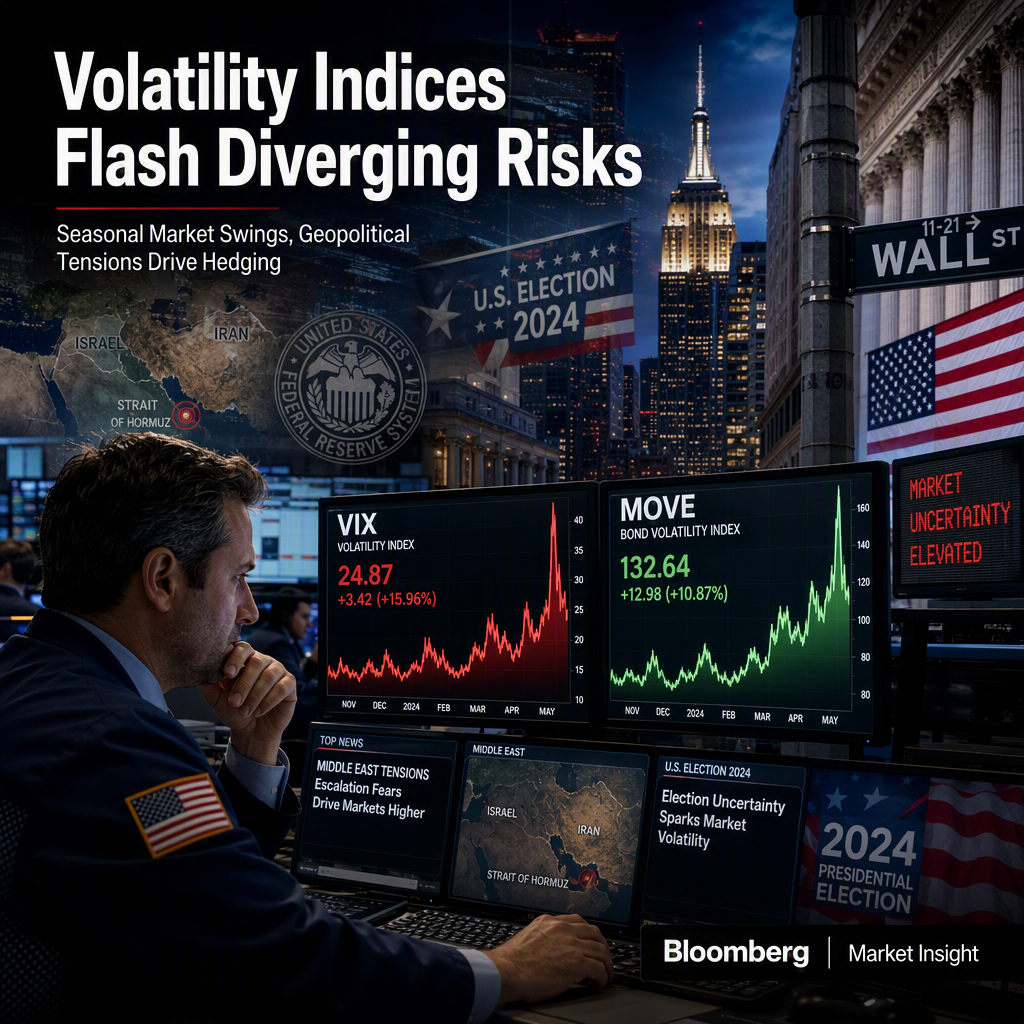
The Cboe VIX volatility index is drawing increased attention as it signals a rise in equity-market hedging during a period that is historically volatile for stocks, particularly in September and October, which are known for significant VIX jumps following midyear declines [1]. This heightened focus comes as both the VIX and the MOVE Index, which measures Treasury-option volatility, hover around their 10-year averages, while corporate credit spreads remain historically tight, according to CreditSights [1].
Several factors are contributing to the current market environment, including the U.S. midterm elections, interest-rate risks stemming from oversupply dynamics, hawkish central bank policies, and recent escalations in Middle East hostilities. These elements are prompting investors to seek protection from what Nomura's Charlie McElligott describes as a "negative risk trinity" [1]. McElligott also noted that the VIX three-month call skew is in the 91st percentile, indicating that options betting on increased U.S. equity volatility are relatively expensive at this time [1].
Luke Rahbari, CEO of Equity Armor Investments, anticipates higher equity-market volatility—both upward and downward—as the year progresses, driven by shifting rate expectations and mounting cross-asset pressures. Rahbari also observed that stress in the Treasury market is beginning to spill over into equities [1]. The MOVE Index remains elevated as bond markets grapple with changing expectations regarding rate cuts, inflation, and Treasury supply [1].
Zachary Griffiths, Head of IG and Macro Strategy at CreditSights, stated that volatility could rise further as markets transition out of the summer slowdown, though he expects some relief from market swings thereafter [1]. James Ooi, market strategist at Tiger Brokers, added that volatility typically eases in November, with the VIX historically falling around 4% as midterm election results provide greater policy clarity and remove a key political overhang [1].
CONCLUSION
The VIX and MOVE indices are signaling diverging risks across equity and bond markets, with several geopolitical and macroeconomic factors driving increased hedging activity. While volatility is expected to remain elevated in the near term, historical patterns suggest potential easing after the U.S. midterm elections as policy uncertainty diminishes.