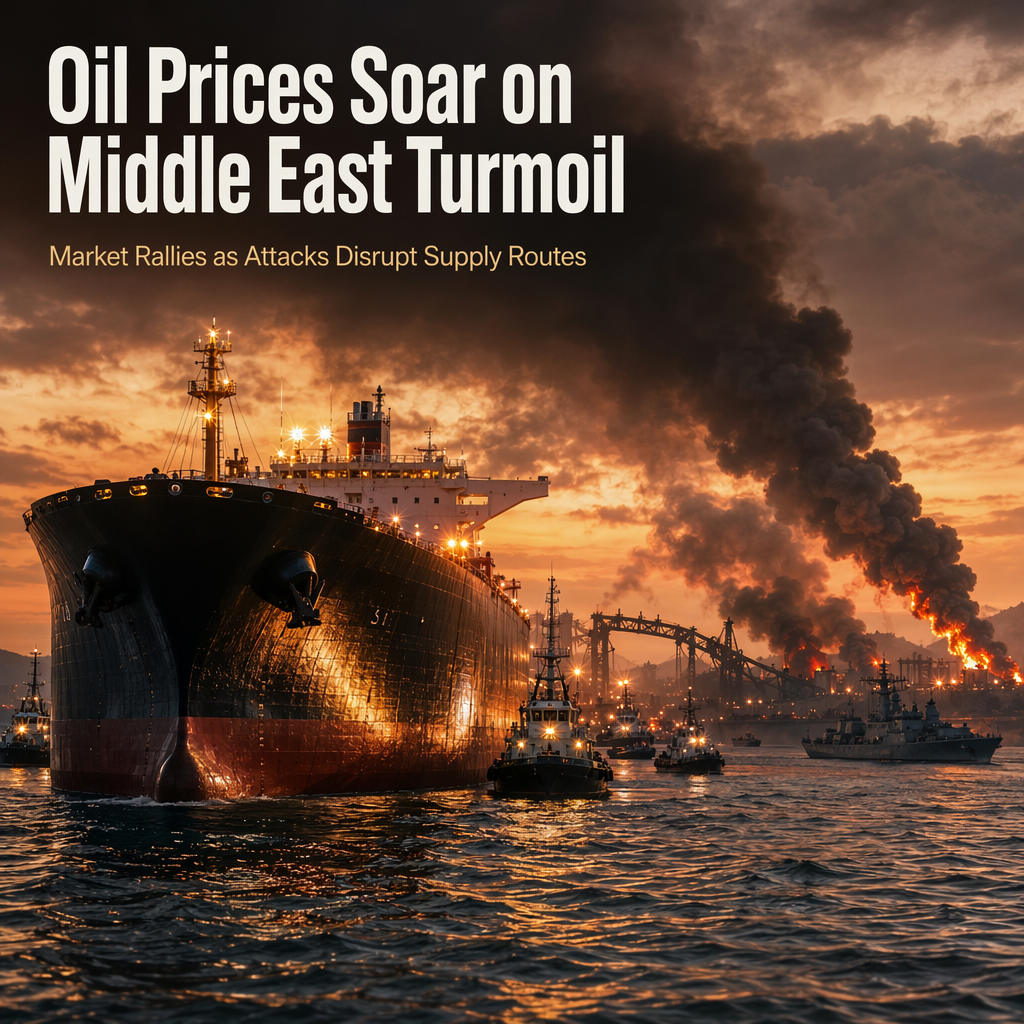
Crude oil markets experienced a significant rally, with West Texas Intermediate (WTI) trading just above $91.00, marking an almost 6% increase on the day, while Brent crude approached the $95.00 level, up nearly 5%. Both benchmarks returned to price levels last seen in early June [1]. The move was characterized by a steady, one-directional advance throughout the day, with every dip quickly absorbed, indicating a market repricing rather than a reflexive reaction to headlines. This behavior contrasts with the more volatile, headline-driven trading observed earlier in July [1].
The rally was fueled by escalating geopolitical tensions. Iranian Foreign Minister Abbas Araghchi reiterated Tehran's 'eye for an eye' doctrine and promised a powerful response to any strike on Iranian infrastructure. The Iranian foreign ministry also condemned Washington's targeting of bridges and power plants as unlawful. Meanwhile, Houthi forces, after declaring a maritime embargo on Saudi Arabia earlier in the week, attacked two Saudi tankers in the Red Sea, creating a new pressure point for Saudi oil flows in addition to the ongoing risks at the Strait of Hormuz [1].
U.S. Secretary of State Marco Rubio responded from Manila, describing the U.S. strategy as 'a head for an eye' and stating that the price rises every night until Tehran changes its stance. Rubio emphasized that the U.S. goal is to prevent Iran from acquiring a nuclear weapon, not regime change, and referenced the ongoing cycle of threats and retaliations between the two countries [1].
Unlike previous sessions, where the market would fade such headlines and quickly reverse gains, today's sustained rally suggests that traders are now viewing the situation as confirmation of a broader and more persistent disruption risk, rather than just noise to trade around. The absence of a quick reversal indicates that the market perceives the retaliation ladder as open-ended, with risks extending beyond the Strait of Hormuz [1].
CONCLUSION
Crude oil prices surged sharply on heightened geopolitical tensions and direct threats to supply routes, with both WTI and Brent reaching multi-month highs. The market's sustained upward move signals a shift from headline-driven volatility to a repricing of persistent disruption risks.