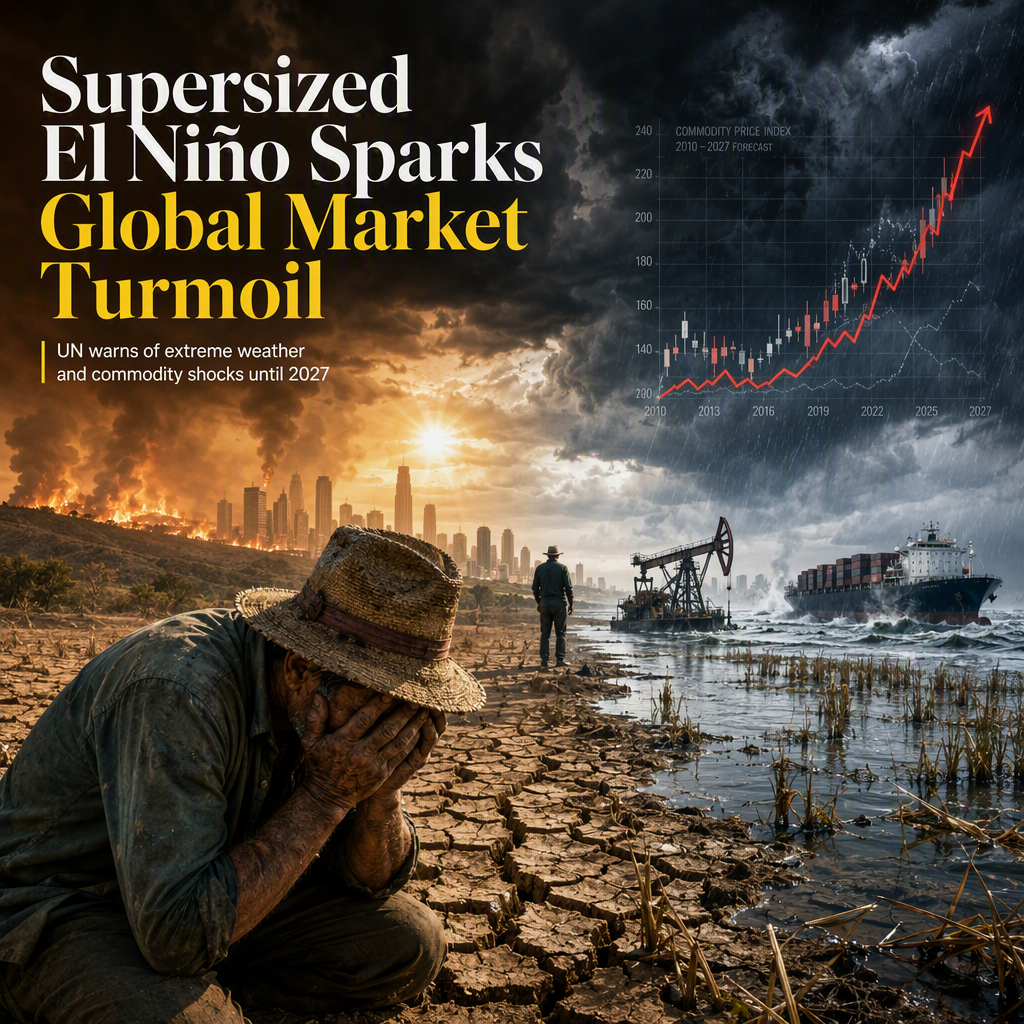
The United Nations has issued a stark warning regarding the intensification of the El Niño climate event, which is now expected to persist until February 2027 and is being described as 'supersized' by UN Secretary General António Guterres. Guterres stated that the world is 'in the danger zone of extreme weather,' with heightened risks of floods, droughts, and extreme heat anticipated to last for more than a year and a half [1].
Celeste Saulo, secretary general of the U.N.'s World Meteorological Organization, emphasized that this El Niño event 'has the potential to deliver a massive blow to communities and economies across the world.' The immediate impacts are expected to be most severe in Asia-Pacific and Latin America, but the effects will be felt globally, particularly in commodity markets such as corn, cocoa, coffee, and energy [1].
Specific countries already experiencing adverse effects include Guatemala, Honduras, and El Salvador, where erratic weather and drought have led to severe crop losses. Indonesia is battling devastating wildfires, and India is facing a weaker monsoon season that threatens the production of rice, sugar, cotton, and soybean. In Peru, officials report that anchovy fishing, crucial for livestock feed, has suffered a 'devastating blow' [1].
The UN also warned that extreme weather could unpredictably affect energy generation and demand, potentially disrupting hydropower, wind, solar, oil and gas production, refining operations, and mining. The WMO's latest research indicates that sea surface temperatures in the tropical eastern Pacific were more than 2 degrees Celsius above normal in July, reaching between 2.2 and 2.6 degrees Celsius above normal from late July to mid-August, with subsurface ocean temperatures exceeding 8 degrees Celsius above average during the same period [1].
The impact on commodity prices, especially grains and soft commodities, is expected to be significant, with grain prices already soaring as a 'perfect storm' brews for global food supply this winter [1].
CONCLUSION
The UN's warning of a 'supersized' El Niño event signals a period of heightened risk for global economies and commodity markets, with severe weather disruptions already impacting key agricultural and energy sectors. Market participants should prepare for continued volatility in food and energy prices as the event persists through early 2027.