
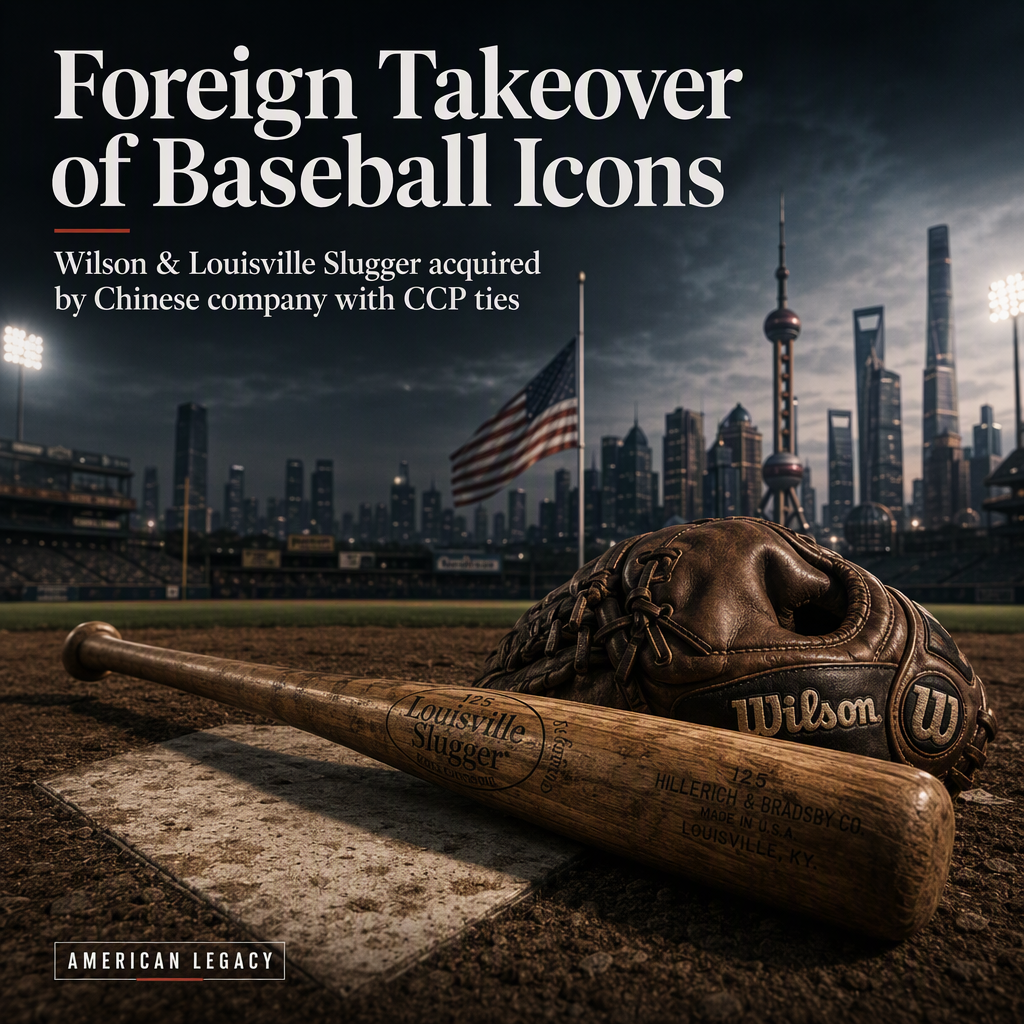
Two of the most iconic American baseball equipment manufacturers, Wilson and Louisville Slugger, are now owned by a Chinese company associated with the Chinese Communist Party (CCP) [1]. Both companies have a storied history in the United States, with Louisville Slugger founded in the 1880s and Wilson Sporting Goods established just before World War I [1]. These brands have been synonymous with baseball in America for over a century, supplying gloves and bats to both youth and professional players. Notable athletes such as Ronald Acuna Jr., Kyle Schwarber, Pete Crow-Armstrong, and Will Smith use Louisville Slugger bats, while Clayton Kershaw has used a Wilson glove throughout his career [1].
Louisville Slugger was originally owned and operated by the Hillerich & Bradsby Company, a family business dating back to the 1800s. However, in 2015, the company was sold due to an inability to compete with larger multinational corporations, according to CEO John A. Hillerich IV [1]. The article highlights concerns about the shift in ownership of these quintessentially American brands to a foreign entity with reported ties to the CCP, framing it as indicative of broader economic and cultural challenges [1].
The market implications of this acquisition are significant, as it represents a transfer of control over key suppliers in America's national pastime to a foreign company with political associations that may raise concerns among consumers and policymakers [1]. The article does not provide specific financial data, stock market reactions, or analyst opinions regarding the acquisition [1].
No forward-looking statements or analyst commentary are included in the source. The focus remains on the historical significance of the brands and the implications of their foreign ownership [1].
CONCLUSION
The acquisition of Wilson and Louisville Slugger by a Chinese company with CCP ties marks a major shift in the ownership of two pillars of American baseball. While the article emphasizes the cultural and symbolic impact, it does not provide financial or market reaction data. The event underscores ongoing concerns about foreign ownership of iconic American brands.