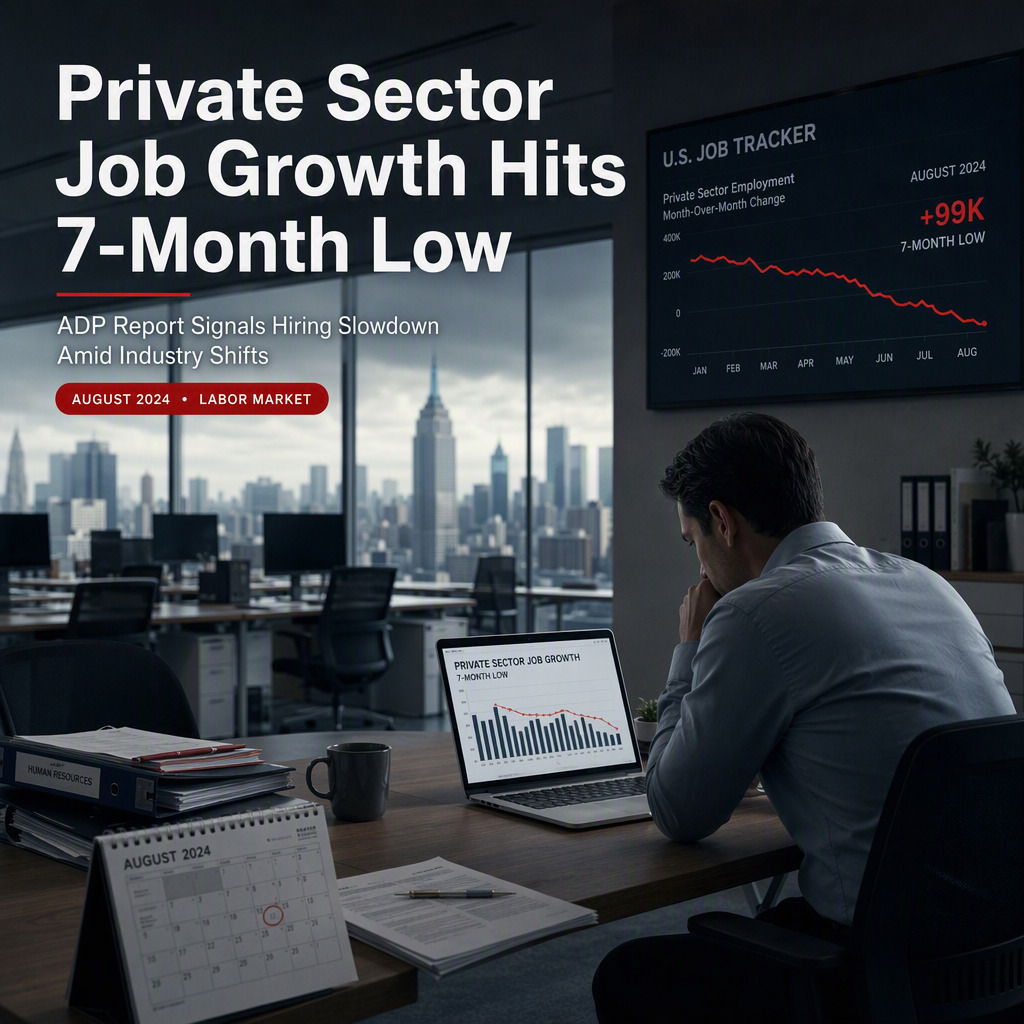
ADP reported that the private sector added 38,000 jobs in August, significantly below economists’ expectations of a 48,000 job gain and down from the prior month's revised figure of 46,000 payrolls. This marks the lowest monthly job addition since January, highlighting a slowdown in hiring momentum [1]. Nela Richardson, ADP's chief economist, commented on the complexity of current wage growth, noting that demographic changes, persistent inflation, and the impact of AI are influencing hiring patterns and pay dynamics [1].
Industry-specific data from the ADP report shows education and health services led job creation with 45,000 new positions, followed by leisure and hospitality with 16,000 jobs. Financial activities and other services each added 6,000 jobs. Conversely, manufacturing lost 17,000 jobs, professional and business services shed 16,000, and natural resources and mining, as well as trade and transportation, each lost 5,000 jobs. The information sector lost 4,000 positions [1].
Large businesses (500+ employees) contributed 34,000 jobs, while hiring was flat for mid-sized businesses (50-499 employees). Small businesses (fewer than 50 employees) added just 3,000 jobs [1]. Wage growth for those staying in their roles increased by 4.4% year-over-year, while job changers saw their pay rise by 7.3% [1].
The ADP report precedes the Labor Department's nonfarm payrolls report, which is expected to show an increase of 56,000 positions, a rebound from July's unexpected loss of 23,000 jobs. The unemployment rate is forecast to remain steady at 4.1%. However, ADP's data often differs notably from government figures, suggesting uncertainty in the labor market outlook [1].
CONCLUSION
ADP's August report signals a marked slowdown in private sector hiring, with job gains falling short of expectations and reaching their lowest level since January. While some industries showed strength, losses in manufacturing and business services underscore ongoing challenges. The upcoming government payrolls report may provide further clarity, but the current data points to a cautious market sentiment.