
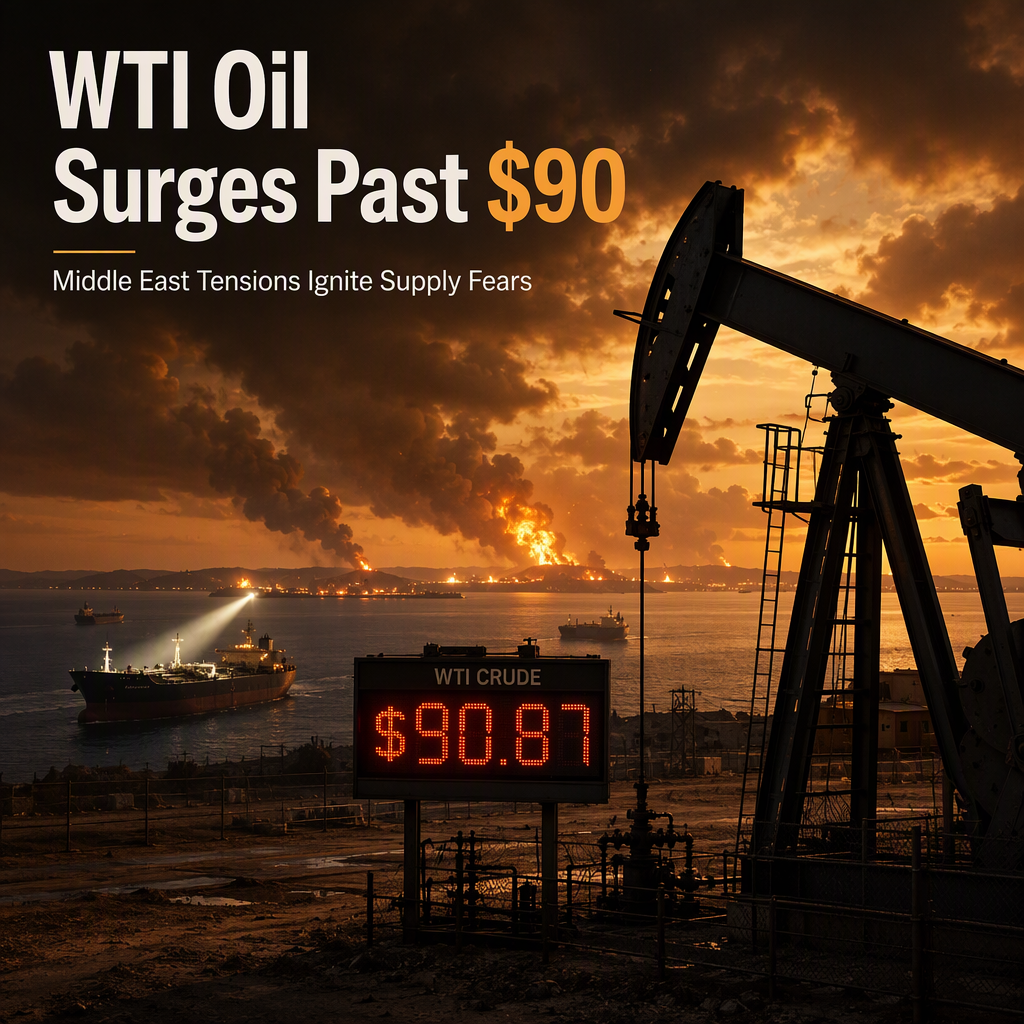
West Texas Intermediate (WTI) crude oil prices surged above the $90.00 mark on Thursday, reaching $90.87 at the time of reporting, driven by escalating tensions in the Middle East and fresh supply concerns [1]. The rally follows reports of new attacks on Saudi Arabian airports by Iran-backed Houthi militias, which resulted in three fatalities according to the Saudi aviation authority [1]. These attacks are described as retaliation for Saudi support of the Yemeni government's offensive against the Houthis and are seen as a potential catalyst for further escalation in the region, raising fears of crude supply constraints [1].
Additionally, the UK Maritime Trade Operations (UKMTO) reported a notable increase in attacks on vessels in the Strait of Hormuz, with nine incidents in October so far—half the number recorded in all of September [1]. This uptick in maritime attacks has led to higher shipping costs, as companies have increased hiring rates for supertankers, further supporting the rise in crude prices [1].
On the supply side, the latest data from the US Energy Information Administration (EIA) revealed a significant drawdown in crude oil stocks, with inventories falling by 3.186 million barrels in the week ending October 2. This decline exceeded expectations of a 1.9 million-barrel drop and followed a 922,000-barrel build in the previous week [1]. The EIA also reported that US crude imports fell by 53,000 barrels per day, while exports rose by 1.2 million barrels per day to reach 4.7 million barrels per day [1].
The combination of geopolitical risks, increased shipping costs, and tighter US inventories has provided strong upward momentum for WTI oil prices. Market participants are closely monitoring the situation for further developments that could impact global crude supply and pricing [1].
CONCLUSION
WTI oil prices have climbed sharply above $90 amid heightened geopolitical tensions in the Middle East, increased shipping risks, and a larger-than-expected US inventory drawdown. The market is reacting strongly to these supply-side concerns, with further price volatility possible if the situation escalates.