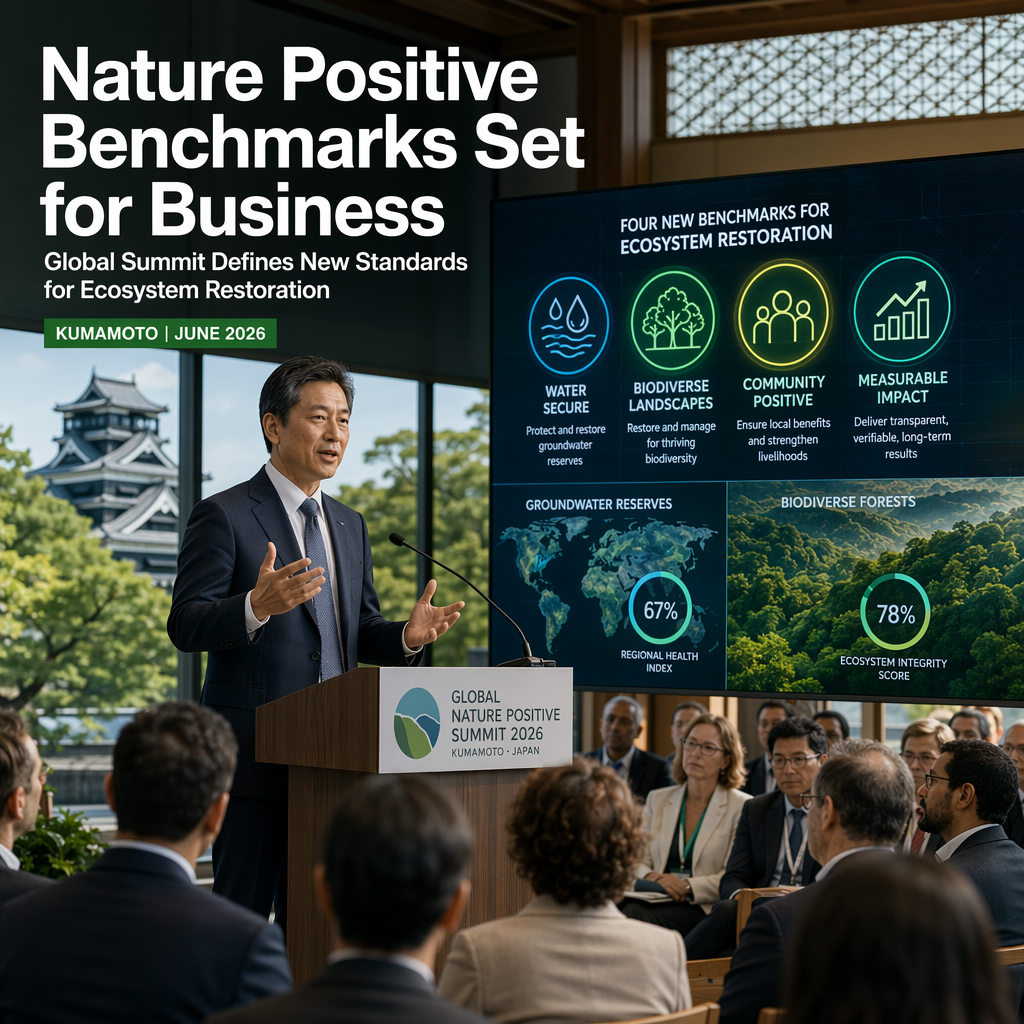
The Global Nature Positive Summit 2026 convened in Kumamoto, Japan, spotlighting the critical role of businesses in halting and reversing the loss of natural capital, which includes assets such as groundwater and biodiverse forests [1]. At the conference, four new benchmarks were announced to standardize the assessment of corporate efforts in ecosystem restoration. These indicators are designed to help businesses track, evaluate, and report their progress toward rebuilding natural capital, thereby promoting transparency and accountability in environmental stewardship [1].
A conference spokesperson emphasized the importance of these standardized measures, stating, 'Clear, robust indicators are crucial for aligning business strategies with global nature recovery targets.' The summit underscored that such benchmarks will enable companies to better evaluate their environmental impact and contribute meaningfully to ecosystem restoration efforts [1].
Participants discussed the financial implications of adopting nature-positive benchmarks, noting that improved ecosystem health can reduce operational risks and enhance long-term asset value for corporations. The restoration of natural assets was identified as a critical investment for safeguarding future business operations and shareholder interests [1].
The conference also addressed the challenges of integrating ecosystem restoration into corporate financial reporting, calling for greater collaboration among environmental scientists, financial analysts, and corporate strategists. Stakeholders highlighted that clear metrics and regular reporting would assist investors in assessing corporate performance in environmental stewardship, potentially influencing capital allocation and market sentiment. However, no specific price levels, technical indicators, or trading advice were discussed, as the summit focused on environmental impact and corporate responsibility rather than direct financial market analysis [1].
CONCLUSION
The Global Nature Positive Summit 2026 introduced standardized benchmarks for businesses to measure and report on ecosystem restoration efforts, emphasizing the financial and operational benefits of improved natural capital. While the summit did not provide direct market analysis, it highlighted the potential for these measures to influence investor sentiment and capital allocation through enhanced transparency and accountability.