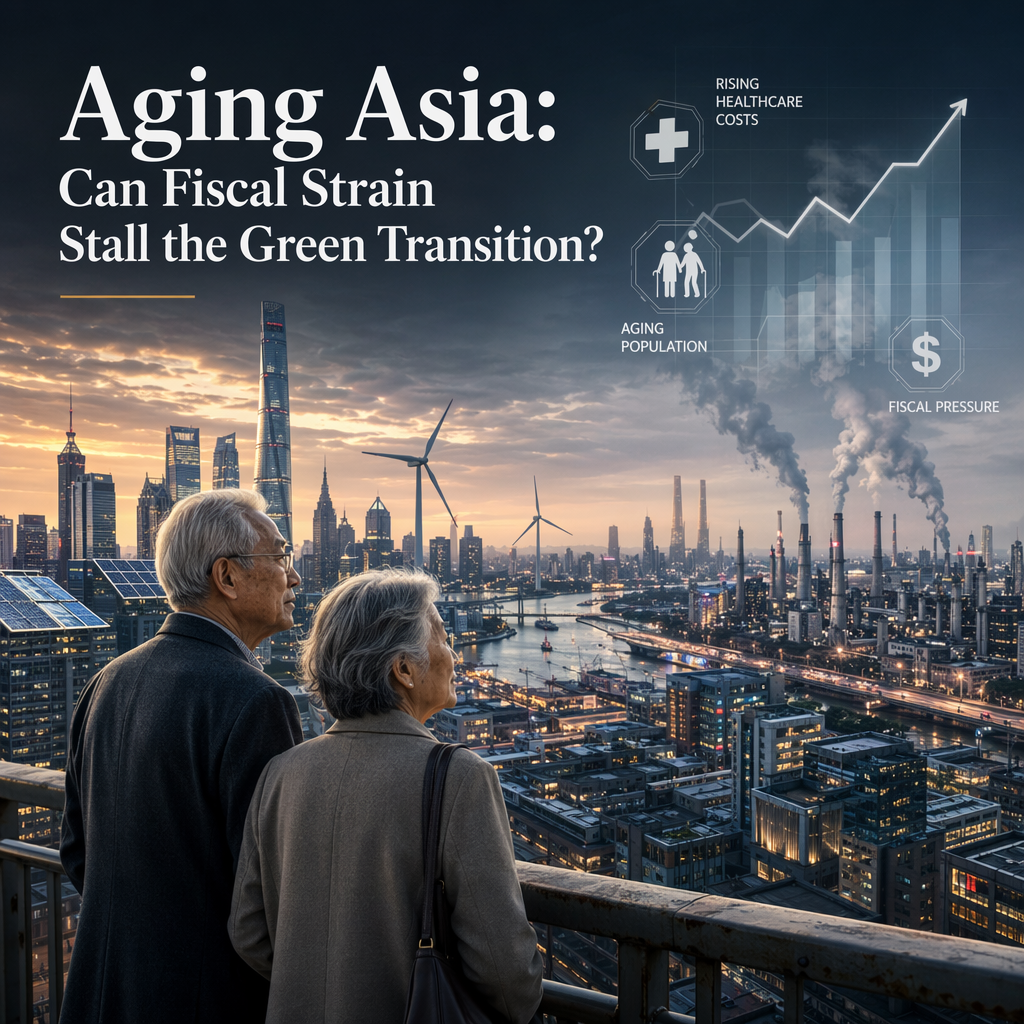
Asia's pursuit of net-zero carbon emissions is facing significant challenges due to rapidly aging populations and escalating pension and healthcare costs, which are straining government budgets and threatening the capital-intensive energy transition required to decarbonize economies [1]. The International Energy Agency (IEA) estimates that Asia will need to mobilize trillions of dollars by 2050 to achieve net-zero targets, but shifting fiscal priorities in countries such as Japan, South Korea, and China may delay or derail these ambitions [1]. According to the United Nations, Asia’s population aged 65 and over will double to 1.2 billion by 2050, with Japan already having more than 29% of its population over 65 and China projected to reach a similar level by 2050 [1].
The Asian Development Bank reports that demographic changes are creating a major headwind to funding the energy transition, as policymakers must balance supporting aging populations with investing in low-carbon infrastructure, renewables, and clean energy technologies [1]. The region requires $1.7 trillion in infrastructure investment annually through 2030 to maintain growth and meet climate goals, with clean energy comprising a large share of this requirement [1]. However, shrinking tax bases and rising social spending may hinder governments' ability to sustain green investment, and the IEA warns that without strong policy support and innovative financing, Asia risks falling behind in the global race to net zero, which could impact global carbon reduction efforts given Asia's contribution to more than half of the world's emissions [1].
To bridge the funding gap, governments are increasingly turning to public-private partnerships, green bonds, and multilateral support, but investors remain cautious due to regulatory uncertainty, project risk, and long payback periods associated with clean energy infrastructure [1]. Market analysts emphasize that without fiscal reform and stronger incentives, Asia's energy transition could slow significantly. A UBS report notes that aging societies face tough choices: raising taxes, cutting spending elsewhere, or borrowing more to finance the transition [1]. Failure to resolve these trade-offs could jeopardize both regional and global climate objectives [1].
CONCLUSION
Asia's demographic shift is creating substantial fiscal challenges that threaten the region's ability to invest in clean energy and achieve net-zero targets. Without decisive policy action and innovative financing, the energy transition may slow, impacting both regional growth and global carbon reduction efforts. Market participants and policymakers must address these trade-offs to sustain momentum toward climate goals.